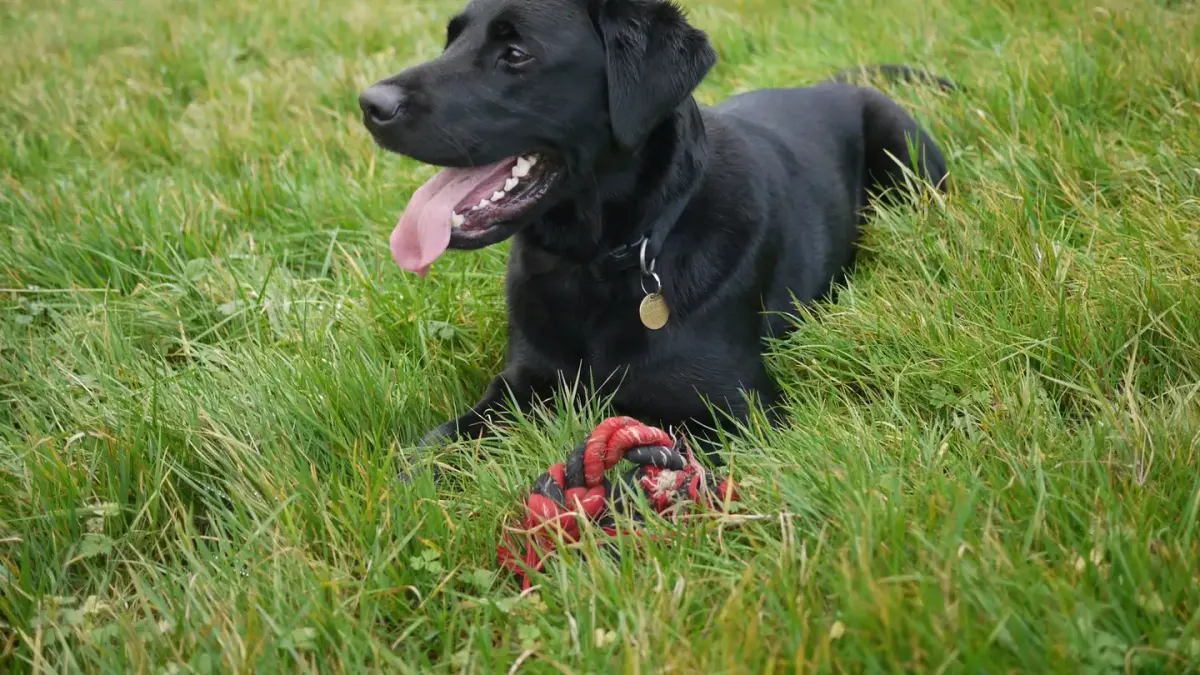
Maya leaves for a Tuesday shift at 8 a.m., tosses her 9-month-old cattle-dog mix a plush fox with a squeaker, and figures the crate camera will catch any trouble. By 9 the fox is headless on video, by noon there is white fluff on the bedding, and by 6 p.m. she is counting poops and wondering if the squeaker went down the hatch. That 10-hour workday is the exact decision fork for this whole topic: what entertains a bored dog for ten minutes with you watching can turn into an obstruction risk during ten hours alone.
I weigh what a toy can realistically do for diet, mobility, and recovery the same way I weigh a supplement — what is the active benefit, what is the dose of risk, and what does the evidence support when nobody is there to intervene. A toy left alone has one job: keep a dog calm without creating pieces, strings, or swallowed parts.
If it can be ripped, gutted, or unraveled, it stays with you
Plush toys, squeakers, rope tugs, and toys with ribbon, eyes, or stitched-on tails are supervised-only in my book. The American Veterinary Medical Association makes the same distinction in its toy-selection guidance for pet owners, warning against toys with small, removable parts and anything that can be chewed into swallowable fragments.
That matters because unsupervised chewing looks different from play. With you on the couch, you hear the seam pop and trade for a treat. Alone, a determined chewer works the same seam for an hour, swallows fistfuls of stuffing, bites out the plastic squeaker, and shreds rope into long fibers. Stuffing can irritate and obstruct, squeakers can lodge in the throat or intestine, and string is the worst of the group because linear material can saw across bowel.
Small tennis-style balls and tiny fetch balls belong here too. If it fits entirely behind the canine teeth, it can block an airway.

The crate test I use before I leave anything behind
Ask three questions. Can the dog bite a piece off with the jaw in front of you? Can that piece block air or gut? Would you know it happened before dinner? If the answer to the first two is yes and the third is no, do not leave it.
That rules out soft vinyl squeak toys that crack into shards, compressed rawhide knots and braided chews that swell and break into chunks, thin bully slices and small edible chews that become gulpable nubs, and any treat-dispensing toy with a cracked wall or loose lid. The U.S. Food and Drug Administration advises owners to supervise chew toys and treats and to remove them once they are small enough to swallow, which is exactly the line between supervised enrichment and an alone-time hazard.
The tradeoff story shows up here a lot. A couple with a 34-pound French bulldog told me they had upgraded to “tough” braided rawhide rings because the dog finished a standard 6-inch bully stick in 22 minutes and paced the apartment after. The thicker ring lasted three evenings while they watched TV, so they left the fourth ring for a 5-hour grocery-and-errands stretch. They came home to wet coughing, a missing 2-inch section, and a panicked emergency visit for gagging. The dog passed the fragment, but the lesson stuck: durability with supervision does not equal safety alone, because chewing style changes when arousal builds and nobody trades up.
For more on matching toughness to jaw strength without overspending on toys that die fast, see How Much Should You Spend on Dog Toys?.
Supervision changes the math.
What I will actually leave, and how I set it up
I am narrow about alone-time toys. A solid, one-piece rubber toy in the correct size, with no cracks, no missing chunks, and holes large enough that tongues and jaws cannot wedge, is the baseline. A frozen stuffed Kong-style toy prepared for that dog’s stomach counts, provided the dog has tolerated those foods before and the toy itself is intact. A sturdy puzzle feeder with a locking lid can work for calm adult dogs that nudge rather than chew through walls.
Size it like safety equipment. For most medium dogs that means large or XL rubber, inspected weekly and retired at the first deep gouge. Puppies need a separate plan because teeth and judgment change fast; see When Do Puppies Stop Teething and Need Different Toys? before you graduate a 5-month-old to an adult setup.
The bend-the-rules case is the senior dog everyone assumes needs nothing. A 13-year-old, 18-pound shih tzu with only seven teeth left still paced for four nights after his owner removed every toy following a choking scare on a frayed rope. The fix was not to reintroduce the rope. We kept a single solid rubber ball too large to fit past his 1.5-inch mouth opening, smeared with a teaspoon of pumpkin he already ate daily, placed on a non-slip mat for 30 minutes before bedtime. The pacing dropped to one brief wake-up by night five, and the owner kept the squeakers and ropes for lap time only. Age lowered the force but not the need for a job.
Gastrointestinal foreign bodies remain one of the most preventable surgical emergencies in dogs, and the Merck Veterinary Manual notes that string, fabric, plastic, and rubber fragments are among the common culprits that can require endoscopic or surgical removal.
Check fit, freeze the filling, and ditch anything damaged.
My forward-looking rule is boring on purpose: supervise the fun stuff, automate only the solid stuff. Buy fewer shreddable novelties, inspect the two or three rubber workhorses you actually trust, and let the camera be a backup — not the babysitter.
Frequently asked questions
What toys are safe to leave with a dog alone?
Stick to a solid, one-piece rubber toy in the correct size with no cracks or missing chunks. Save plush, squeakers, ropes, small balls, and small edible chews for supervised play.
Are rope toys safe if my dog loves them?
They are a supervised-only toy for most dogs. Unraveled fibers can be swallowed and cause intestinal injury, so inspect for fraying and put the rope away when you leave.
Can I leave a treat puzzle when I go to work?
Only if your dog nudges rather than chews through it, the lid locks, the foods are already tolerated, and the toy is intact and correctly sized. When in doubt, leave the sturdy rubber feeder and skip the rest.
Sources
- Selecting Safe Toys for Your Pet — American Veterinary Medical Association