
On this page
You’ve seen the video — that high-pitched squeak, the floppy pig flying across the kitchen, the dog obsessed for three straight days. Latex toys earn that viral moment because they’re soft on teeth, easy to shake, and noisy in exactly the way dogs love. You’re not wrong to buy one, but you do have to supervise play with a latex toy differently than a solid rubber feeder.
I weigh toys the way I weigh supplements: what can this realistically do for diet, mobility, and recovery, and where does it stop helping? A latex squeaker may help support light activity and mental enrichment during interactive play, but it won’t stand up to sustained chewing and it was never built to be left alone with a determined jaw.
A 14-month-old, 24-pound terrier mix came up in a training thread I follow — classic adolescent chewer, living in an apartment, owner working from home. She gave him a new latex pig on a Monday morning and watched him carry it bed to couch for two days. By Wednesday night he’d worried one ear thin, and she counted 6 separate puncture dimples along the seam before she pulled it. That count was the signal: interactive carry and squeak, yes; solo gnawing, no.
That squeak is a supervision cue, not background noise
Latex is thin, stretchy, and designed to deform. That makes it fun to bite and easy to tear once a canine tooth catches. A common question is whether you can leave the room if your dog is just cuddling it. My answer is still no for latex — unsupervised chewing is where foreign-body risk climbs.
The American Veterinary Medical Association recommends sizing toys to your dog and supervising play to prevent choking and ingestion, with regular inspection for damage. I apply that strictly here: choose latex larger than your dog can wedge behind the molars, stay within arm’s reach during squeak play, and trade for a treat the second chewing replaces carrying.
If you’re building a toy rotation on a budget, my explainer on How Much Should You Spend on Dog Toys? helps you decide what deserves dollars and what doesn’t.
The 30-second check I do before every toss
You don’t need a checklist app. You need light and your fingers. Squeeze the toy, stretch seams gently, look inside the mouth and squeaker slit, and smell for a sharp rubber breakdown odor. Pull it if you see thinning that shows light through, a sticky surface, a loose or silent squeaker, or any flap your dog can work with a front tooth.
ASPCA notes that toys with squeakers, ribbons, or small parts need extra supervision and should be removed once damaged, because determined chewers can ingest pieces. Latex fails fast once it starts — a pinhole Monday becomes a missing chunk Tuesday.
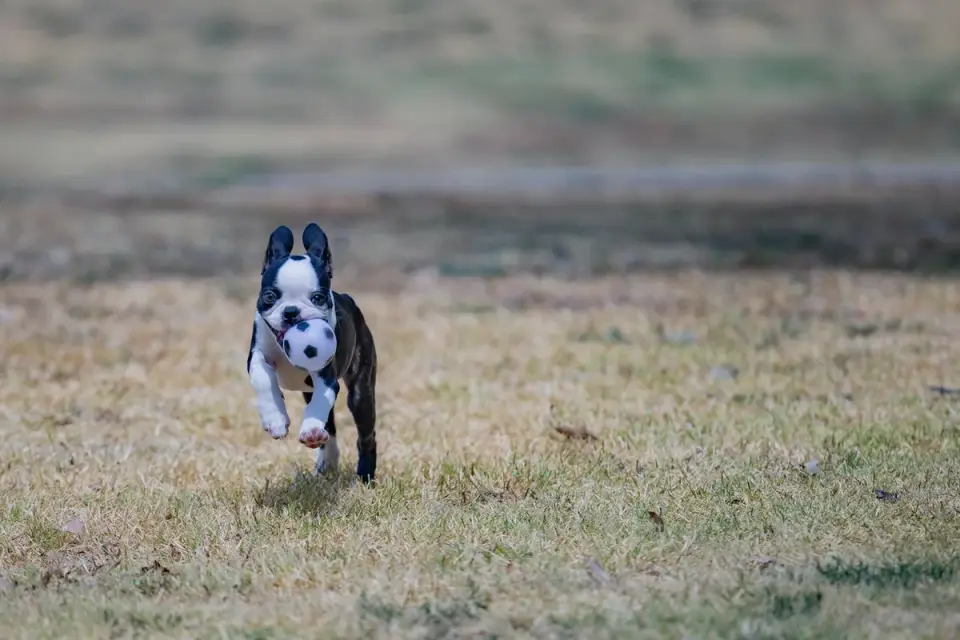
A 5-year-old, 68-pound sporting mix I heard about shows the tradeoff. His owner tried to make a latex chicken last by only allowing fetch in the hallway, 10 minutes at a time. It worked for nine evenings — no damage, great recall reps, dog slept well. On night ten she took a phone call and left him to self-entertain for maybe four minutes. He peeled the sewn tail off in one strip and gagged before spitting it out. The failed approach wasn’t fetch; it was trusting a thin toy to cover boredom instead of swapping to a food-stuffed rubber toy for solo time.
Where I bend the usual take-it-away rule
Puppies in that mouthy window complicate everything. If you’re wondering When Do Puppies Stop Teething and Need Different Toys? you’re asking the right question, because sore gums love soft latex and adult jaws destroy it.
For a teething puppy under direct lap supervision — you on the floor, toy in your hand for tug, puppy chewing the middle while you stabilize the ends — I’ll allow short latex sessions for comfort and handling practice. What changes is the setup: you hold one end, sessions run 3 to 5 minutes, and the toy lives on a high shelf otherwise. If you need to read body language during that tug-shake game, see Play Bow or Aggression? Reading Dog-to-Dog Signals.
An 8-year-old toy breed with only 9 remaining teeth and early arthritis bends the rule the other way. She couldn’t grip hard rubber anymore and had stopped playing for three weeks, owner worried about stiffness. With her on an orthopedic bed 4 feet from her owner, a small soft latex squeaker brought back gentle nose-nudges and 2-minute carries twice daily without mouth pain. We kept it strictly interactive, washed hands after handling, and retired it at the first surface crack — comfort play, not chew play.
What to do tonight
Buy for the jaw in front of you, not the video. If your dog dissects plush, treat latex as a supervised fetch-and-squeak toy and store it out of reach between sessions. Retire it early — a $9 toy is cheaper than an obstruction workup.
Sources
- Selecting Safe Toys for Your Pet — American Veterinary Medical Association
- Destructive Chewing in Dogs — ASPCA