On this page
Tug looks simple until the rope starts shredding, so supervise play with a rope tug toy by checking the toy, setting rules, and ending on your cue.
The 60-second safety checklist I use:
- Check the rope before each game — no long frays, exposed core, or loose knots
- Play in open space with footing, never around necks, chairs, or stairs
- Keep tugs low and side-to-side, not high and yanking up
- Teach drop or trade with food, and pause if teeth hit skin or arousal spikes
- Put the rope away when you stop — it is not a chew-alone toy
- End fast and call your vet if your dog swallows string, gags, paws at the mouth, or vomits
A 14-month-old Boxer mix weighing 48 pounds kept escalating in a 6-foot apartment hallway, grabbing the rope mid-shake and bumping the wall with his hips. His owner wanted to quit tug entirely because it felt too wild. We moved the game to a carpeted living room, shortened the rope grip to 8 inches from the dog’s mouth, and added a sit-to-start and drop-to-restart rule. After 4 nights of three-minute sessions, his out was clean on the first cue and that hallway shoulder-checking stopped, which made the decision concrete: keep tug, change the setup and supervision, not the dog.
Is Tug Actually Worth the Hype?
I see why this game trends. It burns energy fast, builds grip and shoulder control, and may help support mobility and recovery when it is played with good mechanics rather than frantic pulling.
What tug can realistically do for diet, mobility, and recovery is modest but real: short bouts can support muscle tone and handler focus without a long run, which matters forhousebound days. Ground an integrative claim in the nutritional evidence and the picture stays honest — play does not replace food therapy, conditioning, or rehab, it just makes the rest of the plan easier to stick to. What it cannot do is fix guarding, reactivity, or a sore neck on its own.
Watch body language the way the American Kennel Club describes for structured tug — loose body, play bows, and re-engagement mean keep going, while stiffening, hard staring, or grabbing clothes mean pause. That lens keeps you honest about arousal. For help telling the difference in multi-dog play, see Play Bow or Aggression? Reading Dog-to-Dog Signals.
The Rope Fail I Keep Seeing on Repeat
A family with a teething 5-month-old Beagle left a knotted cotton rope in the crate for 3 nights because the puppy loved to gnaw it to sleep. By day four the end had unraveled into 2-inch strings and the puppy was passing soft stool with visible fibers. They had treated an interactive tug toy like a solo chew, and the tradeoff bit them: unsupervised chewing shreds fibers faster than supervised tugging ever will. We tossed that rope, switched crate chewing to rubber, and made rope a humans-only, put-it-on-a-shelf toy. Stool normalized in 48 hours without a vet visit, but string ingestion can obstruct, so that outcome was luck, not proof.
Inspect like you mean it. If you can pull a strand longer than a grain of rice with light tension, trim it or retire the toy. Puppies in that chewing stage need different textures anyway, which is why I point owners to When Do Puppies Stop Teething and Need Different Toys?.
How I Run a Clean Game
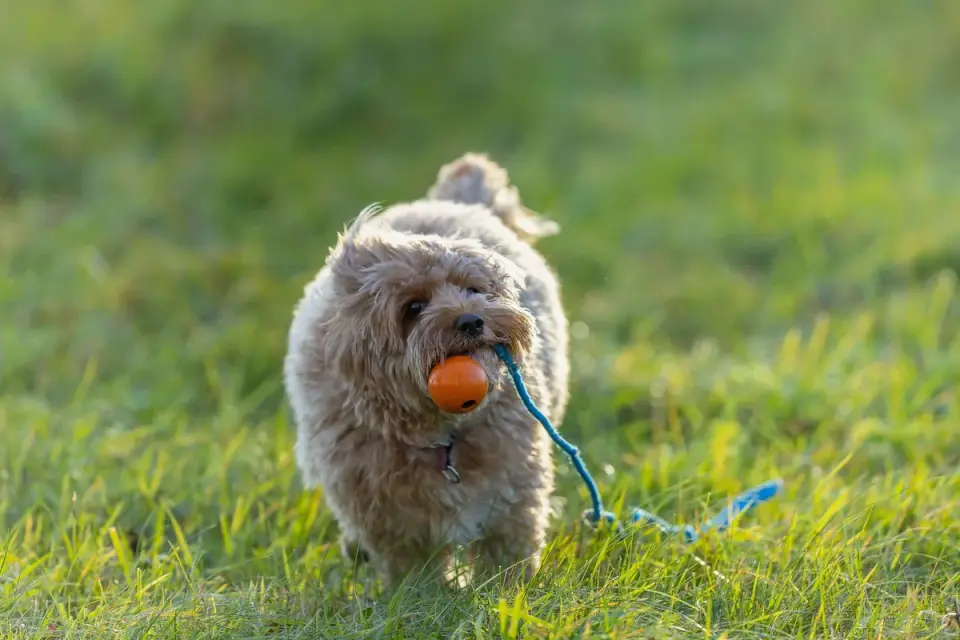
Keep sessions short. Two to four minutes beats 15 minutes of escalating chaos.
Start with a sit. Present the middle of the rope, let the dog grip, then tug side-to-side at dog-shoulder height. Let the dog win sometimes — it builds confidence and keeps the game social.
Teach the off-switch early. Freeze, go boring, say drop once, then mark and trade with a pea-sized treat or a second toy. Resume tug as the reward for dropping. No chasing hands, no prying jaws open.
Protect teeth and necks. Avoid hard vertical pops, do not lift a dog off the floor by the rope, and skip tug entirely if your dog has a wobbly tooth, recent dental surgery, neck pain, or is on restricted activity. The American Veterinary Medical Association selection guidance makes the same point about matching toys to size, chewing style, and supervision level.
Stop the game while it is still good.
When I Have to Bend the Usual Rules
An 11-year-old Shih Tzu with early mobility stiffness still lit up for tug, but standard rules — big rope, strong pulls, long rounds — left her panting and sore for a half-mile evening walk she usually loved. The usual advice to play hard and let the dog win by pulling harder had to bend. We switched to a 10-inch soft fleece tug, played seated on a rug for 90-second rounds, and I did all the gentle shaking while she just held and pranced. She kept her favorite game, finished her normal 0.4-mile loop that night without lagging, and napped instead of pacing.
Senior dogs and tiny breeds do better with low resistance and more wins. Puppies do better with extra trade practice and softer pressure. Budget matters too — you do not need a premium rope to do this well, as I break down in How Much Should You Spend on Dog Toys?.
Quit and check the mouth if you see bleeding gums, a cracked tooth, limping, coughing, or swallowed fiber. Store ropes up high, wash hands after frayed cotton play, and replace the toy when the weave loosens.
Your next step is practical: grab the rope, do the 60-second check, and run one three-minute session with a start cue and a drop cue tonight.
Frequently asked questions
Does tug make dogs aggressive?
No, structured tug with start and stop cues does not create aggression. Pause or end the game if arousal spikes, teeth touch skin, or body language stiffens.
Should I let my dog win at tug?
Yes, sometimes. Letting your dog win builds confidence and keeps the game cooperative. Ask for a drop first, then restart as the reward.
When should I throw a rope toy away?
Retire it when you see long frays, loose strings, exposed core fibers, a weakened knot, or thinning sections that shed when tugged.
Sources
- Pet Toys: How to Choose the Right Toys and Use Them Safely — American Veterinary Medical Association