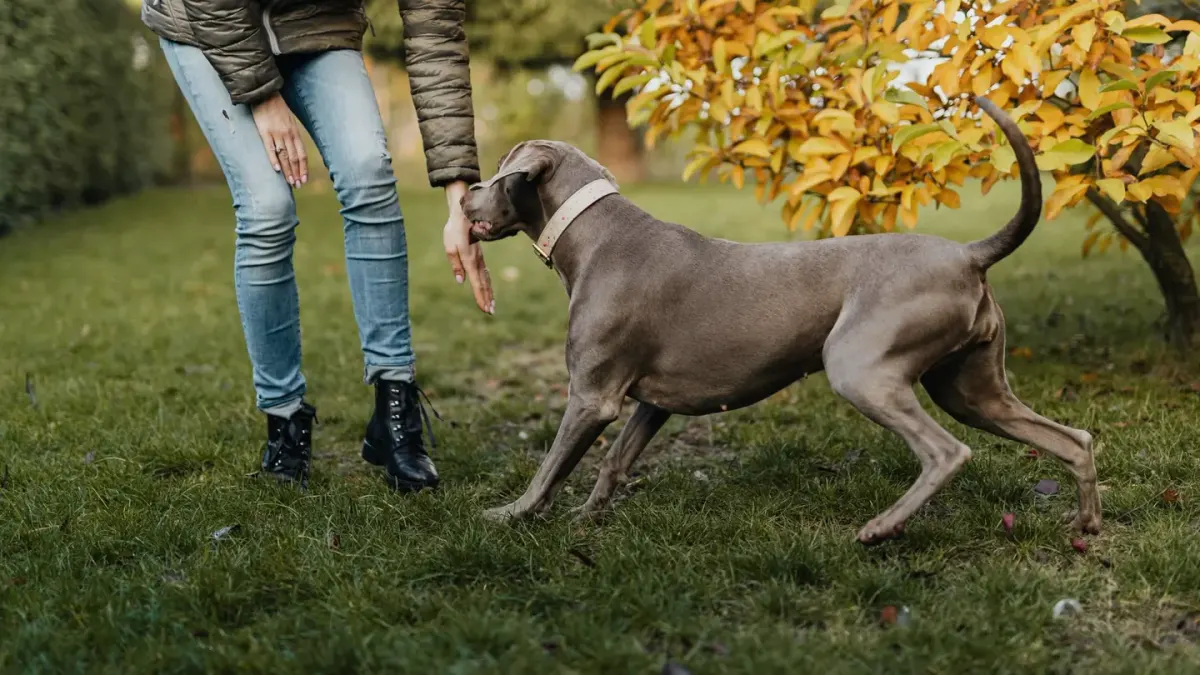
Maya adopted a four-year-old cattle-dog mix who came with a tote bag of 14 toys, and by day ten every one of them sat untouched by the couch while he paced, sighed, and nosed the trash can at 9 p.m. She had walked him 2 miles that morning, fed dinner on time, and still watched him drop a squeaker after two chomps and stare at her. The question she was really weighing was not which toy to buy next, but whether a smaller, fresher set — swapped on a schedule that protected his teeth, weight, and joints — could make play feel worth doing again.
That instinct tracks what behavior teams describe: novelty plus the right kind of interaction matters more than volume. VCA Hospitals notes that under-stimulated adult dogs invent their own jobs, from chewing baseboards to demand barking, and that structured enrichment helps redirect that energy. The American Society for the Prevention of Cruelty to Animals frames the same problem as normal behavior with nowhere to go, not disobedience.
The toy box is full but the dog is still bored
Adult dogs habituate. The fifth exposure to the same squeaker produces less sniffing, less carrying, less chewing — not because the dog is stubborn, but because the outcome is fully predictable. Food therapy and rehab teach the same lesson I apply to supplements: dose and timing decide whether an intervention can realistically support daily function. A toy left out around the clock is a background object. A toy that appears for 20 minutes, stuffed or tossed with you, becomes an event.
Start by sorting what you already own into four jobs, then keep only what is safe and usable. Chew, chase-tug, food-puzzle, and comfort-snuggle cover most adult preferences without buying a haul. Check seams, squeakers, rope fray, and rubber cracks, and pull anything stiff enough to risk a slab fracture in a hard chewer. If you are unsure whether restlessness is plain boredom or something tighter, read Boredom vs Separation Anxiety: How to Tell the Difference before you rotate, because panic at departures needs a different plan than an underemployed evening brain.

A rotation that keeps novelty alive for two weeks
Keep six to eight toys total in play and store the rest out of sight. Put out two from different jobs — say one chew plus one food puzzle — for three to four days, then swap. Wash rubber and silicone on swap day so smell resets too. That three-day window may help support interest because the dog never fully habituates, yet sees each favorite often enough to build a habit around it.
The middle failure I see looks like this: a guardian of a six-year-old, 52-pound pit-type dog tried strict minimalism after watching toy-swap videos, boxing all but two hard rubber toys for a full month to force novelty. For the first six nights it worked; chewing on the couch edge fell from daily to twice. Then week three stalled. The dog started skipping the rubber, licking his foreleg after meals, and gaining restless energy that spilled into 5 a.m. whining for three mornings straight. The tradeoff was too narrow a menu with no licking, sniffing, or soft-carry outlet, plus no human game attached. We widened the box back to five toys across three categories and added a ten-minute scatter-feed in grass, and engagement rebounded without buying anything new.
Pair each swap with you. The American Kennel Club emphasizes matching enrichment to how a dog likes to play, and owner-led games carry that point. Toss the ball for five retrieves, trade for a treat, then put it away while interest is high. Stuff the puzzle with part of dinner rather than extra calories, which matters for adult weight and joints. A nutrition lens helps here: enrichment that replaces bowl volume may help support healthy weight maintenance far better than enrichment layered on top of a full bowl.
Short reset beats a bigger basket.
Track one marker so you know it is working. Note couch-chewing attempts, evening pacing minutes, or how long a puzzle holds attention, and compare week to week. For budget context on what to keep versus replace, How Much Should You Spend on Dog Toys? is a useful guardrail.
When you have to bend the tidy rotation
The usual advice — fewer out, frequent swaps — bends for dogs with mouth pain, anxiety, or destruction risk. I think of a household with a nine-year-old, 68-pound senior Lab with worn canines who fit the adult-dog pattern but could not safely use the standard chew rotation. The owner kept trying to pull the one soft plush he loved because every guide said plush equals clutter. After two vet dental rechecks in four months confirmed sore teeth, they did the opposite: they left that single comfort toy out continuously and rotated only the other two slots around it, swapping a snuffle mat and a slow feeder every Sunday for six weeks. Nighttime pacing dropped from about 40 minutes to under 10, and he stopped guarding the plush once it was no longer threatened with removal.
Keep that exception in mind. Leave a true comfort object out if removing it raises stress. For power chewers, supervise squeakers and plush and save them for interactive sessions only. If teething rules are still echoing in your house from an earlier life stage, When Do Puppies Stop Teething and Need Different Toys? explains why adult choices should shift toward durability and dental safety.
End on this line: rotate less, play more, and let the dog’s evening behavior grade the plan.
Frequently asked questions
How many toys should be out for an adult dog at once?
Most adult dogs do well with 4 to 8 toys out, drawn from 2 to 3 play categories, with the rest stored away and swapped every 3 to 4 days.
How often should I rotate dog toys?
Swap 1 to 2 toys every few days and wash food toys on swap day. If interest drops or destruction rises, change the category mix rather than adding more toys.
What if my dog ignores every toy?
Pair toys with short human-led games, use part of dinner in puzzles instead of extra treats, and check for pain, anxiety, or separation distress if disinterest lasts more than a week or two.
Sources
- Common Dog Behavior Issues — The American Society for the Prevention of Cruelty to Animals