
Most puppy toy bins fail all at once, right around the time that soft squeaker starts coming apart in strips.
I see it in a 7-month-old, 48-pound Lab mix who came in for a cracked puppy Kong and bleeding gums. He had finished teething three weeks earlier, his adult canines were fully erupted, and his owner was still buying the same extra-soft teething rings from month three. By day 10 with his stronger bite, he was shearing off chunks instead of denting them, and the toy that once soothed his mouth had become a foreign-body risk. That shift from compression to destruction is the decision point, and for most medium and large breeds it lands between six and nine months.
Puppy rubber is formulated to deform under a deciduous tooth and an immature jaw. Adult dentition changes the leverage entirely. Once the 42 adult teeth erupt and the temporalis and masseter muscles mature, bite force climbs and the periodontal ligament is built to handle sustained load, according to background on dental development from the Merck Veterinary Manual. Softer compounds then fatigue faster, which is why I ground an integrative claim in the nutritional evidence here: chewing itself does not replace diet or dental care, but appropriate hardness may help support normal chewing behavior and gum stimulation during recovery from teething inflammation without promising cleaner teeth.
I saw the soft-to-hard fail on camera, then in the exam room
A 10-month-old, 22-pound French Bulldog had the opposite problem. Her owner upgraded too fast after watching a viral indestructible-toy test, swapping every plush for dense nylon and a rock-hard ball by day 14 of the new bin. She stopped playing, started guarding the one soft toy left, and chipped enamel on an upper premolar from repetitive hard chewing. We pulled the hardest chews, kept one supervised plush for carrying, and moved her to medium-density rubber that gave under thumbnail pressure. Play returned within three weeks, and the guarding faded once choice returned.
That tradeoff is common.
Why adult toys have to work differently, not just tougher
Puppy toys prioritize softness to protect baby teeth and encourage mouthing. Adult toys prioritize controlled deformation and replaceability. General dog-care guidance from the American Veterinary Medical Association emphasizes supervision and matching size and chewing intensity to the dog, and chewing-behavior overviews from VCA Hospitals make the same point about redirecting destructive chewing to appropriate objects.
In practice I look for failure mode, not marketing labels.
If a toy dents and rebounds, it still fits. If it cracks, splinters, sheds ribbons, or can be compressed to fit entirely behind the canines, it is done.
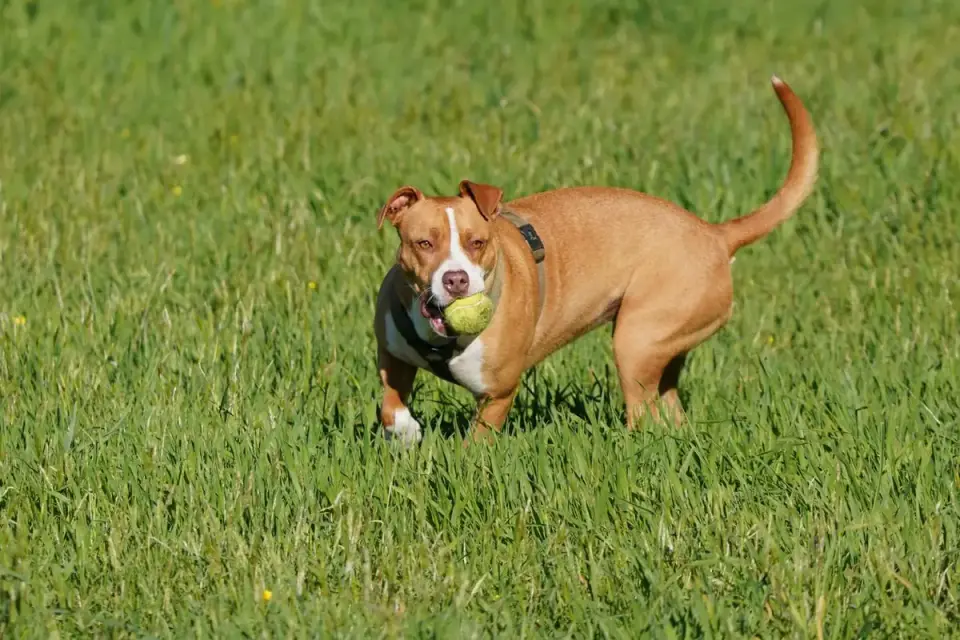
Small breeds often need the upgrade later on hardness but earlier on size, because a toy that fit a 12-week-old mouth becomes a swallowing hazard at eight months even if the dog is gentle.
The 6-pound senior puppy nobody plans for
A 13-month-old, 6-pound Chihuahua mix kept her puppy plushes because she never destroyed anything. The edge case was not strength but dentition and habit. She retained one upper canine until extraction at 14 months, and her owner kept offering a tiny, worn squeaker with a loose seam because she loved it. That thin fabric over a compressed squeaker is an obstruction risk far beyond what her jaw suggests. We retired anything with exposed stuffing or a palm-sized squeaker, kept short supervised plush sessions, and shifted her to small adult-density rubber and flat crinkle toys sized so she could not wedge them sideways.
Age in years matters less than teeth, weight, and behavior here. A 1-year-old 70-pound power chewer and a 1-year-old 8-pound mouth-only dog do not graduate to the same shelf.
Retire puppy-soft rubber once adult teeth are fully in and the dog can shear rather than gum the surface, usually around six months for large breeds and closer to nine to twelve months for small breeds still losing teeth. Move up one density step at a time, size up so the toy cannot lodge behind the canines, and keep one comfort texture under supervision rather than removing it cold. More on timing lives in When Do Puppies Stop Teething and Need Different Toys?, and the durability-versus-cost math is clearer in How Much Should You Spend on Dog Toys?.
The strongest counterargument is to keep soft toys longer to protect teeth. I respect it for seniors and post-extraction mouths, but for a healthy adolescent with full adult dentition it trades a small enamel benefit for a larger obstruction risk.
Upgrade when the mouth changes, not the birthday.
Frequently asked questions
What age should I switch from puppy toys to adult dog toys?
Most dogs transition between 6 and 12 months, once all adult teeth are erupted and the dog starts destroying rather than denting puppy rubber. Large breeds often shift around 6 to 9 months; small breeds may need until 9 to 12 months.
How do I know a puppy toy is no longer safe?
Retire it if it cracks, sheds strips or stuffing, holds deep tooth gouges that trap bacteria, or fits entirely behind the canines. Squeakers that can be isolated and swallowed are another immediate retirement sign.
Sources
- Dental Disorders of Dogs — Merck Veterinary Manual
- Pet Care Resources — American Veterinary Medical Association
- Know Your Pet Library — VCA Hospitals