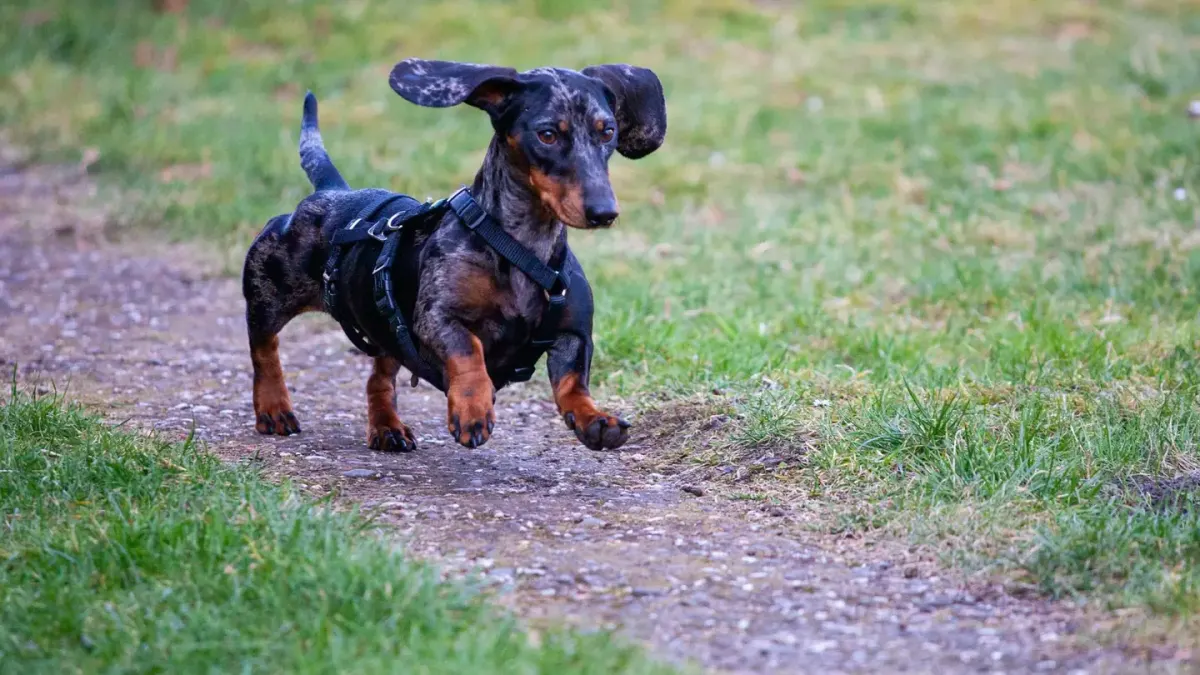
If your dog can still try to get up but can’t finish the job, you need lift assistance — if they can’t bear weight at all, you need a vet visit first.
That fork decides everything below. For the wobbly-but-willing senior, a well-fitted support harness may help support daily mobility and confidence around food, walks, and recovery from rest. For the dog who cries out, knuckles hard, or collapses, stop shopping and get an exam. I weigh supplements and gear the same way: what can this realistically do for diet, mobility, and recovery, and where does it stop?
The quick checklist I use before recommending any lift setup:
- Rear vs full-body: hind-end weakness = rear harness; front-end or whole-body fatigue = full-body with chest + rear
- No neck pressure: load goes through chest, pelvis, and handle — never throat or belly alone
- Washable, padded panels: wide fleece or neoprene under belly and thighs, not thin straps
- Adjustable in 3+ places with quick-release buckles you can undo with a down dog
- Handle placement: vertical lift handle over hips for stairs, plus longer leash-assist strap for walks
- Toileting cutout: rear piece must clear genitals so they can urinate and defecate wearing it
- Traction plan: harness without rugs and ramps still fails on hardwood
A 13-year-old chocolate Labrador in a ranch house started scrambling for 4-5 seconds on laminate every morning, then popping up once his feet found the kitchen rug. His owner was looking at slings, worried about his 78-pound weight and her own back. We trialed a padded rear harness with a hip handle for two weeks, added two low-pile runners from bed to door, and timed his stand-to-walk. By day 10 he was standing in under 2 seconds on the rug path and walking to the yard without a second attempt, and she only lifted for the two back steps. The number told us it was friction plus hind-end support, not a full-body problem.
Is this the viral sling thing all over your FYP?
Yes. The sound is usually someone hoisting a big senior like luggage with a towel under the belly. That clip is why lifting harnesses blew up — and why rehab vets wince.
A towel concentrates force on soft abdomen and can ride forward into armpits. A structured rear harness spreads load across pelvis and thighs, keeps a handle over the center of gravity, and leaves room to eliminate. Same idea, completely different biomechanics.
A common question is whether front-clip walking harnesses can double as lift aids. They can’t. If you want the breakdown on pull control vs support, see Front-Clip vs Back-Clip Dog Harness: What Actually Stops the Pulling — walking harnesses manage direction, mobility harnesses manage weight.
Rear, full-body, or sling — which architecture fits?
For isolated hind-limb weakness from arthritis or post-exercise soreness, rear-only is often enough and cooler to wear. Look for thigh loops plus a belly panel, not just a single strap.
For generalized weakness, neurologic wobble, or a dog that fatigues halfway through a walk, full-body distributes help front and back so you aren’t jackknifing the spine. The tradeoff is heat and bulk, plus more buckles to adjust.
Emergency slings have a place in the car trunk for a bad day. They are not a daily plan.
Support needs change during recovery, so nutritional support for joints and overall condition matters alongside mechanics. VCA Hospitals notes that arthritis management in dogs is multimodal — weight, exercise modification, and veterinary therapies working together — and a harness is one piece of that plan, not a fix for pain itself.
The fail I see when owners size up
A 9-year-old 54-pound pit mix with morning stiffness got a full-body harness ordered by chest girth alone. On paper it fit. In motion the rear section sagged 3 inches low, the front edge rubbed behind the elbows, and after four nights she refused to walk past the driveway and started panting at harness sight. The owner assumed she needed more lift and tightened the top strap. That made the chafing worse.
We switched to a two-piece system where chest and rear adjusted independently, re-measured with a soft tape after a meal when belly was relaxed, and did three 5-minute indoor practice sessions with treats before any stairs. She accepted the new fit because nothing pinched when she sat. The lesson I keep: one measurement does not fit a senior body that changes shape between standing and sitting.

Fit check takes 60 seconds. You should slide two flat fingers under every strap, see no skin bunching at armpits, and watch the dog take 10 steps without the rear shifting sideways.
Keep the spine level when you lift.
How to actually lift without hurting either of you
Bend your knees, keep the handle short, and lift straight up just enough to unweight — not to carry. Think elevator, not crane.
For stairs, stand beside or slightly behind, one hand on the hip handle, other on leash or chest handle to steer. Pause on each landing. For cars, use a ramp first and use the harness only to guide the rear.
Leash mechanics matter here too. A sudden jolt through a lift handle can torque shoulders, which is why I have owners read Bungee Leash vs. Fixed Leash for a Lunging Dog: What Actually Protects Necks and Shoulders before they clip a long lead to a support harness.
Small habit, big difference.
When my usual rear-first advice bends
A 11-year-old 18-pound dachshund mix lived in a second-floor walk-up with 22 steps and no elevator option. Standard advice says full-body for small dogs with back concerns, but he overheated and froze on landing 2 wearing the full vest in July. His owner needed toileting access and speed, not maximum coverage.
We bent the rule: lightweight rear lift with a wide under-pelvis panel for the stair carry, plus a separate padded walking vest for ground-level potty strolls, and a vet recheck for pain control because he had started vocalizing on lift-off. The American Kennel Club emphasizes traction, ramps, and veterinary guidance for older dogs with mobility issues, and that matched here — carpet treads on the middle 10 steps did more than any extra strap. Sometimes less harness plus more environment wins.
So which setup do you actually buy? If your senior tries to stand, slips, then walks okay once up, start with a padded, washable rear harness with independent adjustments and a toileting cutout, plus rugs where they stand. If they tire mid-walk, sway in front, or need help on both ends, go full-body. If they cannot stand, yelp, drag knuckles raw, or worsen over 48 hours, skip checkout and call your veterinarian.
What would change my mind fastest? New pain, not new weakness.
Frequently asked questions
Can my senior dog wear a lifting harness all day?
No. Use it for assisted stands, stairs, and short walks, then remove it to prevent rubbing, matting, and skin irritation. All-day wear traps moisture and hides fit problems.
How do I wash a mobility harness without ruining padding?
Rinse mud promptly, machine-wash cold on gentle in a laundry bag if the label allows, and air-dry fully. Check hook-and-loop and fleece for debris that can chafe.
What are red flags that mean vet, not harness?
Sudden inability to stand, crying in pain, knuckling, dragging paws bloody, incontinence with back pain, or rapid decline over 1-2 days warrant prompt veterinary evaluation.
Sources
- Arthritis in Dogs — VCA Hospitals