Front-Clip vs Back-Clip Dog Harness: What Actually Stops the Pulling
Front-clip harnesses redirect a pulling dog sideways; back-clip harnesses let them lean into it — the right pick depends on your dog, not the trend.
On this page
Start with the fork in the road: if your dog leans into the leash like it’s towing a sled, clip the leash to the front ring on the chest. If your dog walks reasonably close already, the back ring between the shoulder blades is simpler and doesn’t tangle in the legs. That’s the whole decision tree before you get into the why.
I’ve had this conversation more times than I can count with owners standing in my exam room, leash wrapped twice around their wrist, apologizing for their dog’s manners before I’ve even said hello. One client brought in a 58-pound adolescent goldendoodle named Otis who’d pulled her off her feet twice on icy sidewalks that January. She’d tried a back-clip harness first because it looked gentler in the pet store photos. It didn’t touch the pulling — Otis just leaned harder into it, the way dogs do when the leash attaches over their center of mass. We switched her to a front-clip design, and within two walks she reported he was noticeably easier to redirect at the chest instead of dragging her forward from the shoulders. That’s not a cure; it’s physics doing some of the training’s work.
Why the clip position changes everything
A harness doesn’t fight a dog’s pulling instinct on its own — it changes the geometry of where the force lands. A back-clip harness sits the leash attachment near the dog’s center of gravity, over the shoulders. That position lets a dog lean its full body weight forward, which is exactly why research comparing collars and harnesses in brachycephalic and dolichocephalic dogs found dogs pulled with greater force in a back-clip harness than in a flat collar. Dogs aren’t being stubborn; they’re using better leverage.
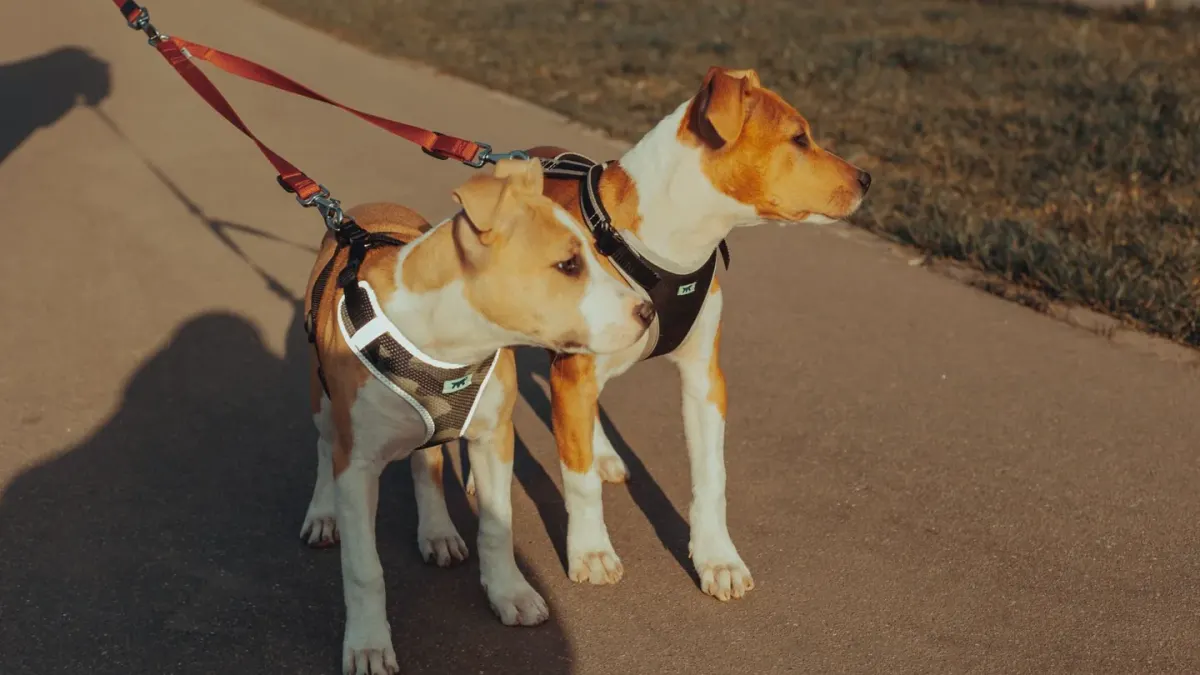
A front-clip harness moves that attachment point to the sternum, in front of the dog’s shoulders. When a dog pulls forward, the leash tension redirects the front of the body sideways instead of letting the dog drive straight ahead. It doesn’t punish the pulling — it just makes pulling mechanically inefficient, which is a very different thing from a training correction.
What the eye and airway research actually says
Owners often assume any harness is automatically safer than a collar, and for airway and ocular pressure, that’s mostly true — but the research is specific about why. The same Veterinary Medicine and Science study found intraocular pressure rose measurably when neck pressure was applied through a collar, but not when the same pressure was applied through a harness. For a dog with thin corneas, glaucoma, or any condition where a spike in eye pressure is a real risk, that’s a meaningful reason to keep the leash off the neck entirely — regardless of whether the harness clips front or back.
Trachea health matters here too. A 2026 review in Frontiers in Veterinary Science on the physical risks of dog-worn equipment underscores that a harness distributes force across the chest and ribs instead of concentrating it on the trachea — which is exactly the tissue small and brachycephalic breeds can least afford to compress. Neither clip position changes that basic advantage over a collar; a front-clip and a back-clip harness both keep pressure off the neck. The difference between the two is about pulling mechanics and fit, not airway safety.
Sizing and fit: where most harnesses actually fail
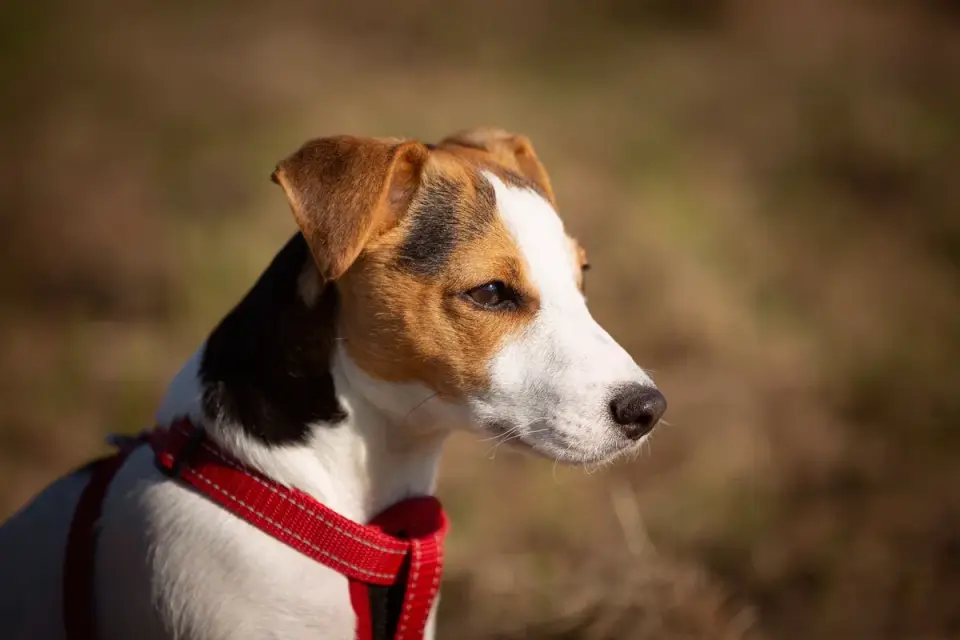
Neither clip style works if the harness itself doesn’t fit. This is the part I see go wrong most often, more than the clip-position debate itself. A harness that’s too loose lets a front-clip design rotate around the dog’s body when they turn, which pulls the chest strap off-center and can rub the armpits raw over a few walks. Too tight, and you’re back to compressing the chest wall on a dog who was supposed to be protected from exactly that.
Two fingers should slide flat under any strap when the dog is standing normally. Check the fit again after the first few walks — webbing stretches, and a harness that was snug out of the box can loosen within a week of regular use. For dogs with barrel chests or narrow waists (many sighthounds and some terrier mixes), a Y-front or adjustable four-point harness usually seats more evenly than a single-strap design, front-clip or back.
If you’re also working on loose-leash walking as a skill rather than just managing the symptom with equipment, our guide to apartment living breeds covers a related fit issue — dogs in tight spaces need gear that doesn’t snag on furniture or doorways, which front-clip designs with a shorter chest strap tend to handle better.
When back-clip is genuinely the better call
This is where I push back on the reflexive “front-clip is always more effective” take that dominates a lot of pet-store advice. A back-clip harness is the right choice for a dog who already walks reasonably well, for short dogs whose legs can catch a low-slung front strap, and for any dog doing structured pulling work like skijoring or weight-pull, where the whole point is to let them drive forward with their body. It’s also simpler to put on one-handed, which matters more than people admit when you’re managing a squirmy dog and a leash at 6 in the morning.
I had a client with an 11-year-old beagle, Daisy, who came in for a mobility recheck and mentioned, almost as an aside, that she’d switched Daisy to a front-clip harness because a video convinced her it was strictly better. Daisy had mild early hip changes and walked slowly enough that pulling was never the issue — the front-clip strap sat low across her chest and was rubbing a bald patch behind her elbows within three weeks. We went back to a well-fitted back-clip harness with a wider chest strap, and the irritation resolved. The lesson wasn’t that front-clip harnesses are bad; it’s that matching the tool to the actual dog in front of you beats matching it to whatever’s trending that week.
The bottom line
Front-clip harnesses solve a specific mechanical problem: a dog whose body weight is doing the pulling. Back-clip harnesses are simpler, often more comfortable for a dog who doesn’t pull hard, and are the right call for structured driving sports. Both keep leash pressure off the trachea and away from the intraocular pressure spikes tied to collars, so the front-versus-back decision is really about leverage and fit, not safety in the collar-versus-harness sense.
If your dog is actively dragging you down the block, start with a front-clip harness and a leash trainer’s basic loose-leash cues — the equipment buys you room to work, it doesn’t replace the training. If your dog already walks politely, don’t fix a problem you don’t have; a well-fitted back-clip harness will serve you fine for years. And if pulling shows up suddenly in a dog who’s always walked well, that’s worth a vet visit before it’s worth a new harness — sudden leash resistance can be an early sign of joint or spinal discomfort rather than a training gap. For everyday walk-safety extras worth pairing with either harness style, see our breakdowns on GPS trackers for escape-prone dogs and dog nail grinders, both of which come up constantly with the same clients asking about harnesses.
Frequently asked questions
Is a front-clip harness always better than a back-clip harness for pulling?
Not always. Front-clip harnesses reduce pulling leverage for dogs who lean their body weight into the leash, but a dog who already walks well often does fine on a back-clip design, and dogs doing structured pulling sports need a back-clip or sled-style harness by design.
Can a back-clip harness hurt my dog's neck the way a collar can?
No. Both front-clip and back-clip harnesses keep leash pressure on the chest and ribs instead of the neck, which is the main airway and ocular-pressure advantage a harness has over a collar regardless of clip position.
How do I know if my harness fits correctly?
You should be able to slide two fingers flat under any strap while the dog stands normally, with no gapping at the neck or rubbing at the armpits. Recheck fit after the first few walks, since webbing can loosen with use.
Sources
- Effect of a Collar and Harness on Intraocular Pressure and Respiration Rate of Brachycephalic and Dolichocephalic Dogs — Veterinary Medicine and Science (Wiley)
- Health implications of dog-worn equipment: a review of known and alleged physical risks — Frontiers in Veterinary Science