On this page
If your For You page is all chunky pitties strutting in thick padded harnesses with traffic handles and velvet linings, I get the pull.
They look sturdy. They look comfy. But for a 70- to 110-pound dog that hits the end of the leash like a linebacker, what matters most isn’t the padding — it’s whether those shoulders can swing free and whether you can dial in the fit in five places.
Shoulder freedom or extra padding: pick your side
Here’s your fork: do you want a harness that looks protective, or one that lets a big dog move?
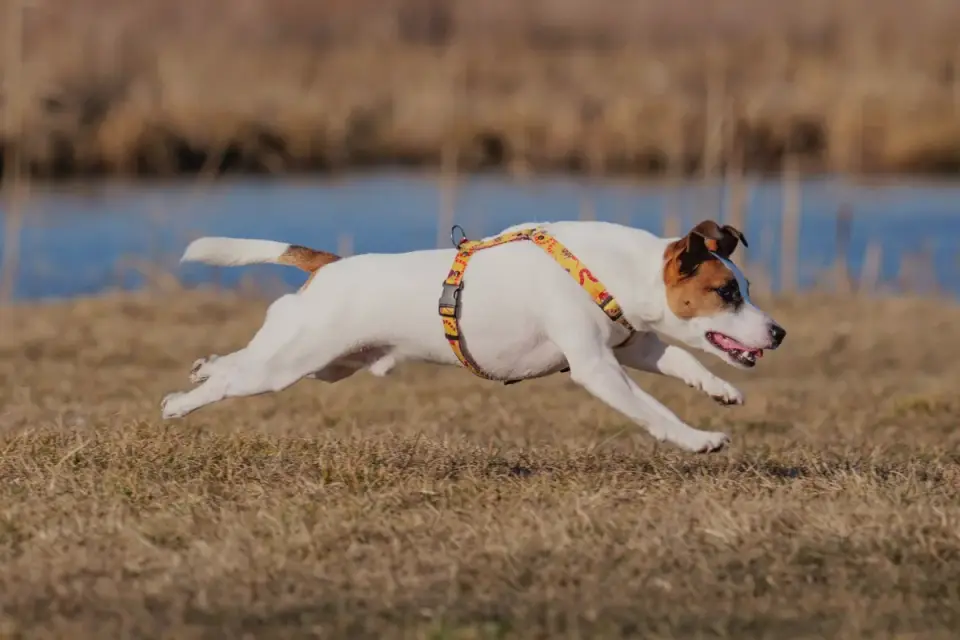
Vets often see the same pattern in practice with large, pully adolescents — redness in the armpits, a chafe line behind the elbows, and a chest strap that has crept up toward the throat by the end of the block. The owner did nothing wrong. The harness was just built with a wide chest panel and stiff edges that pin the shoulder blades with every stride.
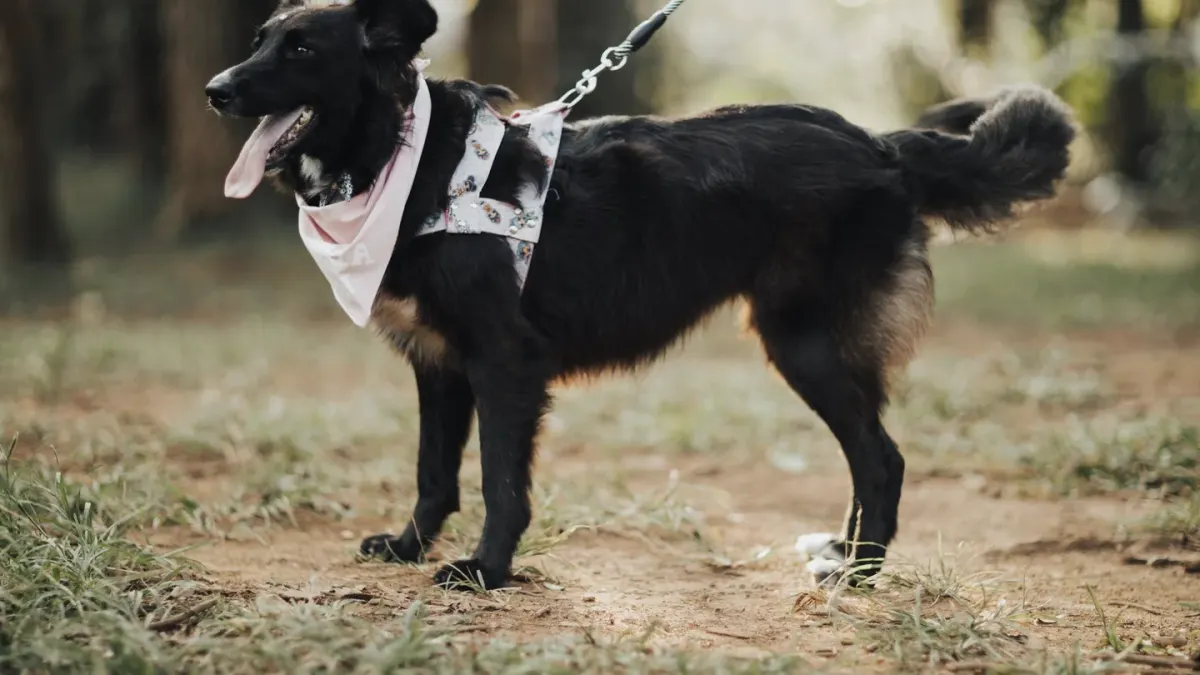
For strong dogs, I prioritize a Y-shaped front that sits on the breastbone, leaves the point of the shoulder visible, and keeps pressure off the trachea. You can learn the basic placement from the Ruffwear guide, then take it one step further for big breeds: watch your dog walk toward you and away from you. If the front dips, twists, or the elbows hit webbing, that’s a fit fail — no matter how plush it feels in your hand.
Fit wins.
Why big dogs pay more for a bad fit
A 15-pound dog can tolerate a so-so harness. An 85-pound dog multiplies every pressure point.
When the neck opening is too tight or the chest strap rides high, strong pullers cough, gag, or start to weave and crab to unload a sore shoulder. When the girth is too loose, they can back out of it at the worst moment — squirrel, skateboard, loose off-leash dog. That’s why adjustability beats styling for this weight class. Look for five adjustment points — both sides of the neck, both sides of the ribcage, plus the chest length — with metal or heavy-duty hardware that doesn’t slip under load.
Clip position matters here too. A front clip can help redirect a leaner, while a back clip keeps things simpler for a trained loose-leash walker, and I break down that trade-off in Front-Clip vs Back-Clip Dog Harness: What Actually Stops the Pulling. For neck and shoulder safety on a lunger, pair that choice with the right connector in Bungee Leash vs. Fixed Leash for a Lunging Dog: What Actually Protects Necks and Shoulders.
And to be honest where the preventive evidence is thin: we don’t have strong trials proving one padded brand prevents shoulder injury better than a well-fitted minimal harness. What we do have is biomechanics, daily exam findings, and a lot of sore armpits that clear up once the shoulder is freed.
The 2-minute fit check that beats the size chart
Size charts lie for deep-chested mixes, blocky bully bodies, and fluffy double coats. Do this check in the living room before you keep the tags on.
You want two fingers flat under every strap, a sternum piece centered on bone — not tipped into one armpit — and at least two inches of clearance between the girth strap and the front leg when your dog is standing square. Have your dog sit, down, and shake. The harness shouldn’t gape, spin, or saw forward over the shoulders.
Then walk 100 feet and recheck. Big dogs settle into gear the way we settle into boots. If you have to yank the straps to re-center it after half a block, size down or try a different cut with more neck adjustment. If you hike with a long line, the same fit rules apply before you add length — see Biothane vs Nylon vs Leather Long Line: Which One Actually Holds Up?.
When fancy actually helps — and when to skip it
I’m not anti-features. I’m anti-features-first.
A padded chest plate can help a dog with almost no body fat or thin skin, and a back handle can help you steady a senior on stairs or load a big dog into an SUV. But handles, extra D-rings, and tactical MOLLE add bulk and heat, and they don’t fix a harness that binds the scapula.
Skip fleece-lined armpit wraps if they bunch when wet, skip stiff no-pull straps that cross the shoulder joint, and skip anything you can’t wash easily — because a smelly harness gets left in the closet.
So here’s my take-home for your cart: buy for shoulder line and adjustability, prove it with the 2-minute fit check, and only then decide if you need padding or a handle.
Sources
- Front Range Dog Harness Fit Guide — Ruffwear