Bungee Leash vs. Fixed Leash for a Lunging Dog: What Actually Protects Necks and Shoulders
A bungee leash softens the jolt of a lunge; it doesn't fix why your dog is lunging in the first place.

On this page
Here’s the decision fork before you spend money: are you trying to survive the next six weeks of walks with a dog who lunges at squirrels, bikes, and other dogs, or are you trying to actually change the behavior? A bungee leash answers the first question. It does nothing for the second. I tell owners that distinction on the first visit, because it changes what they buy and what they expect from it.
Quick answer: what to buy for a lunging dog
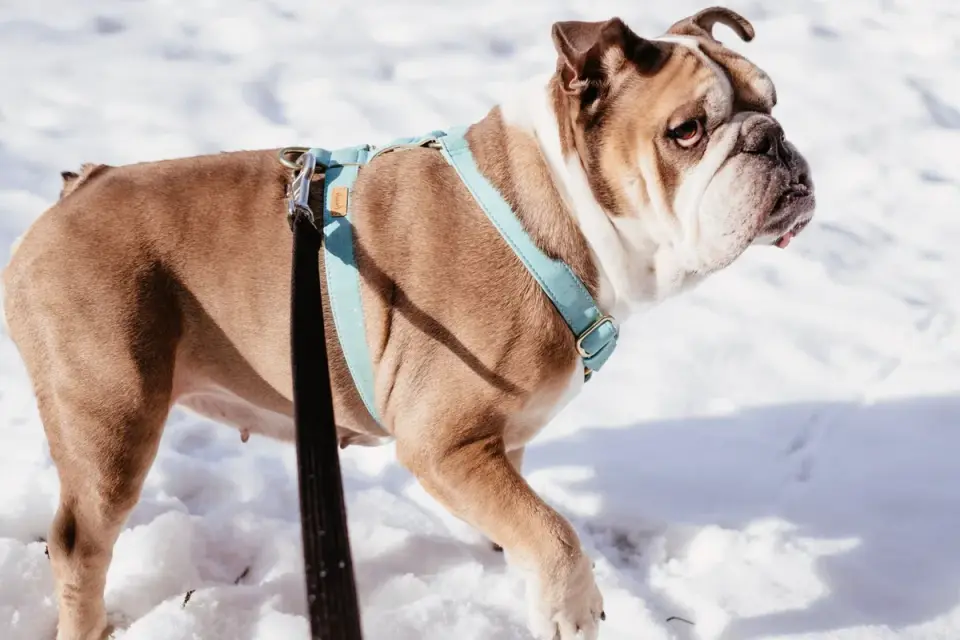
- If your dog lunges occasionally and you mainly want to protect your shoulder and their neck — a bungee (shock-absorbing) leash, paired with a well-fitted harness, is a reasonable buy.
- If your dog lunges hard, frequently, or at triggers you can predict — a fixed leash with a front-clip harness gives you more precise control than stretch alone.
- If your dog is still on a flat collar — switch to a harness before you touch the leash question at all; the pressure math on a collar is worse than most owners assume.
- If lunging is frequent, not occasional — the leash is a management tool, not a fix. Pair either option with reward-based training aimed at the trigger itself.
- Never use a bungee leash off-leash-adjacent, near roads, or with a retractable mechanism — the stretch adds unpredictable distance right when you need control most.
I’ll walk through why each of those holds up below.
What a bungee leash is actually doing
A bungee leash has a section of elastic webbing, usually a foot or two, built into an otherwise normal leash. When your dog hits the end of it, instead of a hard stop, there’s a stretch-and-recoil. That stretch is the entire product. It spreads a sudden jolt over a longer fraction of a second instead of transmitting it all at once through the collar, the harness, and your arm.
That’s a real, physical difference, not marketing. Force applied over more time and distance is lower peak force — it’s the same principle as a car’s crumple zone. For a dog who lunges a few times a walk at a squirrel or a jogger, that softened peak can mean the difference between a startled correction and a jarred shoulder or a wrenched wrist for you.
Where it stops helping: the bungee doesn’t change how far your dog travels before the leash engages, and depending on the stretch length, it can add several inches to a foot of extra reach right as your dog is closing distance on whatever they’re lunging at. If the trigger is another dog or a cyclist, that extra slack matters.
The neck injury math nobody explains at the pet store
This is the part I bring up with almost every client who’s still walking a puller on a flat collar. A Nottingham Trent University study measured the pressure a standard flat collar puts on a dog’s neck at three force levels — a firm pull, a strong pull, and a hard jerk — and found that even the lowest level produced pressures higher than what’s been shown to risk tissue damage in human neck research. Every collar type tested carried that risk once real force was applied.
That finding lines up with what’s covered in more detail on Companion Animal Psychology: Flat Collars Risk Damage to Dogs’ Necks if They Pull or You Jerk the Leash: the recommendation isn’t a specific leash material, it’s getting the point of pressure off the neck and onto a harness, especially for a dog who lunges. A bungee leash on a flat collar is still better than a fixed leash on a flat collar, but neither solves the underlying problem — the collar is the wrong attachment point for a dog who hits the end of the leash hard and often.
If you haven’t made the harness switch yet, our guide to front-clip vs. back-clip harnesses walks through which clip position actually reduces pulling versus which one just redirects it.
I had a client bring in a two-year-old shepherd mix, about 55 pounds, who’d started lunging at delivery trucks on their afternoon route. The owner had a rotator cuff issue from a previous injury and had switched to a bungee leash on her own, hoping it would spare her shoulder. It helped with the jolt — she said the pull felt “softer,” less like getting yanked and more like getting nudged. But the truck-lunging didn’t improve, and by week three she’d started avoiding the route with the most truck traffic entirely. That’s the pattern I see constantly: the bungee leash solves the physical wear on the handler, and owners sometimes mistake that relief for the behavior getting better. It isn’t. The dog is still practicing the same lunge, just with a softer landing.
When a fixed leash is genuinely the better call
A standard fixed-length leash gives you something a bungee can’t: a predictable, unchanging distance between you and your dog. For training work — teaching a dog to check in before hitting the end of the leash, or practicing a controlled turn away from a trigger — that predictability matters more than shock absorption. You can’t reliably time a leash-pressure cue if the leash itself is stretching an unknown amount depending on how hard the dog pulls.
Trainers working reactivity cases also tend to prefer a fixed leash for a simple mechanical reason: it lets you feel the dog’s intention earlier. The stretch in a bungee leash delays that feedback by design — that’s the whole point of it — but delayed feedback is a disadvantage the moment you’re trying to intervene before a full lunge happens rather than after.
Training the behavior, not just cushioning it
None of this leash math replaces addressing why the dog lunges. The American Veterinary Society of Animal Behavior is direct about method here: reward-based training is the recommended approach for behavior modification, and aversive techniques — including leash corrections and jerking — are discouraged because the evidence points to them increasing anxiety and, in some cases, worsening the reactive behavior they’re meant to stop. A softer leash doesn’t undo the effect of a hard correction; it’s a completely separate lever.
For most of the lunging dogs I see, the actual fix is a combination: get the pressure point off the neck, keep the leash length predictable enough to train on, and work the trigger distance down gradually with rewards rather than corrections. The leash is equipment. The behavior change is the part that sticks.
One more thing worth saying plainly, because it’s the part that’s easy to skip past when you’re mid-training-plan: a lunging dog on any leash setup near traffic or an off-leash dog is a safety call first, training second — increase your distance from the trigger before you worry about which leash you’re holding.
Bottom line
If your dog is a moderate, occasional lunger and your own shoulder or wrist is the main concern, a bungee leash on a proper harness is a fair, low-effort upgrade — it won’t make the behavior worse, and it’ll take real force off your body. If your dog lunges hard or often, or you’re doing active reactivity work, a fixed leash paired with a front-clip harness gives you the precision that training actually needs, and the stretch of a bungee will work against you more than for you. Either way, the leash material was never going to be the whole answer — it buys you comfort or control, not behavior change. That part still comes from consistent, reward-based work on the trigger itself, and from getting the fit and clip position right before you touch anything else. If your dog’s routine is still shaky beyond the leash question, a puppy potty-training schedule is a good example of how much structure alone can settle a young, reactive dog’s overall walk behavior — routine helps more than owners expect.
Frequently asked questions
Is a bungee leash safe for a dog that lunges at other dogs?
It can reduce the jolt on your arm and the dog's neck, but the added stretch also gives more distance before the leash engages, which can be a problem if the trigger is close by. A fixed leash with a front-clip harness gives you tighter control in that situation.
Does a bungee leash stop pulling?
No. It softens the force of a pull or lunge; it doesn't teach the dog not to pull. Behavior change comes from training, not leash material.
Should a lunging dog wear a harness instead of a collar?
Research on collar pressure suggests moving the attachment point off the neck is worth doing regardless of which leash you choose, especially for a dog that hits the end of the leash with force.
Sources
- Collars risk causing neck injuries in dogs, study shows — Nottingham Trent University
- Flat Collars Risk Damage to Dogs' Necks if They Pull or You Jerk the Leash — Companion Animal Psychology
- AVSAB Humane Dog Training Position Statement — American Veterinary Society of Animal Behavior