
On this page
Is that frayed edge character or a failure waiting on your next walk? If you walk daily, swim often, or live with a puller or a fast-growing puppy, check fit and fabric now rather than waiting for a calendar date.
A lanky 7-month-old Golden Retriever came in for a weight check last fall at 52 pounds, already on his third collar since adoption. His owner loved the first blue nylon one and kept loosening it as he grew, then switched to a borrowed harness when the collar started curling at the edge. On the exam table the harness rode forward over his shoulders and the collar left a faint red line where damp fur had stayed trapped underneath. She asked whether to punch another hole or start over. That choice — adjust versus replace during rapid growth — is the fork most owners miss.
Still safe, or ready to retire?
Run this 60-second check monthly, weekly for puppies, pullers, swimmers, and seniors:
- Two-finger fit: two flat fingers under collar, snug but not tight over harness chest and belly straps
- Hardware test: buckles click clean, D-ring does not wobble, adjusters hold under tug
- Fabric test: no fraying, glazing, thinning, stretched elastic, cracked leather, or compressed padding
- Smell and skin check: no sour odor, dampness, hair loss, redness, or scratching under gear
- Function check: collar does not slip over ears, harness does not rotate or ride into armpits
If you can pull it over the ears, retire it.
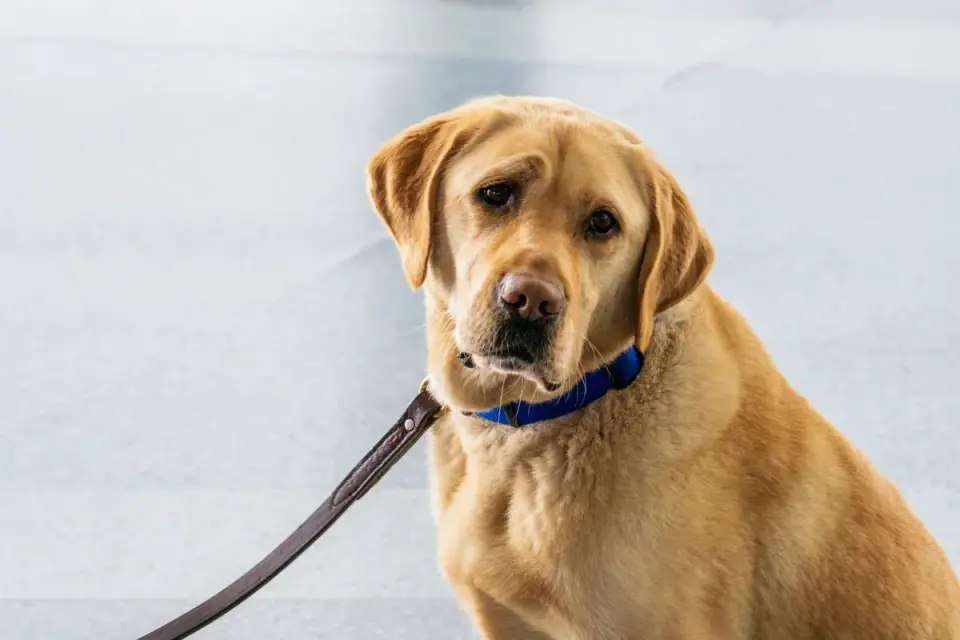
What does that quick check actually catch?
Webbing and leather do not fail all at once. Nylon glazes smooth and thins where the leash loads the D-ring, hook-and-loop loses grip, elastic belly straps creep longer, and leather dries and cracks near holes. From a nutrition and rehab perspective I think in support terms: well-fit gear may help support comfortable movement and steady leash skills, but worn padding or a slipping chest strap cannot unload a neck or steady shoulders the way owners hope.
Fit matters as much as fiber. Guidance from the American Veterinary Medical Association emphasizes snug, monitored fit and identification, and the American Kennel Club has practical fitting walk-throughs that pair well with a hands-on tug test at home. For material differences, our breakdown of rolled versus flat collars shows why thin, damp nylon cords saw at coat and skin faster than wider, softer weaves.
A three-year-old cattle dog mix who logs 2.5 miles with her runner every morning shows the tradeoff I see with wash-and-keep. Her owner did everything right on paper, rinsing the harness weekly after sweaty summer runs and hanging it to dry. After eight months the webbing looked clean but felt slick and thin, the chest strap slipped a full inch during a sprint, and the hook-and-loop belly panel no longer held. She had tried to extend life with extra washing instead of retiring stretched fibers. Clean does not mean strong, and friction plus sweat finishes nylon long before color fades.
How long should gear really last in real life?
There is no single expiration date, because load decides lifespan. As a working range I use:
- Puppy collar: replace every 4-8 weeks during rapid growth, then recheck monthly
- Everyday adult collar, one walk daily: 6-12 months for nylon, 12-24 months for well-kept leather
- Everyday harness, daily walks: 9-12 months for heavy pullers or daily runners, 12-18 months for easy walkers
- Swim, mud, or winter-salt gear: often 6-9 months, rinse after use and dry flat
- Light-use backup or house tag collar: until it fails a check, often beyond a year
Front-clip hardware wears faster because it takes rotational load on every lunge. If pulling is the main issue, fit style matters as much as age — see our front-clip versus back-clip explainer before you buy the same model again. Leash shock matters too; a hard stop on a fixed leash loads stitching harder than many owners expect, which our bungee versus fixed leash guide walks through.
Care extends useful life but cannot restore strength. Rinse salt and pond water, wash with mild soap, air dry away from heat, and condition leather lightly. Care guides like those from Ruffwear stress air drying and regular buckle checks, which matches what holds up in clinic: grit in a side-release buckle causes more surprise releases than torn webbing.
When should you break your own replacement rule?
An 11-year-old Beagle with a wobbly hind end and a history of coughing changed my usual timeline completely. He wears a padded back-clip harness for every potty trip to avoid neck pressure, plus a loose house collar with tags that rarely sees a leash. The padding had compressed over the sternum and the D-ring wobbled in its stitching after two winters of daily use, even though the color still looked fine. For him we replaced the harness early and left the barely used collar alone. Medical need bends the rule: support gear gets retired sooner, idle gear can wait.
Use that same logic for chewing, skin infection, weight change of more than 10%, or a new pulling habit. Replace the piece doing the work, keep the piece resting, and recheck in two weeks.
Bottom line: check monthly, expect to replace the working collar or harness every 6-12 months with daily use, sooner for puppies, pullers, swimmers, and seniors, and let fit and fabric overrule the calendar every time.
Frequently asked questions
How do I know my dog's collar is too worn to use?
Retire it if you see fraying, thinning, cracked leather, a loose buckle, a wobbly D-ring, sour odor that persists after washing, or any redness or hair loss underneath. If it slips over the ears with a snug fit, replace it now.
Does a harness last longer than a collar?
Often yes for neck comfort, but not always for lifespan. Harnesses have more straps, buckles, and padding to wear out, and front-clip rings take heavy load from pullers. Check belly straps and chest padding closely at 9-12 months with daily use.
Can washing make a collar or harness last longer?
Rinsing off sweat, salt, and pond water and air drying helps prevent odor and stiffness. Washing cannot restore stretched webbing, dead elastic, or compressed padding — replace the piece when adjusters slip or fit shifts on a walk.
Sources
- General Pet Care Guidance — American Veterinary Medical Association
- Canine Gear Basics — American Kennel Club
- Harness Care and Fit Guide — Ruffwear