On this page
If the stink is back by day three, stop and decide: did the bath never fully remove it, or is the skin making new smell that fast?
I see this fork in day-to-day practice every spring. A 4-year-old, 68-pound Lab mix comes in smelling sweet-sour around the neck, and the owner says the oatmeal bath worked great for two days and then quit. We lift the ear flap, part the hair behind the jaw, and rub the skin. Fingers come away a little greasy with a faint corn-chip odor. That is not a failed shampoo. That is a dog whose coat stayed damp underneath, whose ears hold moisture, and whose normal yeast and bacteria rebounded fast in the warm fold. By day 3 the owner could already tell which side he sleeps on.
Did the bath actually finish the job?
Most quick home baths do not. Thick undercoat holds shampoo residue and trapped water, and residue feeds odor. Wash in sections, rinse until water runs completely clear and squeaks between your fingers, then rinse again. Keep water lukewarm, lather to the skin — not just the top hair — and give contact time before rinsing.
That timing matters.
Dry like you mean it. Towel, then blow-dry on low warm while brushing to the skin until fully dry, especially armpits, groin, neck folds, and feet. A dog that feels dry on top can stay damp at the base for hours. If you are debating frequency, read Can You Bathe a Dog Too Often? What Actually Happens to the Skin before you add a second bath in one week.
Is that musty odor coming from ears, teeth, or skin folds?
Sniff in zones. Ears first, then mouth, then paws, belly, and tail base. Yeasty ears smell musty-sweet, dental odor smells rotten at the muzzle, anal glands smell fishy at the rear, and generalized seborrhea smells waxy all over.
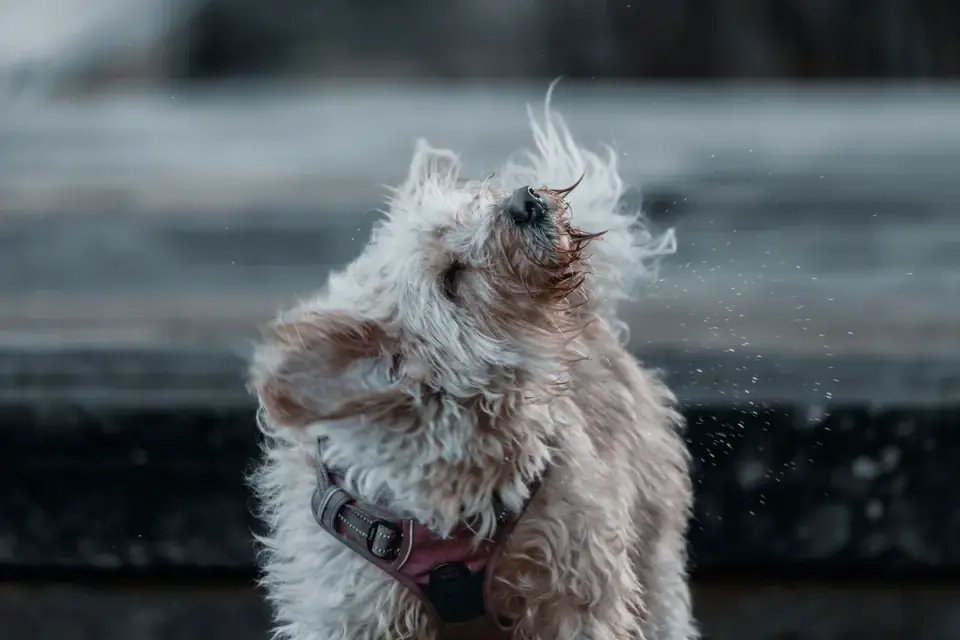
I learned to slow down on this after a case that looked like a simple dirty-dog smell. A 6-year-old, 24-pound Cocker Spaniel came back still smelly three baths in a row, and the owner had switched to a stronger deodorizing shampoo each time. On recheck the ears were red and waxy underneath, the lips folds were damp, and the belly had light flaking. More fragrance only burned eyes and dried the topcoat while the folds stayed moist. We had to undo the plan: stop perfumed shampoos, dry ears deliberately after baths, clean folds, and let the vet check for infection rather than cover it. The counterargument is fair — sometimes a stronger shampoo does fix it — but when odor rebounds on a set schedule, layering scent is what I reject in practice.
Generalized greasiness, scaling, and rapid rebound are classic for seborrhea patterns described by VCA Hospitals, and moist, inflamed skin with pustules or crusts raises concern for secondary bacterial pyoderma explained by the Merck Veterinary Manual. Home care supports comfort and may help maintain barrier health, but it does not resolve infection on its own. Be honest where the preventive evidence is thin: diet and supplements may help maintain coat quality over time, yet no home remedy reliably clears established infection.
Why does staying a little damp matter so much?
Warmth plus moisture grows odor. Yeast and bacteria double fast in a damp undercoat, ear canal, or paw web. That is why the same dog can smell clean at pickup and sour by day two.
After swimming or a bath, ears deserve their own step. Lift, air, and gently dry what you can reach, never probe deep. My routine borrows directly from How to Dry a Dog’s Ears After Swimming (And Why Most Owners Skip the Step That Matters). Wash bedding, collar, and harness too — nylon collars hold weeks of neck odor and re-perfume a clean dog overnight. The American Kennel Club notes bathing frequency depends on coat, lifestyle, and health, which is why drying and bedding often matter more than moving the bath closer.
When is it no longer just a grooming problem?
Call your veterinarian promptly for head shaking, ear scratching, redness, discharge, hair loss, crusts, hot spots, intense itching, broken skin, or a smell that returns in 24 to 48 hours despite thorough rinsing and complete drying. Brachycephalic breeds, Bulldogs, Pugs, Shar-Peis, Spaniels, and any dog with folds, allergies, or a history of skin or ear infections needs a lower threshold.
Here is the edge case owners miss. A 9-year-old, 52-pound mixed breed smelled fine everywhere except her front feet, and only by day 10 after each bath. No ear odor, no flakes, normal skin. She licked one paw at night, and the saliva kept the webs damp enough for yeast to bloom between baths. The fix was not another full bath. It was paw drying after yard time, trimming web hair, an e-collar trial for licking, and a vet visit to check for allergy or pain driving the lick. Feet can drive whole-dog smell.
Rinse fully, dry to the skin, sniff by zone, and treat rebound odor as information. If thorough grooming does not hold for at least a week, let your vet check skin, ears, mouth, and folds before you bathe again.
Sources
- Seborrhea in Dogs — VCA Hospitals
- How Often Should You Wash Your Dog? — American Kennel Club