Can You Bathe a Dog Too Often? What Actually Happens to the Skin
Yes, you can bathe a dog too much — and the tell isn't the coat, it's the skin underneath it getting tight, flaky, or itchy.

On this page
Quick checklist before you grab the shampoo:
- Healthy dog, no skin disease: every 4–12 weeks is reasonable, coat and lifestyle dependent.
- Dog mid-flare for allergies or a diagnosed skin condition: your vet may want baths every 2–3 days for a short stretch, then a taper — that’s a therapeutic exception, not a general rule.
- Signs you’ve overdone it: dull or dry-feeling coat, flaking that wasn’t there before, skin that looks tight or slightly red, more scratching after bath day than before it.
- Rule of thumb on shampoo: a dog shampoo formulated for canine skin pH, rinsed thoroughly, is far less risky than human shampoo or dish soap.
- If you’re bathing more than once a week without a vet’s direction, that’s the point to ask why.
The fork most people get wrong
Owners tend to frame “how often” as a coat question — long hair needs more baths, short hair needs fewer. That’s true as far as it goes, but it skips the part that actually determines whether bathing is helping or hurting: what’s happening to the skin, not the fur. A dog’s skin is protected by a thin layer of natural oils and a lipid matrix in the outer skin layer — cholesterol, free fatty acids, and ceramides that hold skin cells together into something close to a wall (Canine epidermal lipid sampling by skin scrub revealed variations between different body sites and normal and atopic dogs: PMC). Every bath, even a gentle one, pulls some of that away. The question isn’t whether bathing affects the barrier. It does. The question is how much disruption the skin can absorb before it stops recovering between baths.
I’ve had more than one owner come in convinced they were being a responsible dog parent by bathing a itchy Labrador every few days, only for the itching to get worse, not better. In one case — a three-year-old yellow Lab, about 70 pounds, chronic paw-licking that the owner had pegged as allergies — she’d moved to bathing him twice a week with a drugstore oatmeal shampoo because it seemed to calm him down for a day or two. By week three his belly skin was pink and flaking, and the paw-licking was worse at night, after his evening walk on the lawn. We backed the baths off to once weekly with a vet-dispensed shampoo left on for the full contact time, added a rinse-only routine between baths for his feet, and within about ten days the flaking cleared and the nighttime licking dropped off noticeably. The frequency wasn’t the villain by itself — the mismatch between frequency and his skin’s actual capacity to recover was.
What over-bathing actually does
Strip the surface oils too often and the skin barrier stops functioning as a barrier. Water moves out through the skin faster than it should — transepidermal water loss goes up — and irritants, allergens, and bacteria have an easier path in. That’s the mechanism behind the dry, flaky, sometimes reddened skin owners describe after a stretch of frequent baths. It’s a well-documented pattern in veterinary dermatology: harsh or overly frequent cleansing weakens the lipid matrix that holds the stratum corneum together, and dogs with already-compromised skin — atopic dogs in particular — tend to show measurably lower ceramide levels than dogs with healthy skin (PMC). That’s not a reason to avoid bathing. It’s a reason to be deliberate about the product and the frequency together, not just the frequency alone.
Shampoo choice matters more than most owners assume. A shampoo formulated for a dog’s skin pH — which sits closer to neutral than human skin — behaves differently than a human shampoo or a dish soap improvised for a muddy emergency. And contact time matters: a medicated or barrier-support shampoo lathered and rinsed off in under a minute does close to nothing therapeutically, because the active ingredients typically need five to fifteen minutes of skin contact to work (Shampoo therapy in veterinary dermatology: Benefits and practical tips: Shampoo therapy in veterinary dermatology, PMC). So a dog getting bathed “correctly but too fast” and a dog getting bathed “too often but rinsed quickly” can end up looking similar on paper and very different on the skin.
Where frequent bathing is actually the right call
Here’s the honest counterpoint, and it’s the one I lean on most in exam rooms: for dogs with diagnosed allergic skin disease, frequent bathing isn’t the problem — it’s often the treatment. During an active flare, veterinary dermatologists commonly recommend bathing every two to three days for two to four weeks with a therapeutic shampoo, then tapering to a weekly or biweekly maintenance schedule once the skin calms down. That schedule looks like “too much” by the general coat-care rule of thumb, and it isn’t, because the shampoo itself is doing therapeutic work — antimicrobial, anti-inflammatory, or barrier-repairing — that a healthy dog’s skin doesn’t need. This is the piece I want owners to hold onto: frequency alone never tells you if bathing is excessive. Frequency plus purpose does.
I’ll also say plainly where the evidence runs thin. There’s decent consensus on the mechanism — strip lipids too often, barrier function drops, transepidermal water loss rises — but there isn’t a single validated “bathe X times per month” number that applies across breeds, coat types, and climates. Guidance in the four-to-twelve-week range for a healthy dog is a reasonable default, not a rule etched in stone. Safe bathing practice guidance from veterinary teaching hospitals leans on thorough rinsing and species-appropriate products over any fixed calendar interval (Virginia Tech Veterinary Teaching Hospital), and that’s honestly closer to how I coach owners than any specific frequency number.
By the time a dog reaches me for a bathing-frequency question, the story is usually the same: someone loved their dog enough to overcorrect. I think about a senior beagle mix, coat gone a little dull over a summer of near-weekly baths meant to manage a mild grass allergy, whose owner had never been told about contact time or rinse-only options between full washes. We didn’t change much — same shampoo, same underlying allergy plan — we just stretched the interval and added plain-water rinses on the days her feet needed attention instead of a full lather. Coat condition improved within a month. Nothing dramatic happened; that’s usually how it goes when the fix is right-sizing frequency instead of hunting for a different product.
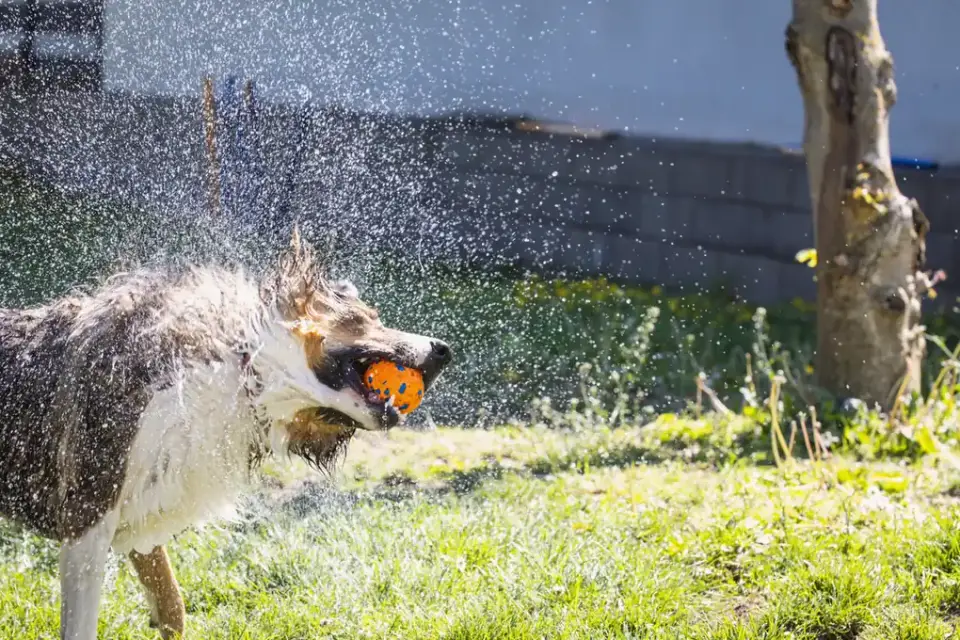
For day-to-day maintenance between baths, the routine that actually holds up is boring on purpose: regular brushing to distribute natural oils and catch debris before it needs a full wash, spot rinses for paws and bellies after muddy walks, and a bath schedule that reflects the dog in front of you rather than a generic calendar rule. If you’re weighing how much of that maintenance load you can realistically handle yourself, how often you should trim a dog’s nails and deciding between at-home grooming and a professional groomer are worth reading alongside this one, since bathing rarely happens in isolation from the rest of the grooming routine.
Where I land
You can absolutely bathe a dog too much — the skin, not the coat, is where you’ll see it first, and dry, flaky, or reactive skin after a stretch of frequent baths is worth backing off and asking why, not pushing through with a “gentler” shampoo. But I don’t want that turned into a blanket “less is always better” rule, because for allergic dogs under a vet’s care, frequent bathing is often exactly the right prescription. The distinguishing question isn’t how often — it’s whether the frequency is matched to a purpose, with a product that’s actually appropriate for dog skin and left on long enough to do its job.
Frequently asked questions
How often should you bathe a healthy dog with no skin issues?
Roughly every four to twelve weeks is a reasonable default, adjusted for coat type, activity level, and how quickly the dog gets dirty or starts to smell.
Can bathing too often actually cause dry, flaky skin?
Yes. Frequent washing strips surface oils and lipids that hold the skin barrier together, which raises water loss through the skin and can leave it dry, flaky, or more reactive.
Is it ever correct to bathe a dog every few days?
Yes, when a veterinarian has prescribed a short, intensive bathing schedule for an active allergic flare or skin infection. That's a therapeutic exception, not a general grooming rule.
Does the type of shampoo matter as much as how often you bathe?
It matters a great deal. A shampoo formulated for canine skin pH, rinsed off thoroughly and left on for the recommended contact time, is far less likely to disrupt the skin barrier than human shampoo or a quick, under-rinsed wash.