Mobile Dog Grooming vs a Salon: What Actually Decides It
The trend isn't wrong that mobile grooming solves a real problem — it's just wrong about which dogs it solves it for.

On this page
Mobile grooming has been showing up on my clients’ phones for two years now — the van pulls up, a groomer in scrubs steps out with a stainless table, and forty-five minutes later a dog that hated every previous salon visit is trotting back inside looking pleased with itself. It’s a genuinely good clip, and it’s not fake. But it’s also not the universal upgrade the algorithm makes it look like. The honest answer to “mobile or salon” depends on three things about your specific dog: how they handle novelty, what’s actually being done to their coat, and whether anything could go sideways that needs a second set of hands.
The dog that made a mobile van look like the obvious answer
A twelve-year-old Cavalier named Biscuit came into my practice for a dental cleanup with a grooming history that told most of the story before the owner said a word — three cancelled salon appointments in a row, each one ending with the receptionist calling to say he’d started shaking and refusing the tub before the groomer even touched the clippers. He weighed nine pounds, had mild mitral valve disease, and the owner had started avoiding grooming altogether rather than put him through it, which meant his coat was matting behind the ears by the time I saw him. We talked about a mobile groomer specifically because his stress response was tied to the waiting room and the crate bank, not the bath itself — remove the other dogs barking twenty feet away and the noise of dryers running on three tables at once, and a lot of that anticipatory panic has nowhere to attach. It worked. Six weeks later his owner sent a video of him standing calmly on the van’s table. That’s one dog’s outcome, not a guarantee, but it’s exactly the profile I now screen for before recommending the switch.
What a mobile groomer’s setup actually removes
The single biggest variable is the waiting environment, not the grooming itself. A salon typically runs several dogs through on overlapping schedules — crates, other clients’ dogs on leash in the lobby, dryers going in adjacent bays — and for a dog whose anxiety is triggered by unfamiliar dogs or a chaotic soundscape, that stacking is the actual stressor, more than the nail trim or the brush-out. A mobile appointment collapses that down to one dog, one groomer, one session, usually inside the same driveway the dog already knows. There’s no car ride longer than the walk to the van, which matters for dogs that get carsick or that panic the moment they’re loaded into a vehicle bound for somewhere unfamiliar. The Fear Free Groomer Certification Program trains groomers in both settings to reduce that anticipatory fear response, but a mobile groomer working solo with one dog has fewer competing stress triggers to manage in the first place, which is a structural advantage, not just a marketing one.
Where the salon still earns its fee
None of that means the salon is the lesser option — it means it’s solving a different problem. A brick-and-mortar shop has more physical space to work a large or heavily matted dog without everyone bumping elbows, and if a dog needs to be restrained more than a groomer alone can safely manage, there’s a second person to call over. That matters more than owners expect: a dog that nips, a senior dog with joint pain who needs to be repositioned carefully, or a coat so matted it requires a slow, staged de-matting session rather than a single pass — all of those go more smoothly with backup on hand. Salons also tend to have more consistent equipment redundancy, so if a dryer or clipper fails mid-appointment, there’s a second one in the next bay instead of a rescheduled trip. And if your regular groomer is out sick, a salon usually has someone else who can step in on short notice, where a solo mobile operator going down for a week means your dog’s grooming gets pushed, full stop.
The credentials that actually tell you something
Whichever format you choose, the credential that matters isn’t “mobile” or “salon” — it’s whether the person holding the clippers has real training behind them. The nationaldoggroomers.com: National Dog Groomers Association of America certifies groomers through written exams and hands-on skills testing, including breed-specific pattern work, and that certification travels with the groomer regardless of whether they work out of a van or a shop. Ask any groomer, mobile or not, what they’re certified in and how they handle a dog that won’t settle — a vague answer is a bigger red flag than the vehicle they show up in.
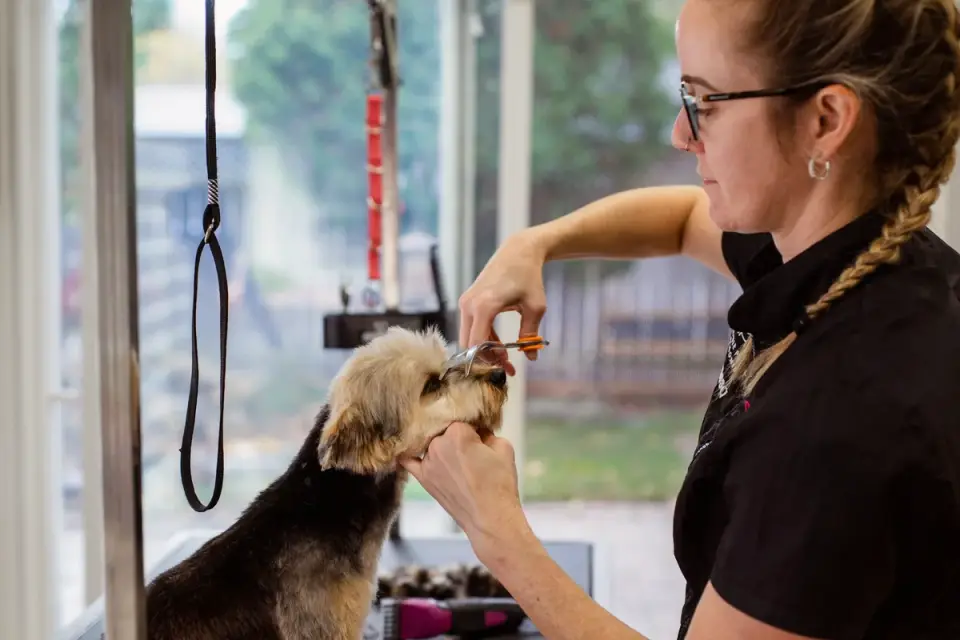
If your dog’s coat needs regular maintenance between full grooming visits, a lot of that upkeep is really a home-care question rather than a mobile-versus-salon one — how often you’re keeping up with brushing, nail length, and dental care in between. Our guide on how often to trim a dog’s nails and our breakdown of what a nail grinder actually fixes both cover the maintenance owners are usually trying to outsource entirely to a groomer, when a chunk of it can happen at home between visits. The same goes for heavy-shedding breeds — if you’re managing a dog through a seasonal blowout, our piece on grooming a German Shepherd through coat blow walks through what a groomer is actually doing differently during that window, mobile or not.
The trade I keep coming back to with anxious dogs specifically
I’ve had this same conversation dozens of times with owners of dogs who freeze up at the salon door, and the pattern is consistent enough that I no longer hedge on it: for a genuinely anxious dog with a manageable coat and no complicating medical issue, I recommend trying mobile first. The cost is usually higher — mobile appointments commonly run more than an equivalent salon visit because you’re paying for the groomer’s travel and solo setup — but the stress reduction for the right dog isn’t a marginal improvement, it’s often the difference between a dog that tolerates grooming and one that needs to be sedated for it. The counterargument I hear most is that mobile vans have less room and lighter-duty equipment, and that’s true — for a heavily matted double coat or a dog that needs real restraint, I’ll still send them to a salon with a second groomer on the floor. But “less equipment” isn’t a knock against mobile for the dog it’s actually built for; it’s just a mismatch when it’s used for the wrong one.
Where I land
Match the format to the dog’s actual failure point, not to what’s trending. If the problem is the waiting room, the other dogs, or the car ride, a mobile groomer solves that directly and usually pays for the price difference in fewer skipped appointments. If the problem is coat severity, size, or a dog that needs more hands than one groomer can safely provide, the salon’s backup and space still win. Either way, ask about certification before you ask about the van.
Frequently asked questions
Is mobile dog grooming actually less stressful, or is that just marketing?
For dogs whose anxiety is triggered by other animals, crating, or a chaotic waiting area, removing that stacked environment is a real structural change, not just a perception. For dogs whose stress is tied to the bath or dryer itself rather than the surroundings, the format matters less than the groomer's handling technique.
Why does mobile grooming usually cost more?
You're paying for the groomer's travel time, fuel, and the fact that they're running a full setup — water tank, generator, dryer — for one dog at a time instead of several dogs on overlapping schedules.
What should I ask a groomer before booking, mobile or salon?
Ask what certification they hold, how they handle a dog that won't settle, and — for a mobile groomer specifically — what happens if a dog needs more restraint or backup than one person can safely provide mid-appointment.
Sources
- Fear Free Groomer Certification Program — Fear Free
- National Dog Groomers Association of America — nationaldoggroomers.com