Hemp Oil vs. CBD Oil for Dogs: What the Label Actually Means
Medically reviewed by Betsy Hershey, DVM, DACVIM (Oncology), CVA — For general education — not a substitute for veterinary care.
Hemp oil and CBD oil for dogs are not interchangeable — one is a fatty-acid supplement, the other a cannabinoid extract with real evidence behind it.

Every few weeks a client sets two bottles on my exam table and asks me to just tell them which one to buy. Both say “hemp” somewhere on the label. One is nineteen dollars, the other is sixty. They assume the price difference is marketing. It usually isn’t — it’s chemistry.
Hemp oil and CBD oil come from the same plant, Cannabis sativa, but from different parts of it, and that distinction changes what the product can plausibly do. Hemp seed oil is cold-pressed from the seeds and contains essentially no cannabidiol (CBD) — it’s a fatty-acid supplement, rich in omega-3 and omega-6 oils, closer in function to a fish oil than to anything with drug-like activity. CBD oil is extracted from the flowers, leaves, and stalks, where the cannabinoids concentrate, and it’s the compound that has actual pharmacokinetic and clinical data behind it in dogs.
I want to walk through where each one earns its place, because conflating them is the single most common mistake I see owners make with this category.
Two products, two jobs
Think of it less as a spectrum and more as a fork. Hemp seed oil is a nutritional add-on. It won’t touch anxiety, seizure activity, or joint pain, because it doesn’t contain the compound responsible for those effects in any meaningful concentration. What it can do is support skin and coat quality through its fatty-acid profile, the same mechanism that makes flaxseed or fish oil useful additions to a dog’s diet.
CBD oil is a different category of product entirely. It’s not a food-grade extra; it’s a cannabinoid that interacts with the endocannabinoid system, and it’s the one that has been studied in a controlled clinical setting. A randomized, placebo-controlled, double-blind crossover study published in Frontiers in Veterinary Science gave osteoarthritic dogs 2 mg/kg of CBD oil every twelve hours and found a significant decrease in owner- and veterinarian-assessed pain scores at two and four weeks, alongside mild liver enzyme elevations in a handful of dogs — a real effect, with a real safety caveat attached to it.
That’s the whole distinction in one sentence: hemp seed oil supports normal skin and coat function; CBD has data suggesting it may help support comfort and mobility in dogs already carrying joint disease. Neither is a cure for anything, and neither should be framed that way on a label.

A dog whose case made me stop trusting the front label
I had a twelve-year-old mixed-breed patient, a sixty-pound dog named Gus, whose owner had been giving him a “hemp joint chew” from a big-box pet store for three months with no change in his hind-end stiffness after rising. When I asked her to bring in the bottle, the ingredient panel listed hemp seed oil, not a hemp extract standardized for CBD content — there was no cannabinoid in the product capable of doing what she’d been told it would do. We switched her to a properly labeled CBD product dosed in the range studied at Cornell, alongside her existing NSAID, and within about three weeks she was reporting that Gus was taking the porch steps again without pausing on the landing. That’s one dog, not a trial, and I don’t treat it as proof of anything beyond what a correctly identified ingredient can do when it’s actually present in the bottle.
That gap between what a label implies and what it contains is not rare, and it’s not accidental. Regulators have been explicit about it: the FDA has issued repeated warning letters to companies making unproven claims about CBD pet products, and the American Veterinary Medical Association has stated plainly that more controlled clinical research is still needed before CBD’s safety and efficacy in dogs can be considered settled beyond the osteoarthritis data that already exists. No cannabis-derived product is currently FDA-approved for use in animals, which means every bottle on the shelf, hemp seed oil or CBD extract, is sold as a supplement rather than a regulated drug.
What that means for how you shop
Because these products sit outside FDA drug approval, the label is doing a lot of unsupervised work, and that’s where third-party verification matters more than the marketing copy. The NASC LIVE: NASC tracks exactly this kind of enforcement action and maintains quality standards that member companies are expected to meet, including seal programs tied to manufacturing practices and adverse event reporting. A certificate of analysis confirming actual CBD content, tested by an independent lab, is the closest thing this category has to proof that what’s on the label is what’s in the bottle. If a company won’t produce one, that’s your answer regardless of what the front of the package says.
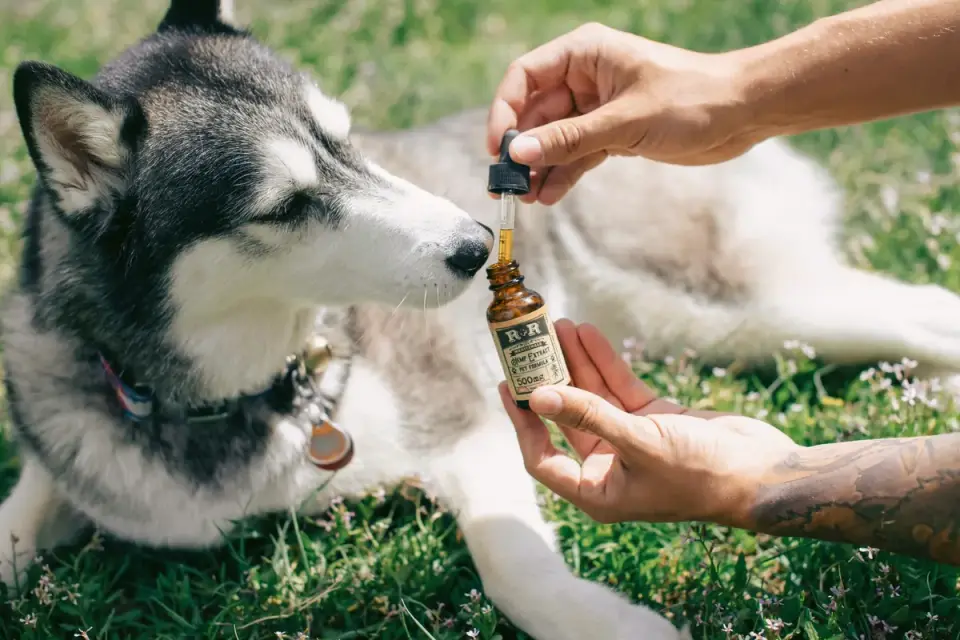
If your dog has healthy skin and a normal coat and you’re simply adding a general wellness fat source, hemp seed oil is a reasonable, low-cost choice — it’s not going to do harm at typical doses, and it’s not pretending to be something it isn’t as long as the label is honest about being seed oil. If you’re managing a specific concern like osteoarthritis pain, the evidence points toward CBD, dosed in the range studied and cleared with your veterinarian first, particularly if your dog is already on an NSAID given the liver enzyme findings from the Cornell data. This is also a good moment to separate this question from dosage form entirely — our guide to chews, powders, and liquids covers how the vehicle affects absorption regardless of which active ingredient you land on, and if joint stiffness is what’s driving the search, it’s worth first confirming you’re looking at arthritis and not normal aging stiffness before choosing either product.
I’ll say this plainly because I don’t hedge it with clients either: I don’t reach for hemp seed oil when a dog needs pain management, and I don’t reach for CBD when a dog just needs a coat-quality boost. Matching the ingredient to the actual job, not the word on the front of the bottle, is the whole decision. Where you buy matters almost as much as what you buy — our breakdown of Amazon marketplace risk versus buying direct applies directly to this category, since mislabeled and diluted hemp products are a documented problem on third-party marketplaces.
The bottom line: hemp oil and CBD oil are not two brands of the same thing, they’re two different ingredients wearing similar packaging, and the one your dog needs depends entirely on what you’re actually trying to support — coat and skin, or comfort and mobility — not on which bottle trended first.
Frequently asked questions
Can I give my dog hemp oil and CBD oil at the same time?
There's no established danger in combining a fatty-acid hemp seed oil with a properly dosed CBD product, but there's rarely a reason to — check with your veterinarian first, especially if your dog is on other medications.
Will hemp oil show up on a drug test or cause a positive THC result?
Hemp seed oil contains no meaningful cannabinoids, so this isn't a practical concern; CBD products should still be checked for THC content on their certificate of analysis, since trace amounts can vary by manufacturer.
How do I know if a "hemp" product actually contains CBD?
Check the ingredient panel for "hemp extract," "CBD," or "cannabidiol" specifically, and ask for a current certificate of analysis — "hemp seed oil" or "hemp oil" alone almost always means no meaningful CBD content.
Sources
- FDA Issues Warnings Over CBD for Animals — American Veterinary Medical Association
- Pharmacokinetics, Safety, and Clinical Efficacy of Cannabidiol Treatment in Osteoarthritic Dogs — Frontiers in Veterinary Science
- FDA Warning Letters Sent to Pet Product Companies — NASC LIVE