On this page
Small Dogs Aren’t Just Little Big Dogs
Every time a viral clip shows a Corgi or a Chihuahua sprinting after a Border Collie on a hiking trail, someone in the comments asks whether that’s actually good for the little dog. It’s a fair question. Great exercise ideas for small breed dogs work with, not against, tiny joints, a delicate windpipe, and rapid-fire metabolisms — and that means the workout can’t just be a shrunken version of what a 60-pound dog does.
A toy or small-breed body isn’t scaled proportionally to a medium or large dog’s. Legs are shorter relative to body mass, joint surfaces are smaller, and structures like the trachea and kneecap groove are simply less forgiving of repetitive impact or sideways torque. None of that means small dogs need less activity — most still benefit from real daily movement — but the shape of that movement matters more than the volume.
The Physiology Behind Why “Normal” Exercise Backfires
The kneecap, or patella, normally tracks in a groove at the front of the femur. In many toy and small breeds that groove is shallower than it should be, and the muscles pulling the kneecap can be slightly misaligned from birth. According to Cornell University College of Veterinary Medicine, patellar luxation is more common in small breeds such as Toy Poodles, Yorkshire Terriers, Chihuahuas, and Pomeranians, and genetics plays a significant role alongside anatomical factors like a shallow femoral groove or general limb malalignment. Repeated jumping off furniture or sharp pivoting during play can aggravate a joint that’s already working with a narrow margin for error.
The airway tells a similar story. Small and toy breeds are disproportionately prone to a progressive weakening of the tracheal rings — the cartilage that keeps the windpipe open. Sustained pressure from a collar during pulling can add mechanical stress to that same structure, which is a big part of why so many small-breed owners get steered toward harnesses.
Growth plates matter, too. In smaller breeds, they tend to close around 6-8 months of age. Repetitive-impact activity — jogging, repeated stair sprints, jumping drills — introduced before that point loads immature cartilage before it’s structurally ready.
Exercise Ideas Built for Short Legs and Fast Metabolisms
Once the mechanism is clear, the practical ideas mostly write themselves. Short, frequent sessions beat one marathon outing. Two or three 10-15 minute walks generally tax a small dog’s joints less than a single hour-long trek, while still meeting the American Kennel Club (AKC)‘s general guidance that some small companion breeds can meet much of their exercise needs through shorter walks and games rather than long-distance work.
Flat, soft surfaces protect joints better than pavement or gravel. Grass, packed dirt trails, or a living room rug absorb more shock than concrete does, which matters most for dogs already showing intermittent hind-limb skipping.
Scent games and food-puzzle “hunts” burn mental and physical energy with almost no joint load — scattering kibble across a yard or hiding treats around a room works a dog’s nose and problem-solving without a single hard landing.
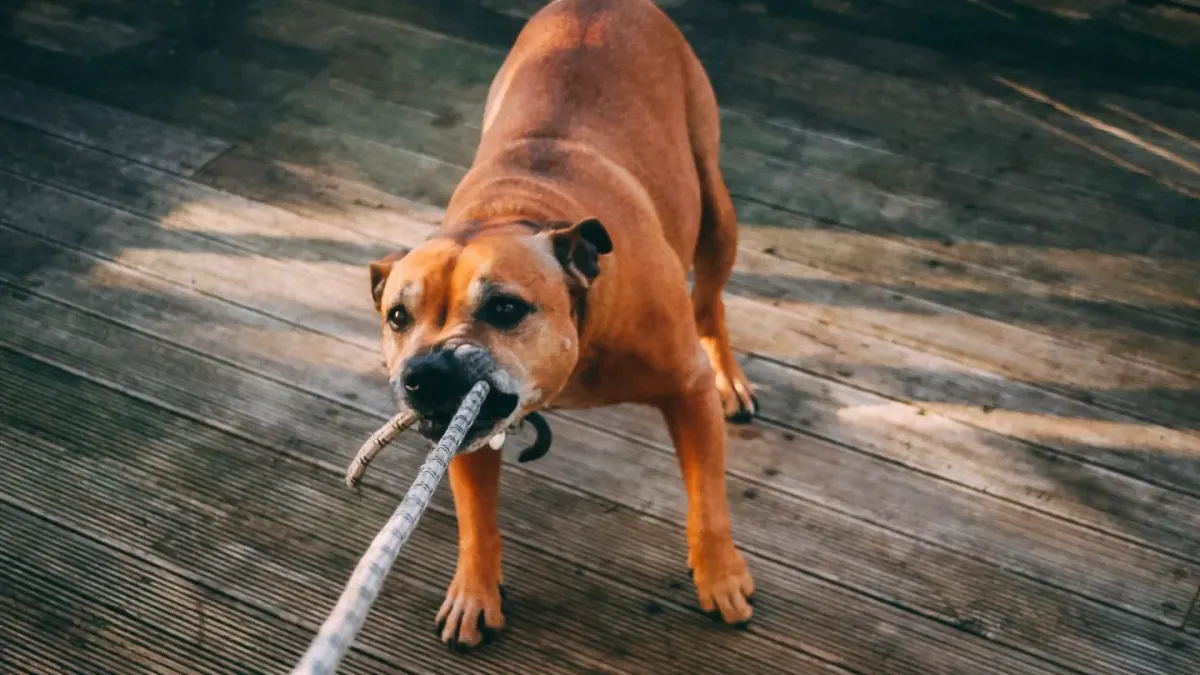
Gentle tug and flirt-pole play, kept low to the ground, lets a small dog chase and pounce in short bursts rather than sustained running. Stop before the dog is panting hard or slowing down; small dogs fatigue and overheat faster than their size suggests.
Stair use should be limited and supervised, not banned outright, especially for breeds already flagged as patellar-luxation-prone.
Gear and Habits That Protect the Joints and Airway
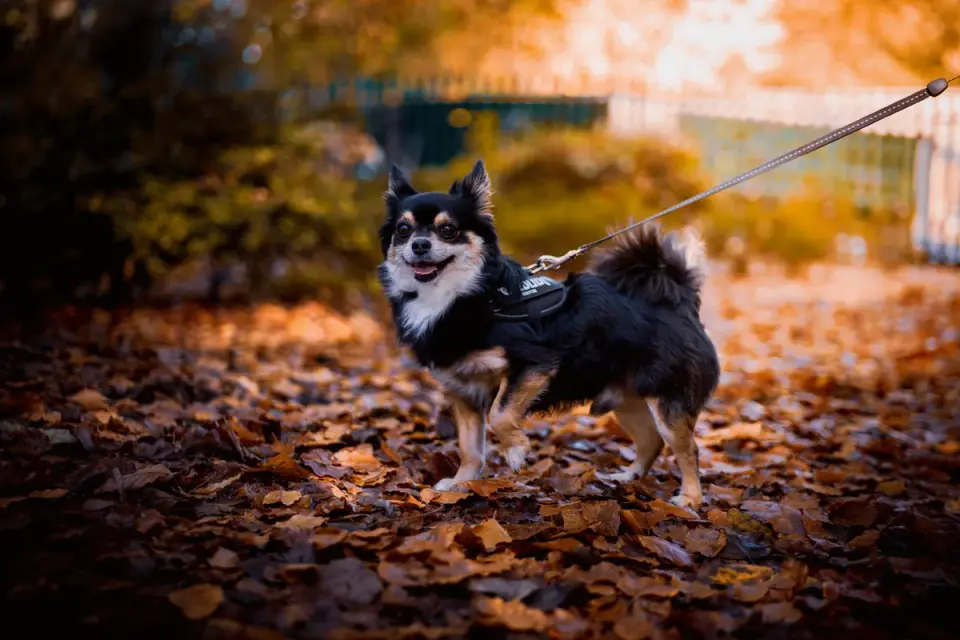
A well-fitted, back-clip harness is the more defensible default for most toy and small breeds, since it moves leash pressure off the neck and onto the chest and shoulders instead. That’s especially relevant for breeds with a known tendency toward tracheal weakening, where sustained collar pressure adds mechanical stress to a structure that’s already compromised.
Jumping on and off furniture, beds, and car seats is one of the more overlooked contributors to knee and back strain in small dogs. A set of pet stairs or a ramp is a low-effort fix that meaningfully reduces repeated hard landings over a dog’s lifetime.
A dog that seems reluctant to play, hides during normal activity, or gets unusually wound up before a walk isn’t just being quirky — that behavior pattern is worth a look through a related Q&A on recognizing when a dog may need calming support, since anxiety and reactivity can shape how safely a dog moves during exercise.
Where Joint-Support Ingredients Fit In
Exercise modification is the foundation, but for a small dog with an existing joint concern or a genetic predisposition toward patellar luxation, it’s fair to ask what nutritional support can realistically add. As a veterinary nutritionist, I’d rather weigh what a supplement can realistically do for diet, mobility, and recovery than oversell it: these ingredients support the joint environment, they don’t rebuild a shallow femoral groove or fix a genetic predisposition.
Glucosamine and chondroitin are among the most-studied joint ingredients in dogs. In vitro and review work has looked at how glucosamine HCl may help limit experimentally induced cartilage degradation (Journal of Veterinary Medical Science), while chondroitin has been studied for its role in supporting healthy synovial fluid homeostasis (Frontiers in Veterinary Science). Green-lipped mussel powder, which supplies omega-3 fatty acids and glycosaminoglycans, has shown anti-inflammatory effects in lab models, including reduced paw swelling and lower markers of inflammation such as TNF-α and IL-17 (Nutrients (MDPI)).
None of that replaces exercise modification, weight management, or a veterinary orthopedic exam for a dog already showing lameness. It’s additive support, not a substitute for the physical-medicine basics. A dog’s overall gut and metabolic health also plays into how well it recovers from activity, which is part of why whole-body nutrition, not just joint ingredients, tends to come up in these conversations — see this breakdown of probiotic options for dogs for that adjacent piece of the picture.
Signs It’s Time to Dial Back and Call Your Vet
A dog that skips or hops on a hind leg, even briefly, after play is telling you something. So is a sudden refusal to jump onto the couch, a honking cough after excitement, or a small dog that seems to run out of steam earlier than usual on a walk it used to handle easily.
Don’t wait for a limp to become constant before booking an exam.
Start tonight with one small swap: trade the next long walk for two shorter ones on soft ground, switch the leash attachment to a harness if you haven’t already, and watch how your dog moves the next day. That single change tells you more about what your dog’s joints and airway can handle than any generic breed chart will.
Frequently asked questions
How much daily exercise does a small breed dog actually need?
It varies by breed and age, but many toy and small companion breeds do well on roughly 20-40 minutes split across two or three short outings, plus indoor play, rather than one long walk. The American Kennel Club (AKC) notes that some small breeds, like Bichons and Maltese, can be satisfied with shorter walks than larger, higher-drive breeds.
Is running bad for small breed dogs?
Sustained running isn't automatically off-limits, but it should wait until growth plates have closed (commonly around 6-8 months in smaller breeds) and be introduced gradually, since repetitive impact concentrates more force on small, less-padded joints.
Should I use a harness instead of a collar for a small dog?
For dogs with a collapsing trachea or a breed predisposition toward one, most veterinarians recommend moving leash pressure off the neck entirely with a well-fitted harness, reserving a collar for ID tags rather than leash attachment.
What are signs my small dog is overdoing it during exercise?
Watch for skipping or hopping on a hind leg, a sudden reluctance to jump onto furniture, a honking cough after excitement, or slowing down mid-walk. Any of these warrants a veterinary exam rather than pushing through.
Sources
- How Much Exercise Does a Dog Need Every Day? — American Kennel Club (AKC)
- Patellar Luxation — Cornell University College of Veterinary Medicine
- Chondroitin and Synovial Fluid Homeostasis — Frontiers in Veterinary Science
- Glucosamine HCl and Cartilage Degradation — Journal of Veterinary Medical Science
- Green-Lipped Mussel Powder and Joint Inflammation — Nutrients (MDPI)