
On this page
If your For You page is full of that metallic clink and close-up embossing videos, here is the fork: are you buying the tough-guy aesthetic, or are you buying a tag a stranger can actually read at 9 p.m.?
In day-to-day practice, vets often see the second part fail. The tag looks great in the unboxing and is blank-silver and unreadable three months later.
Buy it only if it passes this checklist:
- Readable at arm’s length: large block letters, high contrast, pet name plus 2 phone numbers
- Engraved, not printed: deep-stamped or laser-engraved text that you can feel with a fingernail
- Quiet and snag-safe: rubber silencer plus rounded edges, breakaway or S-hook that holds
- Redundant ID: microchip plus collar tag, not tag alone
That is the whole test. If a military-style set cannot pass it, the look is not worth it.
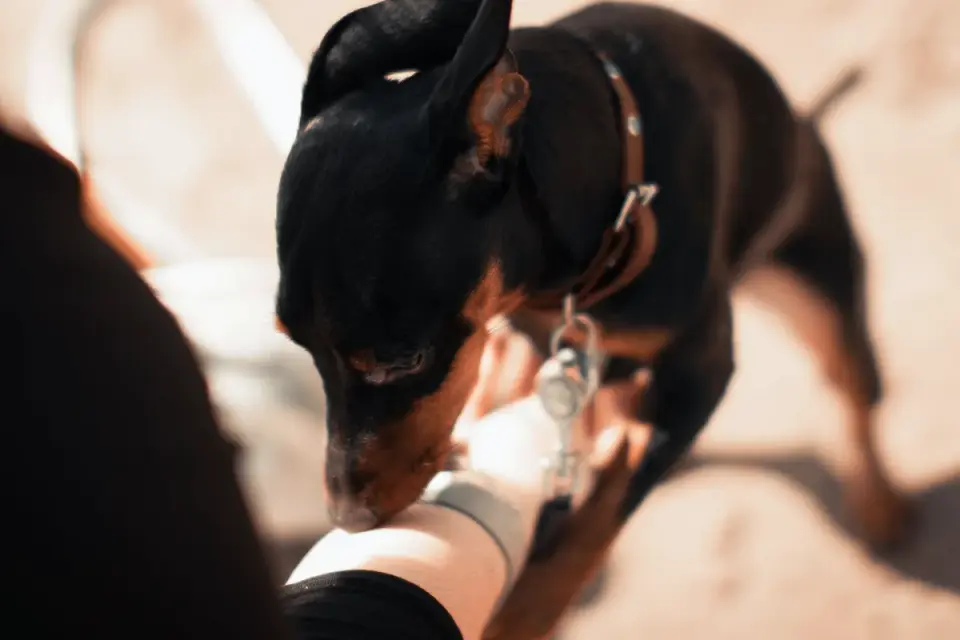
Skip the costume, keep the contact
Real military tags were built for durability and standardization, not for pets. For dogs, the American Veterinary Medical Association still frames the goal the same way: visible ID plus permanent ID gives a lost pet the fastest route home.
That means your dog’s version needs a different priority stack. Human military tags carry name, blood type, religion. Your dog needs species-relevant lines: DOG NAME, CALL 555-555-5555, CALL 555-555-5556, MICROCHIPPED, and city if space allows.
Skip blood type, jokes, and long quotes. They shrink the font that matters.
What holds up on a real collar
Military-style blanks are usually aluminum, stainless steel, or brass. In practice, stainless supports long-term legibility best because it resists scratch dulling. Aluminum is lighter and cheaper but wears smooth faster.
Feel the edge before it goes on the dog. Cheap blanks have sharp stamped rims that catch on crate wire and car seatbelts.
Engraving matters more than metal marketing. Deep-stamped debossing lasts. Surface ink or shallow etching looks crisp on camera and fades with fence-rubbing, swimming, and tag-on-bowl clatter.
Want a quick home check? If you cannot read it after rubbing it with your thumb while wet, a neighbor cannot read it under porch light.
The noise problem no viral video mentions
That signature jingle drives owners crazy by night two. It can also stress noise-sensitive dogs and catch between deck boards.
Look for a set that includes a silicone silencer border and a second tag hole option. Run the tags on a split ring through the silencer, then attach with a small S-hook to the D-ring, not directly through collar fabric.
For context on everyday collar fit and hardware, compare Front-Clip vs Back-Clip Dog Harness: What Actually Stops the Pulling and Biothane vs Nylon vs Leather Long Line: Which One Actually Holds Up?. The same rule applies: hardware should hold without sawing at skin.
Peggy in Gresham, Oregon learned this with Garth, her 9-year-old intact male Akita. His new brass-look tags looked sharp but rang against his water bowl all night. Adding a $4 silencer and moving the tags to the harness D-ring cut the nighttime jingle to zero within two days.
When I say no to the military look
I reject the two-tag chain-and-ball-chain setup for most pets. It is built for humans.
Long dangling chains snag. Duplicate human-style lines waste space. Oversized tags drag on small necks.
The American Kennel Club notes the same practical point in its ID guidance: a flat, current, readable tag on the collar is what helps a finder call you quickly.
If your dog slips collars, chews hanging tags, or hikes through brush, skip dangling military blanks entirely. Use a flat slide-on collar plate with the same contact lines, and keep the microchip registration current. For escape-prone dogs, pair that with a plan from GPS Tracker for a Dog That Runs Off: What Actually Works.
Single short line verdict: buy the military font if you love it, but only on stainless, deeply engraved, silenced, and backed by a chip.
Brandon in Columbia, Missouri did this tradeoff for Tika, his 9-year-old spayed female Shiba Inu mix. She lost one dangling tag on a 3-mile trail loop. He replaced it with one silenced stainless tag on her collar and one slide-on plate on her harness. Redundant and quiet.
How to order it so it works
Keep it boring and complete. Line 1: first name. Line 2-3: two current cell numbers with area codes. Line 4: MICROCHIP + CITY.
Test proof before you pay. Use all caps, simple sans-serif, no script. Confirm character limits so the shop does not auto-shrink type to fit your paragraph.
Check monthly at vaccine and dental rechecks. Home care supports prevention, and ID is prevention. If you can no longer feel the letters, replace it.
Evidence here is thin on fonts and metals and strong on outcome: readable tags plus chips support faster reunions. I will not call any style clinically proven to bring dogs home faster.
Frequently asked questions
Are military-style dog tags good for dogs?
Only if deeply engraved in stainless steel with large, readable phone numbers, rounded edges, and a silencer. The look alone does not help a finder call you.
What should I put on military dog tags for my dog?
Dog name, two phone numbers with area codes, city, and MICROCHIPPED. Skip blood type, jokes, and long quotes that shrink critical text.
How do I stop military dog tags from jingling?
Add a silicone silencer, use a sturdy split ring and S-hook, and attach to the collar D-ring or harness. Replace sharp or loose hardware that catches.
Sources
- Pet Identification — American Veterinary Medical Association