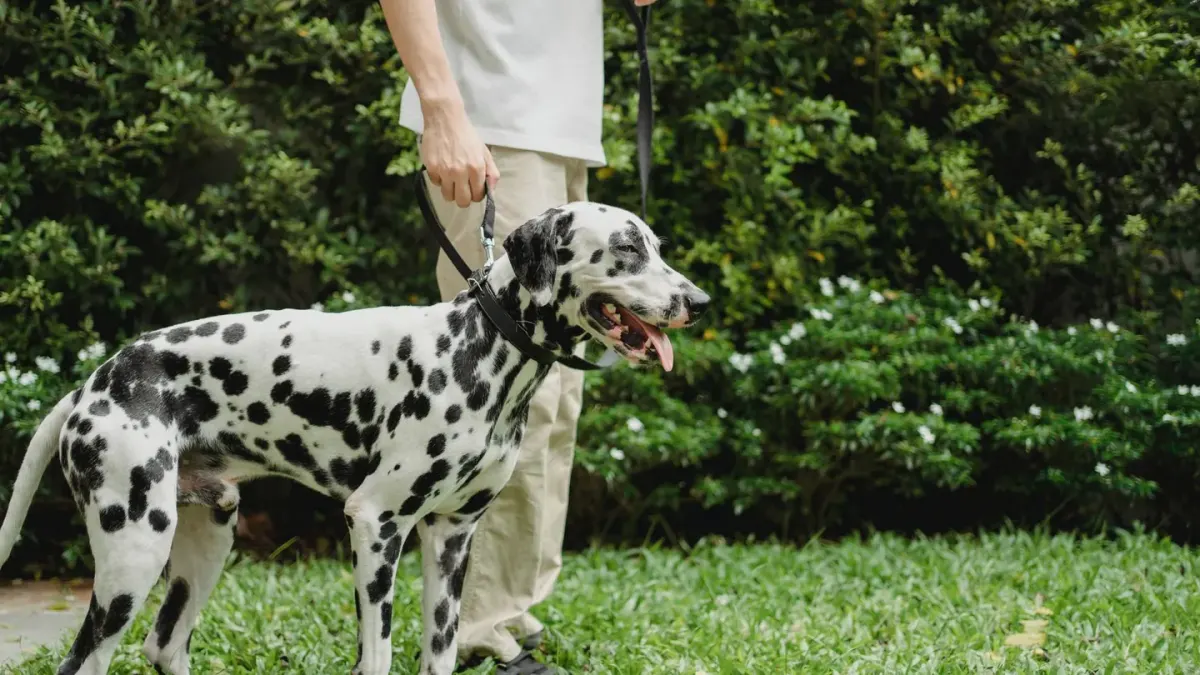
If your For You page is full of cute flower and rainbow dog name tags, here is the decision fork before you order: are you buying jewelry for photos, or ID a stranger could actually read at 9 p.m.?
In practice, the cute ones go blank first. Thin coating scratches, shallow laser marks fade, and tiny script disappears under mud. Vets often see the result — a dog arrives with a tag still attached but completely unreadable.
Diane learned that with Magnus, her 7-year-old neutered Great Pyrenees mix in Pearland, Texas. His novelty tag looked great for about three weeks, then the phone number wore to a smudge after daily fence-rubbing and water-bowl dunks. The fix was boring but effective: a flat, deep-engraved tag with large numbers.
The 30-second readable-tag checklist
- Deep engraving over surface printing: stamped or deep diamond-engraved letters hold dirt and stay contrasted; surface print rubs off
- Hard metal, simple shape: solid brass or stainless steel in a round or rectangle resists bending and edge wear
- Big font, fewer words: dog name, two phone numbers, city — skip the tiny address lines
- Quiet, snag-free attachment: flat rivet-on or small split-ring with a silencer pouch prevents catching
- Backup ID, not tag-only: collar tag plus microchip, because tags fall off
That checklist is the whole argument: durability and legibility over novelty shapes, because a tag nobody can read is decoration rather than protection.
Why depth beats design
Engraving is not all the same. Stamped tags displace metal, so letters stay visible even when darkening wears away. Deep rotary or diamond-drag engraving cuts a groove you can feel with a fingernail. Shallow fiber-laser marks and UV printing sit on the surface, which is why pastel coated tags look crisp on unboxing day and blank by month two.
The American Kennel Club notes that an ID tag should include current contact information and remain on the collar, which only works if the text survives chewing, scratching, and weather. In day-to-day practice, that means choosing contrast you can test: run a thumb across it. If you cannot feel the letters, assume a season of brush and concrete will erase them.
Be honest where the preventive evidence is thin: there is no universal abrasion rating for pet tags. No one publishes a controlled wear trial for brass versus aluminum. What supports the recommendation is material behavior — softer aluminum and thin anodized coatings scratch faster than solid stainless or brass — plus what stays legible on recheck visits.

What to put on it, and what to leave off
Keep it readable at arm’s length.
Front that works for most dogs:
- Dog first name + “NEEDS MEDS” or “SHY” if relevant
- Cell 1, Cell 2 with area codes
- City + state, no full street address
Leave off small clutter like “If I’m lost please call my family who misses me very much” in 6-point script. Every extra line shrinks the phone numbers that actually get a dog home.
Tiffany, who lives in Memphis, Tennessee with Fanny, a 4-year-old spayed Greyhound, swapped a double-sided novelty heart for a one-sided rectangle after she realized the back number was polishing off against the buckle. One side, larger type, two numbers — readable after four months of daily walks.
Metal, shape, and attachment that hold up
Round, rectangle, and slide-on plates outlast stars, paws, and bones. Points bend, thin tabs snap at the hole, and large dangling tags catch on crates and brush.
For metal, plain stainless steel and solid brass are the day-to-day winners for most active dogs. They dent rather than crack and can be deep-engraved. Lightweight aluminum is fine for a small indoor dog, but expect faster wear.
Attachment matters as much as metal. A small, tight split-ring beats an oversized key ring that lets the tag flip and grind. For dogs that snag tags on front-clip vs back-clip harness straps, a riveted slide-on collar plate or a tag silencer helps. The same snag logic applies to long line setups and leash hardware for lungers — less dangle means less loss.
A short single-sentence check: If it jingles loudly on every step, it is grinding itself blank.
Do not rely on a tag alone
A tag is the fastest way home, but collars slip. The American Veterinary Medical Association explains that microchips provide permanent ID that supports return even when collars and tags are lost. That combination — readable tag for the neighbor, chip for the shelter — is the preventive standard that may help maintain a safe return.
So which style should you actually buy? A flat stainless or brass rectangle or circle, deep stamped or diamond-engraved, with big numbers and a low-profile ring. Cute shapes win photos. Boring tags win reunions.
What would you be able to read on your dog’s tag right now, without wiping it first?
For related context, read Basket vs Fabric Muzzle: How to Choose.
For related context, read Do Dogs Actually Need a Life Jacket, or Is It Just Boat-Dock Theater?.
Frequently asked questions
How often should I check my dog's tag for wear?
Check monthly. If numbers feel smooth or need wiping to read, replace the tag before they go blank.
Should I include my dog's name on the tag?
Yes for most pet dogs. Include the name plus two current phone numbers and city/state, kept in large type.
Sources
- Microchips Reunite Pets With Families — American Veterinary Medical Association