Are you buying this harness because it fits your dog, or just because the price dropped 40%?
That is the fork. Sale racks are full of last-season colors, odd sizes, and final-sale returns. Measure first, then shop. Grab a soft tape, measure chest girth right behind the front legs plus neck base, weigh your dog, and write both numbers down before you scroll.
In day-to-day practice, vets often see rubbing under the front legs from a harness that was technically the “right weight range” but wrong chest shape. A preventive fit check supports comfortable walks and may help maintain healthy skin under straps. The evidence for any single harness style preventing injury is thin, and I will say so where it matters.
Check the size chart, not the size letter
Do this in order. Measure chest, compare to that brand’s chart, then check neck opening and strap range. A medium in one brand is a small in another.
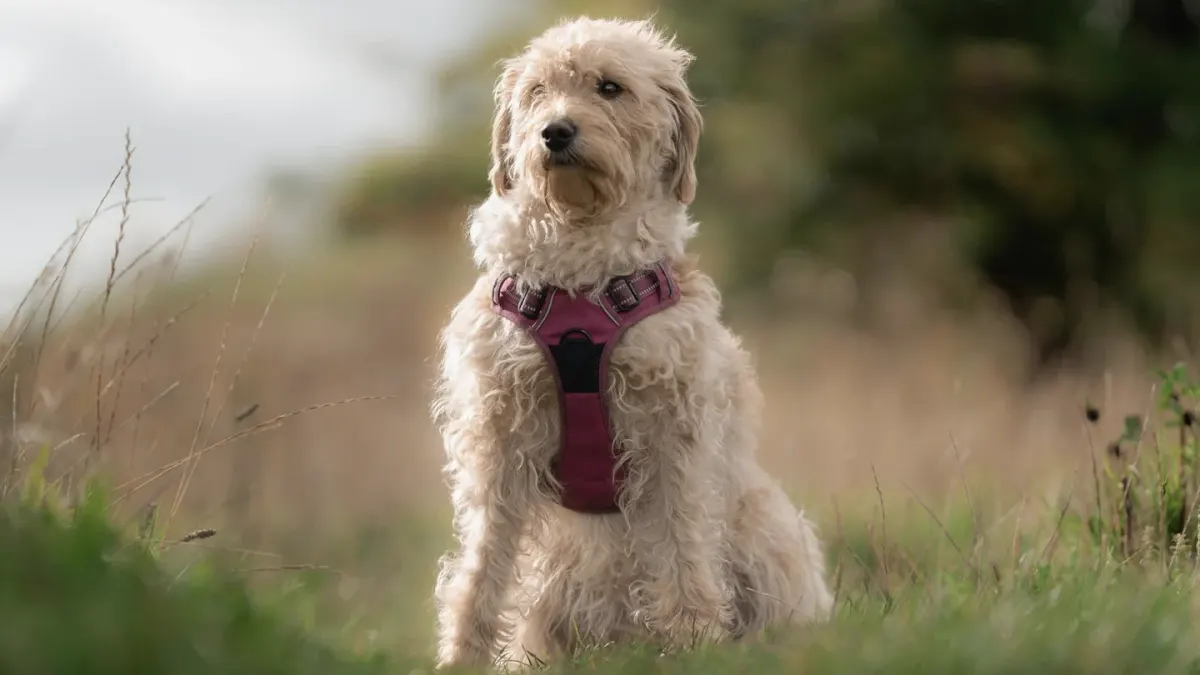
Mocha, a 2-year-old spayed female Toy Poodle mix from Newark, New Jersey, shows why. Owner Casey found a clearance Y-harness listed as small, ordered it for a 9-pound dog, and Mocha could back out of it in under 10 seconds on the sidewalk. The chest strap at its tightest was still 14 inches around a 12-inch chest. Returned, remeasured, sized down by chart — no more escape.
If you can slide more than two flat fingers under every strap, size down. If the front D-ring sits on the throat instead of the breastbone, try another cut.
Sale price means nothing if the build is weak
Turn the listing photos over. Look for wide, padded chest plates, locked stitching at stress points, metal D-rings, and four to five adjustment points on H-style and Y-style harnesses.
The Ruffwear fit guide walks through Y-front versus vest fits and why two-finger clearance matters for comfort and control. Use that fit test on every sale pick, even if it is final sale.
Skip thin single-strap step-ins with plastic buckles set right in the armpit. They chafe, they twist, and they are the most common “deal” dogs outgrow in a month.
A cheap harness that rubs is expensive.
Match the clip to your walking problem
Front-clip D-rings give you steering for pullers. Back-clips keep leash work simple for calm walkers. Dual-clip costs more on sale, but covers both.
For more on that tradeoff, read Front-Clip vs Back-Clip Dog Harness: What Actually Stops the Pulling before you choose. If your dog lunges, leash hardware matters too — see Bungee Leash vs. Fixed Leash for a Lunging Dog: What Actually Protects Necks and Shoulders.
My take: most pet dogs do best in a padded Y-front with front and back clips. I reject no-pull designs that cinch tight across the shoulders or cut across the throat to stop pulling.
When would I not recommend that? Jacks, an 11-year-old neutered male Labradoodle from Olathe, Kansas, is a good example. Owner Paul needed a wide vest with a handle to help a senior with weak rear legs up three porch steps twice a day, not a minimal trail harness. For lift support and car transfers, pick the bulkier help-em-up style instead.
The Cornell University College of Veterinary Medicine publishes owner resources on measuring, handling, and equipment fit that support this measure-first approach. Trust charts with real inch ranges over S/M/L alone.
Buy the discounted harness that fits today and adjusts a little. Pass on the too-big bargain for next summer.
Sources
- Front Range Dog Harness Sizing and Fit Guide — Ruffwear
- Riney Canine Health Center — Cornell University College of Veterinary Medicine