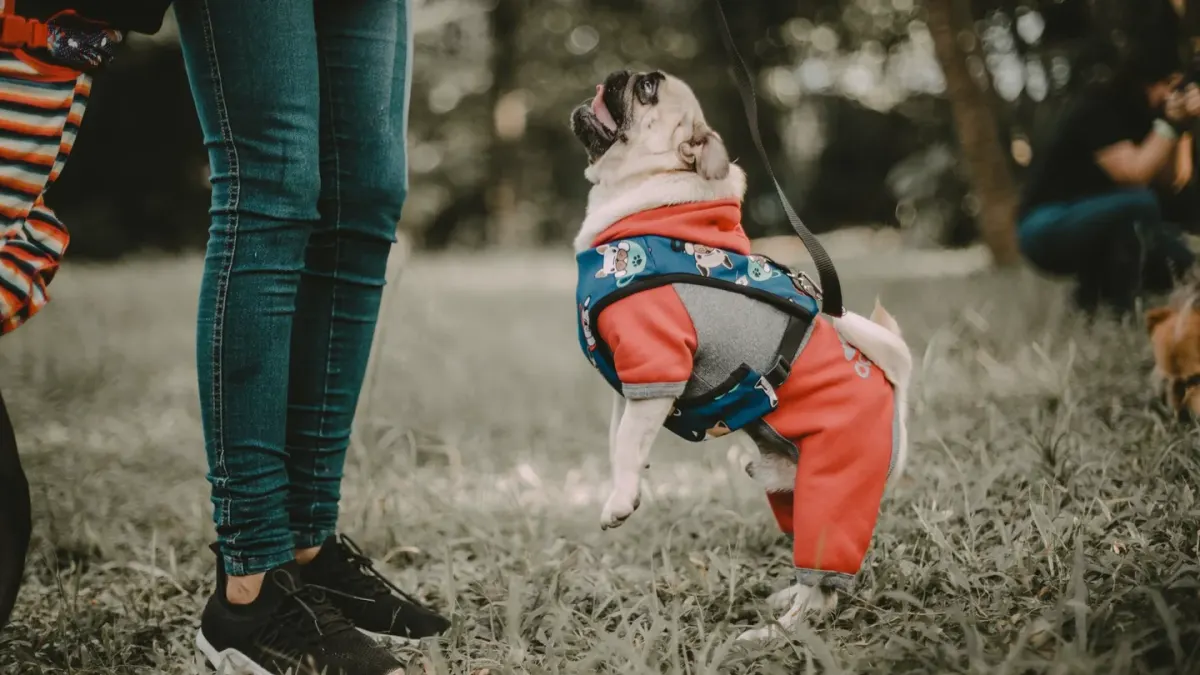
Dwayne knew Brando was done with standard gear when the 8-year-old Brittany mix started ducking his head at the front door in Lincoln, after two rub spots kept reopening behind his front legs despite three different size-medium harnesses.
That is the decision fork for this whole trend: is your dog hard to fit, or just hard to resist dressing up? If TikTok made custom look like the upgrade every dog needs, here is the homework — a custom dog harness only earns its price when off-the-shelf cannot match the shape.
So Your FYP Says Every Dog Needs Custom?
The videos sell the same fantasy: type in neck, chest, and belly numbers, pick the colors, and out comes a harness that fits like tailoring. For a Lab-shaped dog in the middle of the size chart, that is mostly personalization.
In day-to-day practice, vets often see the opposite problem. The dog is not average-shaped — deep-chested Greyhound, barrel-chested Bulldog, long-backed Dachshund, or a senior who lost muscle over the topline — and the chest strap sits an inch too low, the neck opening gapes, or the belly strap creeps toward the armpits. That is where custom stops being aesthetic and starts being preventive.
A common question is whether a better fit actually protects skin and shoulders. The short answer is yes, but only if you fix placement. Straps should clear the throat, sit behind the shoulder blades without pinching the armpit, and let the front legs swing freely. The American Kennel Club walks through that two-finger check and why dogs still slip a loose chest piece, even in a pricey harness.
When Off-the-Shelf Fails Brando — And When It Does Not
Brando measured 16 inches at the neck and 26 inches at the chest, right between sizes for two big brands. Sized up, the neck swam. Sized down, the chest strap sawed. After about 10 days of daily 2-mile walks, the hair behind both elbows thinned to pink.
That in-between pattern is the classic custom candidate: neck-to-chest ratio more than one size apart, chafing you cannot move with adjustment, or escape attempts from a gappy neck. PetMD has a straightforward measuring guide that shows why those two numbers matter more than weight, which is how most owners pick the wrong size.
Average-shaped dogs rarely gain function from going custom.
If your dog fits the chart, can trot with full shoulder reach, and you can slide two fingers under every strap without redness after a walk, you already won. Spend the money on leash skills instead — clip position changes pulling more than stitching does, as we broke down in Front-Clip vs Back-Clip Dog Harness: What Actually Stops the Pulling.
What To Order If You Actually Need Custom
Skip the embroidery menu until the structure is right. In practice, the details that maintain comfort are boring and specific.
Look for independent neck and chest adjustment, at least three to five points of adjustment or true made-to-measure panels, a Y-shaped front that avoids the trachea, and wide, smooth lining where straps meet armpit skin. Ask for hardware placement away from the elbows, a back handle you can actually grip, and materials you can wash without stiffening.
Then measure like it matters. Have the dog standing square, tape snug but not tight around the base of the neck and the widest ribcage, plus girth behind the front legs. Re-measure after big weight change, heavy coat blow-out, or surgery recovery. A harness built on February numbers will not fit an August body.
Custom does not fix pulling or lunging by itself. If the issue is shoulder hits at the end of the leash, pair fit with mechanics in Bungee Leash vs. Fixed Leash for a Lunging Dog: What Actually Protects Necks and Shoulders.
Dwayne kept one well-fitted off-the-shelf harness for mud season and ordered custom for daily walks — same dog, same route, no more head-duck at the door.
If your dog is average-shaped, save your cash. If straps cannot sit right no matter how you adjust, custom is not hype. It is fit.
Frequently asked questions
How do I know my dog needs a custom dog harness?
When neck and chest fall in different sizes, straps chafe behind the elbows despite adjustment, or the neck gapes enough for escape, made-to-measure usually helps. If a stock harness passes the two-finger check and leaves no redness, custom adds little.
What measurements matter most for a custom fit?
Base-of-neck circumference, widest chest circumference, and girth behind the front legs on a standing dog, plus distance from neck to chest strap. Weight alone does not predict fit.
Sources
- How to Put on a Dog Harness — American Kennel Club