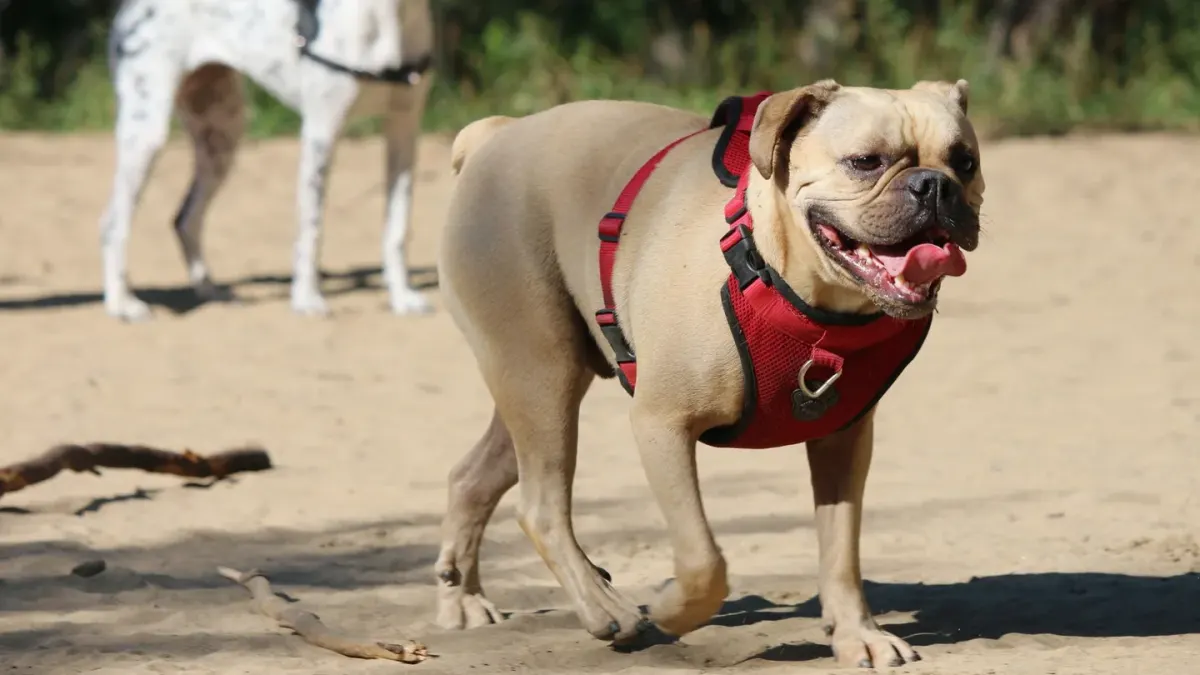
You’ve seen the videos: a dog buckled neatly in the back seat, harness clipped to a seatbelt, text overlay promising a crash tested dog harness that will keep them safe at 30 mph. Are you buying a real car restraint, or just a nice walking harness with a confident label?
That’s the fork to settle before you spend anything. If you want help for pulling on walks, check a front-clip guide and fit separately. If you want protection in a sudden stop, you need a different standard of proof.
Maria in Tyler, Texas, hit that fork with Ahsoka, her 5-year-old spayed female Miniature Pinscher. Ahsoka weighs under 12 pounds and rides in a booster seat for the 25-minute drive to the park. Maria liked a cute harness stamped “crash tested” online, but couldn’t find who did the testing, at what weight, or what passed. Vets often see that same confusion in practice — the label looks serious until you ask for details.
Why that badge can mean almost anything
There is no federal standard that defines a crash tested dog harness in the U.S. A brand can do an internal pull test, a computer simulation, or a single sled run and use similar wording. That doesn’t make the product unsafe for walks, but it doesn’t tell you how it behaves in a crash.
This is where prevention matters more than packaging. A harness that supports comfortable daily walks may help maintain good leash habits, but car restraint is a separate job: managing forward momentum, keeping your dog from becoming a projectile, and keeping the driver distraction-free.
Real independent programs publish their methods. The Center for Pet Safety is the nonprofit most owners will run into here, and its value is transparency — test speeds, dummy weights, anchor types, and pass-fail criteria you can actually read.
What real testing actually checks
Independent crash evaluation isn’t about fabric feel. It’s about whether the whole system holds together under load.
Look for specifics: a stated test weight range, a vehicle-anchored connection rather than just a loop around a headrest, metal hardware and reinforced stitching at load points, and results tied to a named protocol, not just “tested to 2,000 pounds.” A static strength number alone doesn’t equal crash protection.
Fit matters just as much in the car as on the sidewalk. A loose chest strap lets a small dog submarine out in a hard brake.
You don’t need an engineering degree to read this correctly.
Ask for the report, not the badge. Who ran the test? Was it independent or in-house? What size dummy, at what speed? What exactly failed or passed? If customer service can’t answer that in one email, treat the claim as marketing.
The American Veterinary Medical Association reminds owners that unrestrained pets create real crash and distraction risks, which is why containment choice matters even when no product can promise zero injury. The National Highway Traffic Safety Administration makes the same point for human occupants: restraint reduces harm, but no system eliminates it.
How to shop without getting played
Start with your dog’s travel setup. A harness that clips directly to a seatbelt latch, ISOFIX/LATCH anchor, or secured cargo barrier behaves differently than a tether looped over a headrest. For lungers who slam the end of a tether, also compare bungee versus fixed leash trade-offs and think about neck and shoulder load during sudden stops.
Ellen in Cleveland, Ohio, faced this with Gavin, her 3-year-old neutered male mixed-breed mix. At 58 pounds, he paces the back seat on the 8-mile drive to daycare. She skipped two “crash tested” listings with no protocol named and shortlisted only the one that listed dummy weights, anchor method, and a full test video.
That’s the move I’d defend in day-to-day practice: buy only the restraint that names its tester and its limits.
Skeptical friend question: isn’t any harness better than nothing? For keeping a dog off your lap, yes. For crash forces, an unproven tether can give false confidence and even fail at the buckle. A labeled carrier or a documented restraint used exactly as directed is a more honest choice than a vague badge.
If you already own a walking favorite, keep it for walks and buy a separate, documented car system. Recheck fit every few weeks, replace frayed webbing immediately, and never attach a car tether to a collar. For long-line and life-jacket trips where the car is just one leg, review which long line holds up and when a life jacket earns its place separately — water and trail gear isn’t crash gear.
Bottom line: trust the protocol, not the sticker.
Frequently asked questions
Does crash tested mean crash proof for my dog harness?
No. It usually means the brand did some kind of test, but without an independent protocol, stated dummy weight, and pass criteria, you cannot compare safety between products.
Can I use my everyday walking harness as a car harness?
You can use it to reduce distraction, but don't assume crash protection. Car restraints need a vehicle-anchored connection, reinforced load points, and fit checked for that seated position.
What should I ask a brand before I buy?
Who tested it independently, at what weight and speed, how it anchors to the car, and where to read the full results. If they can't answer, keep shopping.
Sources
- Center for Pet Safety — Center for Pet Safety
- Pet Care in Vehicles — American Veterinary Medical Association
- Vehicle Safety and Restraint Guidance — National Highway Traffic Safety Administration