
On this page
Quick checklist before you scroll further:
- Straining but still passing stool — usually a transition hiccup, not a crisis.
- No stool in 48–72 hours, vomiting, or a painful, tucked-up belly — call your vet.
- New food is higher in fat or lower in moisture than the old one — a common, overlooked driver.
- You switched cold-turkey instead of blending over 5–7 days — the single most fixable mistake.
- Senior dog, dehydration risk, or reduced mobility — constipation risk goes up regardless of diet.
A dog who’s straining, hunching, or simply hasn’t gone in a day or two right after a food switch is one of the more common “wait, is this normal?” messages I get. Most of the time it is a plumbing adjustment, not a red flag — but the distinction matters, and it’s worth walking through calmly.
What’s actually happening in the gut
Every diet change asks the colon to recalibrate. Fiber type, fat content, and moisture level all shift the transit time and the water content of stool, and the resident bacterial population has to adjust to new substrates. That adjustment period is where most “why is my dog constipated” questions come from — it’s not usually one villain ingredient, it’s the whole system finding a new baseline. Constipation itself often means stool is sitting too long in the colon, and the colon is doing what colons do: pulling more water out of it the longer it stays.
Fiber is the piece owners fixate on, understandably, since it’s the most visible lever. Pumpkin fiber is a gentle, natural source of both soluble and insoluble fiber, which is one reason it shows up so often in home remedies for firming or softening stool depending on the dog’s baseline. But fiber isn’t the only variable. A jump in fat content can slow gastric emptying and change colonic motility, and a drop in moisture — say, from wet food to a dry kibble — pulls hydration out of the equation right when the gut needs it most.
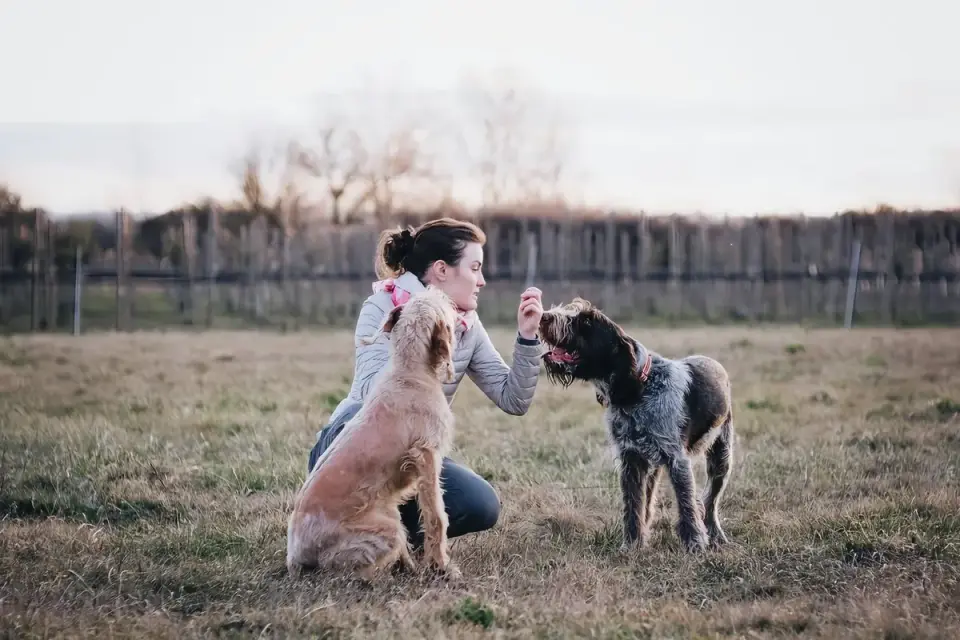
A 9-year-old Labrador I saw for a wellness visit had gone three days without a normal bowel movement after her owner switched from a wet, high-moisture diet to a dry senior formula over a single weekend. She weighed 68 pounds, was drinking normally, and wasn’t vomiting — just straining and passing small, hard pellets. We didn’t reach for medication first. We added warm water to her kibble, backed off the transition pace, and reassessed in five days. By day 6 she was back to a normal daily stool. The fix wasn’t dramatic; it was hydration and patience.
Where owners get the transition wrong
The textbook advice — mix old and new food over 5 to 7 days — gets skipped constantly, usually because the old bag ran out or the dog seemed “fine” on day two. I understand the impulse. But a fast switch doesn’t just risk loose stool, which is what most people worry about; it can just as easily tip a dog toward constipation if the new food is denser, lower in moisture, or higher in fat than what the gut was used to. I’ve also seen owners try to fix it by adding fiber supplement on top of fiber supplement, which can backfire — too much bulk without enough water moving through can make stool harder to pass, not easier. If your dog’s loose stool is the issue rather than constipation, that’s a related but distinct problem, and our guide on dog stomach upset after switching to raw food covers that side of the transition.
A supporting gut microbiome plays a role here too, even though it’s not the whole story. A balanced gut microbiome supports overall immune function, and a stable microbial population also tends to keep transit time more predictable — which is part of why abrupt diet changes can destabilize things short-term. That said, a Frontiers in Veterinary Science trial looking at probiotic response in dogs found that diversity metrics did not distinguish non-responders from responders, which is a useful reminder not to oversell any single supplement as a guaranteed fix. If you’re timing a probiotic around other medications, our guide on probiotics and antibiotics for dogs walks through that separately.
The edge case that changes the plan
Not every constipated dog after a diet switch is a simple transition case, and this is where I get more careful. A 12-year-old dachshund came in after her owner had cut her portions and switched to a “senior digestive” kibble to manage weight — reasonable goal, reasonable food. But at day 10 she still hadn’t had a normal stool, was drinking less than usual, and had lost a pound she couldn’t spare. Reduced mobility from mild arthritis meant she wasn’t moving enough to help normal colonic motility along, and the lower food volume meant less bulk to trigger the urge to go at all. That combination — an older dog, less activity, smaller meals — needed more than a diet tweak; it needed an exam to rule out dehydration and check for an underlying motility issue.
That case is a good example of why I don’t treat constipation as purely a diet-and-fiber conversation once a dog is older or has other risk factors stacked on top. Enzyme and pancreatic function matter here too, even outside the constipation conversation specifically. Per a Journal of the American Veterinary Medical Association review, in dogs with exocrine pancreatic insufficiency, treatment involves pancreatic enzyme replacement therapy, nutritional management with low-residue diets with moderate fat content, and supplementation of cobalamin — a reminder that digestive symptoms after a diet change can sometimes point to something structural rather than just a transition hiccup, especially in a dog with a history of chronic GI issues. Research in this area is still evolving; the same review notes that future studies are needed to further understand the causes of persistent dysbiosis in animals with EPI following initiation of pancreatic enzyme replacement therapy and assess the efficacy of treatments to ameliorate these abnormalities. That’s not a diagnosis to self-apply — it’s a reason to loop in your vet if constipation persists past a few days despite a slower transition.
What I’d actually do, step by step
- Slow the transition down — 7 to 10 days if the dog is older, has a sensitive history, or the new food differs meaningfully in fat or moisture.
- Add moisture, not just fiber — warm water or a splash of low-sodium broth mixed into kibble often helps more than another fiber supplement stacked on top.
- Keep exercise steady — movement supports normal colonic motility, especially in senior or less mobile dogs.
- Watch the clock — no stool for 48 to 72 hours, straining with nothing produced, or a painful abdomen means a same-day call to your vet, not a wait-and-see.
- Don’t diagnose from social media — a dog with a chronic history (EPI, prior GI surgery, recurring soft stool) needs an exam, not a new trending fix.
If you’re weighing fiber sources specifically, our piece on whether you can give a dog too much fiber goes deeper into the soluble-versus-insoluble question, and our breakdown of digestive enzymes for dogs covers where enzyme supplementation genuinely helps versus where it’s overhyped.
Bottom line: most post-diet-change constipation is a hydration and pacing problem that resolves within a week of slowing down and adding moisture — but persistent straining, no stool past two to three days, or an older dog with other risk factors deserves an actual exam, not another 24 hours of “let’s see.”
Frequently asked questions
How long does dog constipation from a diet change usually last?
In most healthy dogs, a slow reintroduction of moisture and a gentler transition pace resolves it within about a week; if it persists longer, an exam is warranted.
Is it the fiber or the fat causing the constipation?
Both can contribute — a jump in fat can slow gut motility, while a drop in moisture (common when switching from wet to dry food) reduces stool water content, and either can happen independent of fiber content.
Sources
- Pancreatic Enzyme Replacement Therapy Review — Journal of the American Veterinary Medical Association
- Probiotic Response Diversity in Dogs — Frontiers in Veterinary Science