
On this page
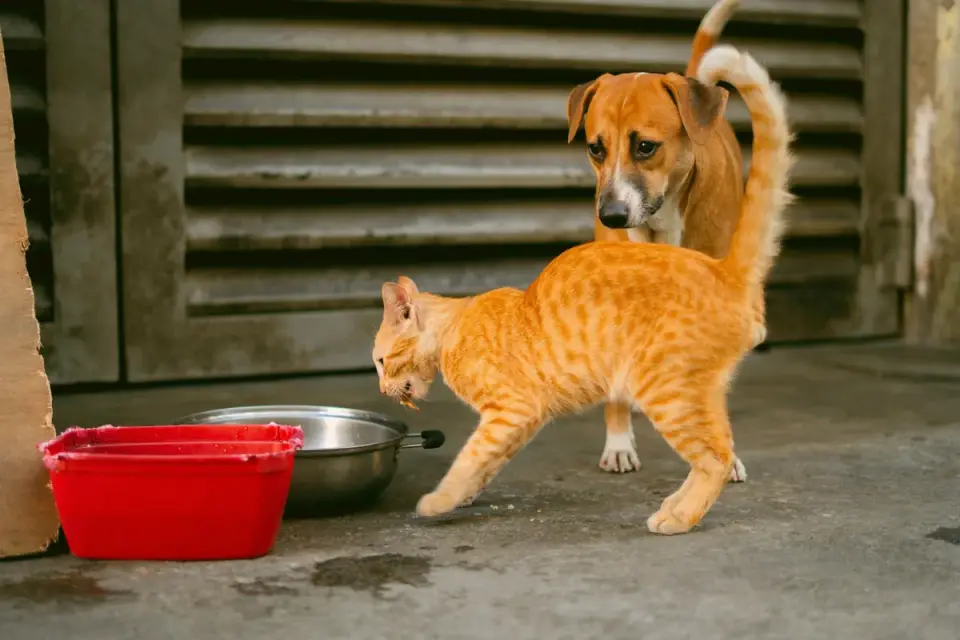
A dog stomach upset after switching to raw food usually traces back to how fast the food changed, not to raw itself. If your For You page sold you on glossy coats and clean bowls, and then day three brought loose stool and a gurgling belly, you aren’t doing anything wrong as a person. You’re watching a digestive system that was built around one kind of meal get asked to run on another one overnight. In the pattern-based language I lean on, this is a Spleen that has lost its footing for a moment, and with time and a gentler pace it tends to find that footing again.
Why does a raw switch upset the stomach in the first place?
Your dog’s gut is a settled little ecosystem. The pancreas releases a fairly predictable mix of digestive enzymes for the food it has been seeing, and the resident microbes have organized themselves around that same menu. You can see how much steady enzyme output matters by looking at what happens when it fails: exocrine pancreatic insufficiency, where the pancreas can’t secrete enough digestive enzymes, is managed with pancreatic enzyme replacement therapy, low-residue diets of moderate fat, and cobalamin supplementation. A raw switch changes the fat load, the protein source, the moisture, and the fiber all at once. The enzymes and the microbiome can adapt to that, but they adapt on their own clock, and pushing faster than that clock is what tips a comfortable belly into an upset one.
How fast should you actually be switching the food?
Slower than the bag suggests, honestly. A commonly cited transition runs about a week: roughly a quarter new food for the first couple of days, then half, then three-quarters, then all raw by around day seven, with the plain note that dogs with sensitive stomachs may need a longer transition. When I have a patient who runs a little cold and damp, I stretch that to ten or fourteen days without apology. The idea is to let each ratio hold until the stool is firm before you nudge it forward. If loose stool shows up, you haven’t failed; you’ve simply found the edge, and the kind move is to step back to the last ratio your dog handled well and sit there a few more days.
What can gently support the gut while it settles?
This is where honest expectations matter more than hype. A probiotic may help support the transition, and the safety picture is reassuring: in a recent pilot in dogs with diarrhea, the probiotic was well tolerated across every dog, with no adverse events reported. That same study is a useful humility check, though. Acute canine diarrhea is often self-limiting, and the researchers found that diversity metrics did not distinguish non-responders from responders. So a probiotic is a reasonable support, not a guaranteed switch-flip. Food therapy earns its place here too. A little cooked pumpkin brings both soluble and insoluble fiber, and warm, bland, easy-to-digest meals tend to settle a struggling gut more kindly than another cold plate does. Think support and warmth, not rescue.
Is it the transition, or is it the raw food itself?
This one is worth sitting with, because they’re genuinely different problems. Most switch-related upset fades within a day or two once you ease the pace. The raw food itself carries a separate consideration: the AVMA discourages feeding any animal-source protein that hasn’t been through a process to eliminate pathogens, because raw meat can carry Salmonella, Campylobacter, Listeria, and E. coli, and the FDA has found these organisms in commercial raw diets. Refrigeration and freezing don’t kill Salmonella. None of that is a lecture against your choice, and plenty of people feed raw thoughtfully, but if your dog’s upset arrives with fever, repeated vomiting, or blood, a pathogen belongs on the list in a way that a slow transition simply doesn’t. Clean handling protects the whole household: wash your hands after handling raw, keep it separate from your own food, and cover and refrigerate what your dog doesn’t finish.
When is an upset stomach a reason to call your vet?
Trust your read of your own dog here. Mild, brief looseness during a careful switch is ordinary and tends to pass. Reach for the phone when you see diarrhea or vomiting that lasts more than a day or two or keeps getting worse, blood in the stool or black tarry stool, greasy and pale high-volume stool with weight loss despite a good appetite, or lethargy, a painful or bloated belly, and signs of dehydration. That greasy, wasting pattern in particular deserves real testing rather than another supplement, since it can point to a malabsorptive disorder that needs a diagnosis rather than a slower food bowl.
The bottom line: a raw switch that upsets the stomach is usually asking you to slow down, not to give up. Ease the pace, support the gut gently, keep the food clean and cold, and let a warm, unhurried transition do the quiet work, and if the signs turn severe or stubborn, let your veterinarian look before you reach for the next thing on your feed.
Frequently asked questions
How long does an upset stomach last after switching a dog to raw food?
When it's transition-related, loose stool usually settles within a day or two once you slow the pace and hold at the last ratio your dog handled well. If it drags on past that, worsens, or comes with vomiting or blood, have your veterinarian take a look rather than waiting it out.
Can I give my dog pumpkin or a probiotic during the switch?
Both may help support a settling gut. A little cooked pumpkin brings gentle soluble and insoluble fiber, and probiotics are generally well tolerated in dogs. Treat them as support rather than a fix, though, and keep the transition itself slow, since much early diarrhea resolves on its own regardless.
Is raw food more likely to make my dog sick than kibble?
Raw animal-source protein can carry pathogens like Salmonella, Campylobacter, and Listeria that a pathogen-reducing process removes, which is why the AVMA discourages feeding unprocessed raw. Careful handling and cold storage lower that risk but don't erase it, and refrigeration or freezing does not kill Salmonella.
Sources
- Raw or undercooked animal-source protein in cat and dog diets (AVMA policy) — American Veterinary Medical Association
- Get the Facts! Raw Pet Food Diets can be Dangerous to You and Your Pet — U.S. Food and Drug Administration
- Exocrine pancreatic insufficiency in dogs and cats (DOI: 10.2460/javma.23.09.0505) — Journal of the American Veterinary Medical Association
- Pilot study evaluating tolerability and changes in fecal microbiota associated with novel probiotic administration to dogs with diarrhea (DOI: 10.3389/fvets.2025.1720932) — Frontiers in Veterinary Science
- How to Switch Dog Foods: Transitioning Your Dog's Diet — American Kennel Club