German Shepherd vs Belgian Malinois: Which One Actually Fits Your Life
German Shepherd vs Belgian Malinois comes down to one question — do you need a family dog or a working partner?
On this page
Before you scroll through one more “which shepherd breed” video, run this checklist first:
- Daily off-leash exercise you can actually deliver: 60–90 minutes for a Malinois, 45–60 for a GSD, non-negotiable either way
- A job for the dog’s brain, not just its legs: nose work, protection sport, or structured obedience — boredom is the real behavior problem
- Tolerance for a dog that reads a room: both breeds are watchful; the Malinois is faster to react, the GSD slower and more deliberate
- A vet who knows working-line health risks: hip screening, degenerative myelopathy testing, and a real conversation about genetics before you commit
- Household patience for adolescence: GSDs mellow around 2–3 years; Malinois can stay wound tight past 3
If you read that list and felt your stomach drop a little on the exercise line, that’s useful information. Keep reading.
The fork: family dog with a job, or a job that happens to live in your house
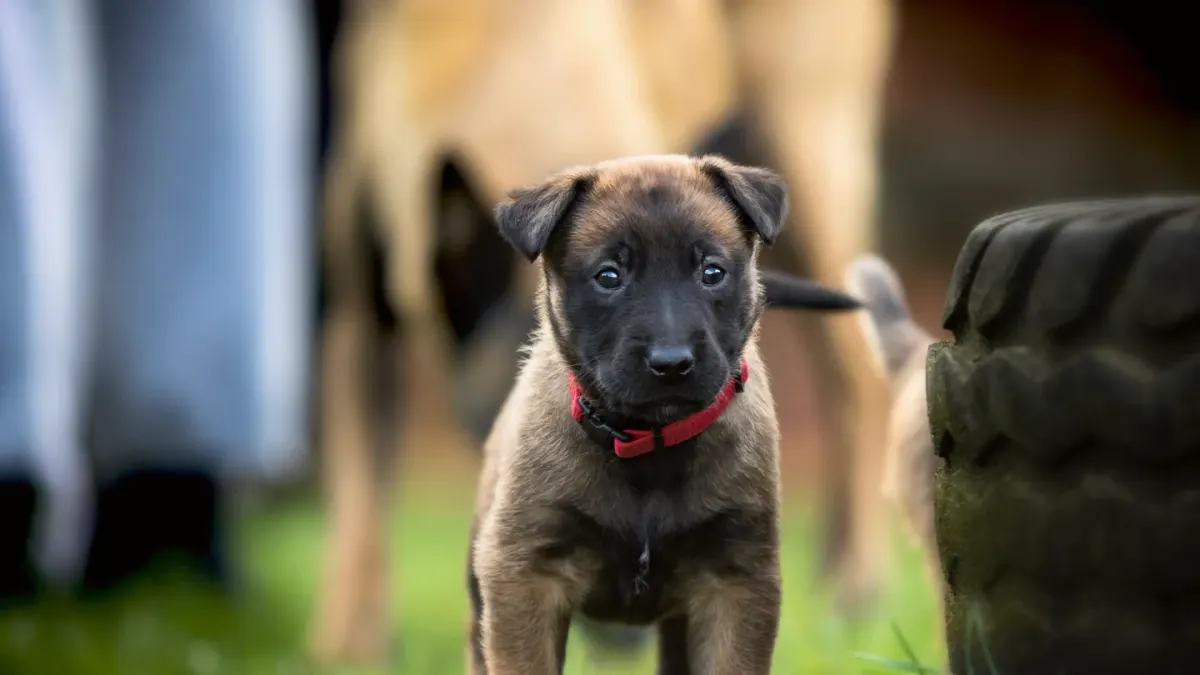
Here’s how I put it to clients who come in torn between these two: a German Shepherd is a working dog that can live like a family dog. A Belgian Malinois is a working dog, full stop, and the family part is something you build around that fact, not instead of it.
Both breeds descend from European herding stock, both were shaped for police and military work, and both will happily stare at you like you’ve personally disappointed them if a day goes by without real output. The difference is intensity and threshold. A German Shepherd’s drive has a plateau — most reach a work ethic ceiling and then settle. A Malinois’s drive tends to keep climbing with the dog’s fitness, which is exactly why they dominate protection sport and detection work, and exactly why they end up surrendered to breed-specific rescues by owners who watched a viral video and didn’t do the homework.
What I actually see walk into my exam room
In my practice, the German Shepherd owners and the Malinois owners tell almost identical opening stories, and that’s the tell. A 14-month-old GSD named Rex came in with his owner describing three months of “destroying the backyard” — not digging for fun, but digging with purpose, methodically, for forty minutes at a stretch, always right after she left for a 9-to-5 job. He was 68 pounds, otherwise healthy, and completely under-stimulated. We didn’t change his food or run bloodwork he didn’t need. We built a decompression walk before she left for work and a frozen-Kong routine for the hour she was gone, and by week six the yard was intact.
Compare that to a Malinois I worked with at 18 months, 55 pounds, who’d started redirecting onto the owner’s ankles during recall training — not aggression, frustration, because the training sessions were five minutes of “sit, stay, good boy” and the dog needed forty-five minutes of actual work. The fix wasn’t behavioral medication. It was a bite-work-adjacent flirt pole routine and a structured 5 a.m. run before the owner’s shift. Same root cause as Rex, different intensity of consequence, because that’s the gap between these two breeds in one sentence: mismatched needs show up as mild frustration in a GSD and as a bite risk in a Malinois.
Health: where the two breeds genuinely diverge
Both breeds carry orthopedic and neurologic risk, but the numbers and the shape of the risk aren’t identical.
German Shepherds have one of the higher documented hip dysplasia rates of any AKC breed — OFA data through 2022 puts roughly 20.6% of screened German Shepherds as dysplastic, a figure that’s held fairly steady across decades of testing. That’s a real number to ask a breeder about, and it’s a reason I push GSD owners toward OFA or PennHIP screening before breeding age, not after symptoms start.
The breed is also linked to degenerative myelopathy, a progressive spinal cord disease driven largely by the SOD1 gene mutation. VCA Animal Hospitals describes it as a slow, painless loss of hind-limb coordination that typically starts in dogs eight and older, with no cure — management focuses on weight control, exercise like walking and swimming, and maintaining mobility for as long as possible. It’s sometimes still called “German Shepherd Dog disease” for a reason.
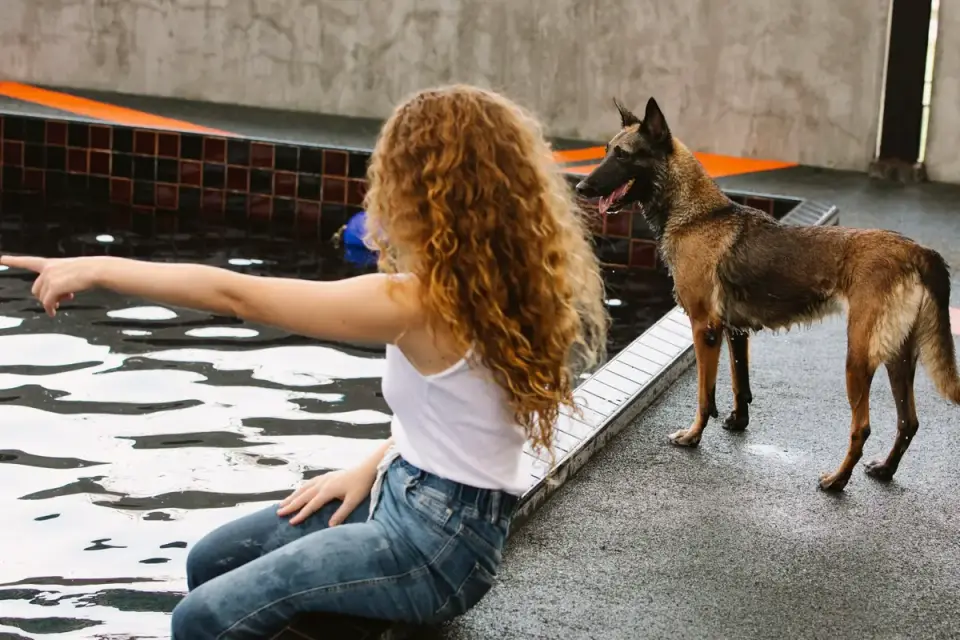
The Belgian Malinois, by contrast, is a genetically tighter, less-inbred working population overall, and doesn’t carry the same dysplasia burden in most reputable lines — though hips and elbows still deserve screening in any large, athletic breed. Where the Malinois costs you is joint wear from sheer workload: cruciate injuries and soft-tissue strain from a dog that never fully turns off.
Temperament, translated out of breed-standard language
The American Kennel Club: AKC breed standard for the Belgian Malinois describes a dog that is “alert, intelligent, inquisitive and confident,” firmly loyal to its people but indifferent — not warm — with strangers, and an “exceptional watchdog” bred to be protective without being aggressive. Read that plainly: this is not a dog built for a dog park full of strangers or a house that hosts a lot of casual guests. It’s a dog built to notice everyone who walks by and make a decision about them.
German Shepherds carry a similar watchfulness but with more social flexibility. Well-socialized GSDs generally warm up to strangers faster and tolerate a chaotic household — kids, visitors, other pets — with more patience than a typical Malinois. That’s not a knock on the Malinois; it’s a design difference. One breed was optimized to be a versatile working and family dog. The other was optimized to be very good at one intense job.
The counterargument I take seriously
I know plenty of capable, active families who do beautifully with a Malinois — competitive obedience folks, agility people, search-and-rescue volunteers. If your daily life already includes structured training and real physical output, the argument “Malinois are only for professionals” doesn’t hold up, and I won’t pretend it does. Dismissing the breed as unsuitable for civilians ignores a whole community that handles them responsibly and gives them a genuinely good life.
But that counterargument only works if the exercise and training commitment is already built into your week before the dog arrives — not something you’re hoping you’ll rise to. That’s the gap I watch families underestimate every single time.
Where I land
For the family that wants a loyal, protective, trainable dog and can commit to 45–60 minutes of real exercise a day, plus mental work, I recommend the German Shepherd first. The temperament has more give in it, the health risks are well-documented and screenable, and the drive has a ceiling most households can meet.
For the household that already lives an active, structured life — sport training, a working farm, a job that involves the dog — the Belgian Malinois rewards that investment with a partner few other breeds can match. It is not the breed I recommend to a first-time owner who fell for a viral training reel.
If you’re weighing herding-breed energy more broadly, our breakdown of Border Collie vs Australian Shepherd covers a gentler version of the same drive question, and if space is part of your decision, see Best Dog Breeds for Apartment Living for what actually matters beyond square footage. Owners cross-shopping large, loyal breeds sometimes land on our Labrador vs Golden Retriever guide instead, once they realize how much daily output a shepherd-type breed demands.
Bottom line: match the dog’s job to your actual week, not your aspirational one — a German Shepherd forgives a slow week, a Malinois rarely does.
Frequently asked questions
Is a Belgian Malinois more aggressive than a German Shepherd?
Not inherently aggressive, but more reactive and protective by design. The AKC standard describes the Malinois as an exceptional watchdog that's naturally protective without being overly aggressive, but that watchfulness combined with high drive means poor socialization or under-exercise shows up faster and more intensely than it typically does in a German Shepherd.
Which breed is easier for a first-time dog owner?
The German Shepherd, in most cases. It's still a demanding, high-drive working breed, but its temperament tends to have more flexibility for a household without a structured training program already in place.
Do German Shepherds or Belgian Malinois have more health problems?
They differ more than they overlap. German Shepherds carry a well-documented hip dysplasia rate near 20% and a breed-linked degenerative myelopathy risk. Malinois generally show lower dysplasia rates in reputable lines but are prone to soft-tissue and joint strain from their higher workload.
Sources
- Degenerative Myelopathy in Dogs — VCA Animal Hospitals
- Belgian Malinois Breed Standard — American Kennel Club