CBD Oil vs. Valerian Root for Dog Anxiety: What the Evidence Actually Supports
CBD oil and valerian root both claim to calm anxious dogs, but the evidence and safety profiles differ substantially.

On this page
- The Question I Get Asked in the Exam Room
- How CBD Actually Works on an Anxious Nervous System
- What the CBD Studies Actually Show — And Where They Fall Short
- How Valerian Root Works — And Why the Evidence Gap Is Bigger
- Dosing, Sourcing, and the Interaction Risks Nobody Mentions on TikTok
- Which One I Actually Recommend, and When
- The Bottom Line
The Question I Get Asked in the Exam Room
Every few weeks, an owner asks me the same version of this question: CBD or valerian, which one actually works for my dog’s anxiety? Usually they’ve already watched a dozen videos on it before they book the appointment.
The honest answer is that neither one is a settled science, but they are not equally unsettled. CBD has a real, growing body of veterinary research behind it, including pharmacokinetic work and at least one placebo-controlled trial on situational stress. Valerian root has almost none in dogs specifically; what exists is extrapolated from human and rodent data, plus a long history of anecdotal use in herbal veterinary practice. That gap matters more than the marketing on either product’s label suggests.
I had a client bring in a rescued shepherd mix, roughly three years old and thirty-two kilos, who’d start pacing and drooling the moment a suitcase came out of the closet. She’d tried a valerian tincture from a wellness shop first, based on a friend’s recommendation, and it knocked him out so hard he stumbled getting off the bed the next morning. That reaction is exactly why I want owners to understand the mechanism before they pick a bottle off a shelf, not after.
How CBD Actually Works on an Anxious Nervous System
CBD, or cannabidiol, is one of over a hundred compounds found in the hemp plant. It doesn’t bind strongly to the same cannabinoid receptors that produce the “high” from THC. Instead, current research points to CBD modulating the endocannabinoid system more indirectly, along with interactions at serotonin (5-HT1A) receptors that are also targeted by some human anti-anxiety medications.
That serotonin interaction is the mechanistic reason CBD gets discussed for anxiety at all, rather than just pain or seizure control, where the evidence base is stronger.
According to Cornell University College of Veterinary Medicine, CBD “is not FDA regulated or approved,” and no standard therapeutic dose has been established for dogs at this time. The same page notes that product quality varies enough between manufacturers that owners often can’t confirm how much active cannabinoid is actually in the bottle they’re giving.
What the CBD Studies Actually Show — And Where They Fall Short
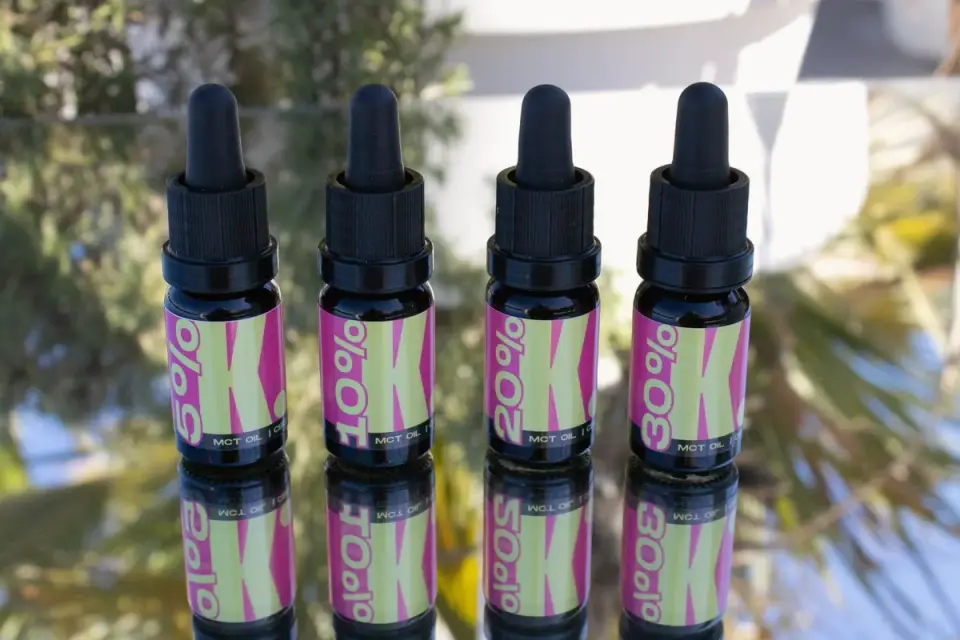
A study titled Pharmacokinetics, efficacy, and safety of cannabidiol in dogs: an update of current knowledge, published in Frontiers in Veterinary Science, reviews how CBD is absorbed and metabolized in dogs and summarizes the clinical trials completed to date, most of which focus on osteoarthritis and seizure frequency rather than anxiety specifically.
The anxiety-specific evidence is thinner but growing. In A single dose of cannabidiol (CBD) positively influences measures of stress in dogs during separation and car travel, also in Frontiers in Veterinary Science, researchers found measurable reductions in stress-associated behaviors and physiological markers after a single CBD dose given before a known stressor. That’s a meaningfully different claim than “CBD cures anxiety” — it’s a situational, pre-dosed effect studied under controlled conditions, not a daily maintenance therapy proven against chronic generalized anxiety.
Cornell’s own review references an internal study in which 83% of dogs given CBD chews before a stressful event showed a decrease in stress-related behaviors, while cautioning that more work is needed across different products and doses before that number should be treated as a general result. I’d add my own caution here: an 83% figure from one small trial, on one product, is a data point worth taking seriously, not a promise to make to a client.
Side effects reported in the CBD literature are generally mild, most commonly increased appetite and mild sedation, but CBD is metabolized through the liver and can interact with other medications a dog is taking, including some seizure and pain medications.
How Valerian Root Works — And Why the Evidence Gap Is Bigger
Valerian root’s proposed mechanism is more straightforward on paper: it’s believed to increase GABA activity in the brain, the same inhibitory neurotransmitter pathway targeted by benzodiazepines like diazepam. More GABA activity generally means less neuron firing, which is the basis for its reputation as a calming herb going back centuries in human herbal medicine.
The problem is that this mechanism has mostly been studied in humans and rodents, not dogs. According to PetMD, “evidence of valerian root’s sedating and anxiety-reducing effects in humans has been inconclusive,” and in dogs, “studies are non-existent.” Veterinary recommendations for valerian are extrapolated, not established by canine clinical trial.
That doesn’t make valerian useless, but it does mean any dosing guidance is closer to informed estimation than prescription-grade precision.
Dosing, Sourcing, and the Interaction Risks Nobody Mentions on TikTok
CBD dosing and quality
There is no standard, veterinarian-agreed therapeutic dose for CBD in dogs. Products vary widely in concentration, and Cornell’s research has flagged real quality-control problems in the category, including heavy metal contamination found in some products tested and others that contained no measurable cannabinoids at all despite label claims. Look for a certificate of analysis from an independent lab before buying anything, and involve your veterinarian, especially if your dog takes other medications, since CBD can alter how the liver processes them.
Valerian dosing and quality
Typical ranges cited for dried valerian root run between roughly 1 and 7.5 grams, and tinctures between about 7 and 15 milliliters, according to PetMD, usually given a few times daily starting several days before an anticipated stressor like a car trip or fireworks. Those figures were never established through canine clinical trials, so treat them as a starting point for a conversation with your vet, not a fixed prescription. Valerian can interact with anesthetics and with other sedative or anti-epileptic medications, making them more potent than intended, and it isn’t recommended in pregnant or nursing dogs.
I’ve watched an owner learn this the hard way with a nine-year-old beagle scheduled for a dental cleaning under anesthesia. She’d been giving him a valerian tincture nightly for weeks to manage thunderstorm anxiety, without mentioning it during intake because she didn’t think of it as a “medication.” We caught it on the pre-anesthetic questionnaire and adjusted the plan, but it’s exactly the kind of interaction that gets missed when herbal supplements aren’t treated with the same disclosure seriousness as prescription drugs. That’s the piece I want every owner reading this to walk away with: whatever you’re giving, write it down and bring it to every vet visit, not just the ones where it seems relevant.
Which One I Actually Recommend, and When
For situational anxiety — car rides, vet visits, fireworks, a single stressful event you can predict — I generally lean toward CBD, because it has actual placebo-controlled data behind a single-dose, pre-event use pattern, and the side-effect profile in the studies reviewed skews mild. The strongest counterargument is real: CBD products are inconsistently regulated, and a poorly tested bottle can deliver far less (or occasionally more) active ingredient than the label claims, which is why sourcing matters as much as the ingredient itself.
For dogs with existing sedative or anti-epileptic prescriptions, or before any procedure requiring anesthesia, I’m more cautious with both, and openly hesitant about valerian specifically, given how little canine-specific dosing data exists and how directly it can interact with anesthesia. If a dog has chronic, generalized anxiety rather than situational triggers, neither of these belongs in the conversation as a standalone fix — that’s a case for a full behavioral workup, and possibly a prescription anxiolytic, alongside training.
Form factor matters too, and it’s worth reading our breakdown of chew vs. powder vs. liquid dog supplements before you decide how to administer either one, since absorption speed and dosing precision differ meaningfully by format. If you’re comparing other situational-calming herbs, our piece on ginger vs. chamomile for dog car sickness covers a related but distinct use case worth knowing about. And wherever you end up buying either product, our guide to Amazon vs. brand-direct buying for dog supplements is worth a read first, since counterfeit and mislabeled listings are a documented problem in this exact category.
The Bottom Line
CBD oil currently has the stronger, though still limited, evidence base for situational canine anxiety, backed by placebo-controlled research and pharmacokinetic study. Valerian root has a plausible mechanism and a long history of use, but essentially no canine-specific clinical evidence, and a real interaction risk with sedatives and anesthesia that owners consistently underestimate. Neither is a substitute for a veterinary conversation, especially if your dog is on other medications or facing a procedure — but if I had to pick one to trial first for a predictable, single-event trigger, it’s CBD, sourced from a company that can hand you a lab report without hesitation.
Frequently asked questions
Can I give my dog CBD oil and valerian root at the same time?
I don't recommend stacking them without veterinary guidance. Both can produce sedation, and combining them increases the risk of excessive drowsiness or low blood pressure, especially in smaller dogs.
Is valerian root safe for puppies?
It's generally not recommended. There's no established dosing data for growing dogs, and the safety margin in puppies hasn't been studied.
How long before a stressful event should I give CBD or valerian?
Studies on CBD have generally used a single dose given shortly before the stressor. Valerian is more often described as needing several days of lead time, though that guidance comes from anecdotal and human-derived sources rather than canine trials.
Sources
- CBD: What you need to know about its uses and efficacy — Cornell University College of Veterinary Medicine
- Valerian Root for Dogs: Does It Work? — PetMD
- Pharmacokinetics, efficacy, and safety of cannabidiol in dogs: an update of current knowledge — Frontiers in Veterinary Science
- A single dose of cannabidiol (CBD) positively influences measures of stress in dogs during separation and car travel — Frontiers in Veterinary Science