
On this page
- So Is This a 24-Hour Limp or a Right-Now Limp?
- What Watchful Waiting Actually Looks Like, Step by Step
- The Case I See Go Wrong: Waiting Past the Window
- When the Limp Is Actually a Bloodwork Question
- The Edge Case That Changes the Calculus: Senior Dogs and Hidden Pain
- How I’d Actually Decide: The Short Checklist
- The Bottom Line
So Is This a 24-Hour Limp or a Right-Now Limp?
Here’s the fork, stripped of the hedging: is your dog’s limp mild, intermittent, and weight-bearing — or is it none of those things? If your dog is putting some weight on the leg, isn’t crying out, and the limb looks normal (no swelling, no heat, no obvious deformity), you’re in genuinely defensible watchful-waiting territory for a short, bounded window. If any of that isn’t true, you don’t have a “wait and see” case — you have an exam-today case, and no amount of rest is going to change that math.
I get why owners hesitate to book the exam. Vet visits cost money and time, and a lot of limps do resolve with rest. But “a lot of limps resolve” is a population statistic, not a diagnosis for the dog in front of you. That’s the distinction I keep coming back to: read the label and the bloodwork before the claim, and a limp deserves the same discipline as a supplement panel — don’t extrapolate from what usually happens to what’s actually happening in this leg, on this dog, today.
The short version: mild, weight-bearing, no systemic signs, no trauma → 24-48 hours of rest is reasonable. Anything else → same-day or next-day exam.
What “Mild” Actually Has to Mean
A limp only qualifies as mild if your dog bears at least partial weight on the leg the whole time, moves around your house and yard at something close to normal, and shows no guarding when you palpate the limb from paw to hip. If your dog holds the leg up entirely, even intermittently, that’s not mild — that’s a dog telling you the leg doesn’t work right now, and “toe-touching” lameness is a recognized pattern in Cranial Cruciate Ligament Disease in Dogs: dogs with a torn cranial cruciate ligament, the knee ligament injury that’s one of the most common causes of hind-limb lameness in dogs of any age.
What Watchful Waiting Actually Looks Like, Step by Step
If your dog clears the “mild” bar above, here’s what responsible watchful waiting actually involves — not just “let’s see how it goes.”
- Restrict activity immediately. Leash walks only, no stairs if avoidable, no off-leash time, no fetch. Crate or pen confinement for a young, high-drive dog is often the only way to enforce this.
- Check the paw and pad first. A thorn, a torn nail, or a cut pad is the single most common source of a sudden mild limp, and it’s the easiest thing to miss if you jump straight to worrying about joints.
- Set a hard 24-to-48 hour clock. Not “a few days,” not “until the weekend” — a specific window you write down.
- Re-check weight-bearing at the end of that window, on flat ground, at a walk. Improved, same, or worse — pick one honestly.
- Call the vet if it’s the same or worse, or if any new sign appears (swelling, heat, non-weight-bearing, reluctance to move, appetite change).
What Counts as “No Better”
Owners tend to grade on a curve here — “she’s still limping but it seems less bad.” Unless the limp is measurably improving day over day, treat it as not improving. According to First Aid for Limping Dogs: VCA Animal Hospitals, limping that persists beyond a day or two, or that’s accompanied by swelling, marked pain, or a limb that won’t bear weight, warrants veterinary evaluation rather than continued home management.
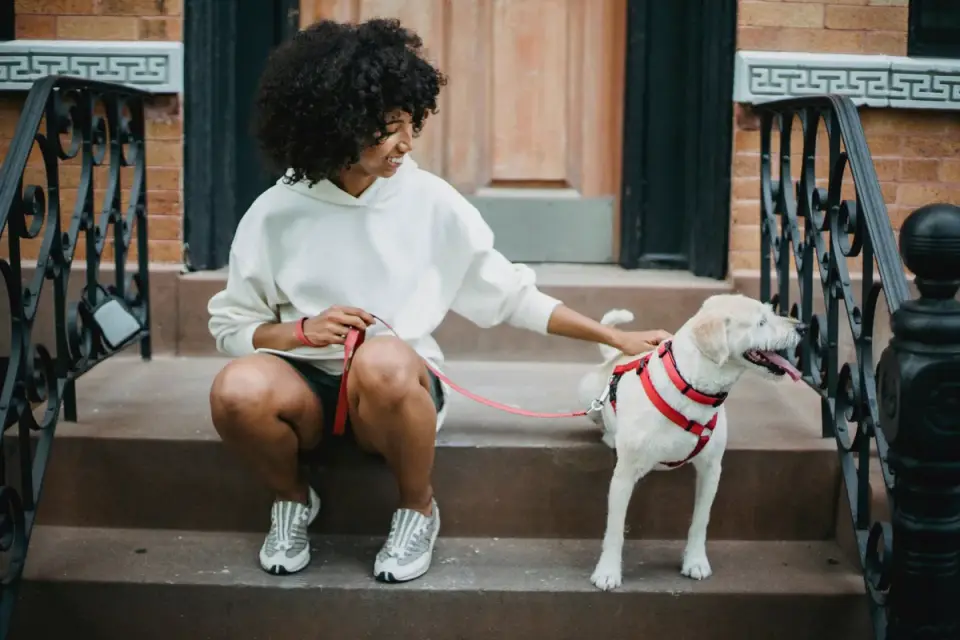
An 8-year-old Labrador retriever, 72 pounds, came up short-strided on her right hind after an ordinary fetch session in the yard. Weight-bearing, no swelling, no yelp when the leg was flexed. Her owner did everything right: leash walks only, day one and day two logged. By hour 40 she was moving normally again, no residual shortening at the trot. That’s what a genuinely mild, resolving limp looks like in real time — not a diagnosis, just a data point that stopped generating new data, which is exactly the signal that lets you close the loop without an exam.
The Case I See Go Wrong: Waiting Past the Window
Here’s where watchful waiting fails, and it’s a pattern I see often enough that I want to name it directly. A limp improves with rest, so the owner keeps resting the dog — day 3, day 5, day 10 — because it seems to be working, a little. That’s the trap: partial improvement from confinement isn’t the same as a healed leg, and plenty of orthopedic injuries feel better on crate rest simply because crate rest removes the loading that triggers pain, not because the underlying structure is intact. A partial ligament tear can look like a mild, intermittent limp for weeks before it progresses to a full rupture, and by the time it does, you’ve lost the window where the least invasive treatment options were still on the table.
This is the counterargument I take seriously — that early rest genuinely does help most soft-tissue strains, and that rushing every mild limp into an exam room is its own kind of overtreatment. I still land on the side of a time-boxed check-in with a real endpoint, not open-ended rest, because the cost of the exam is small and fixed, while the cost of a missed cruciate injury compounds every week you don’t address it. A PMC: review of canine cranial cruciate ligament rupture describes it as a progressive, biomechanically driven process rather than a single event in many dogs — which is exactly why “it got a little better” isn’t the reassurance owners want it to be.
When the Limp Is Actually a Bloodwork Question
Most mild limps are orthopedic, full stop. But there’s a subset where the leg is the symptom and the joint isn’t the real problem — immune-mediated polyarthritis, tick-borne disease, or a systemic infection can all present as a shifting, mild lameness before anything else looks wrong. This is where I’d push back on treating every limp as a pure mechanics question. If a limp comes with any fever, lethargy, inappetence, or if it seems to migrate between legs rather than staying put, that’s not a “give it 48 hours” presentation — that’s a bloodwork presentation, and a CBC and chemistry panel will tell you things a physical exam alone won’t. Reading the numbers before the narrative isn’t optional in that scenario; it’s the whole diagnosis.
What a Vet Exam Actually Adds That Home Monitoring Can’t
A hands-on exam can localize pain to a specific joint through palpation and range-of-motion testing, detect joint effusion or instability you’d never feel through fur at home, and flag neurologic signs like knuckling that change the entire differential list. Per Cornell University Riney Canine Health Center, a lameness workup typically includes a full orthopedic and neurologic exam and, when indicated, imaging — steps that simply aren’t available to an owner watching from the living room, however careful the observation.
Weight matters here too, and not just for dosing. A dog carrying excess pounds loads every joint harder with each step, which is part of why body composition belongs in the same conversation as the limp itself — see our breakdown of body condition score versus muscle condition score for how to actually assess that instead of eyeballing it.
The Edge Case That Changes the Calculus: Senior Dogs and Hidden Pain
Here’s the complication that should genuinely change your threshold, not just your worry level. Dogs are extraordinarily good at masking pain, and senior dogs are the best at it of all — a slow-onset limp in an 11-year-old dog is far more likely to reflect degenerative joint disease that’s been building for months than an acute strain from yesterday’s walk, which means the “just rest it” default is often wrong for exactly the age group most likely to get that advice at home. A limp that seems mild on day one in an older dog can also be the first visible sign of something that started as subtle stiffness weeks earlier and only became a limp once it crossed a pain threshold.
That’s a different problem from a fresh sprain, and it deserves a different read. If you’re trying to work out whether what you’re seeing is ordinary aging stiffness or something progressive, our guide to arthritis versus normal aging stiffness in dogs walks through the load-bearing clues that separate the two — because the watchful-waiting clock genuinely runs differently for a young dog’s fresh limp than for a senior dog’s “new” one that’s probably not new at all.
A 12-year-old mixed-breed terrier, weighing about 24 pounds, had what her owner described as “a little hitch” in her back leg for maybe three weeks before the visit — nothing dramatic, no reluctance to walk, still greeting people at the door. On exam, that hitch turned out to be a moderately unstable stifle with existing joint changes on imaging, not a fresh injury at all. Nothing about the presentation screamed emergency. That’s precisely the profile that gets waited on the longest, and precisely the one where waiting costs the most functional ground.
How I’d Actually Decide: The Short Checklist
- Trauma, non-weight-bearing, visible deformity, or a cold/pulseless limb → today, not tomorrow.
- Fever, lethargy, appetite loss, or a limp that shifts between legs → bloodwork and exam, not rest alone.
- Puppy, senior, or a dog on chronic medication → lower your threshold; their margin for “wait and see” is thinner.
- Young-to-middle-aged, otherwise healthy dog, weight-bearing, no red flags → 24-48 hours of restricted activity with a hard re-check is reasonable.
- Same or worse at the re-check, or any new sign appears → call the vet; don’t extend the window a second time.
If you’re also managing joint support long-term, whether that’s diet, weight, or a supplement, it’s worth knowing what actually separates a rigorously formulated product from one that just markets well — our comparison of vet-formulated versus over-the-counter dog supplements covers that ground without assuming price tells you anything about quality.
The Bottom Line
A truly mild, weight-bearing limp with no red flags earns a short, defined trial of rest — 24 to 48 hours, checked honestly, not extended because you’d rather not go to the vet. Everything else — non-weight-bearing, trauma, systemic signs, a senior dog’s “new” stiffness that probably isn’t new — skips the waiting room in your living room and goes straight to the one with a diagnostic table. The next time a limp shows up, the question isn’t how bad it looks right now. It’s whether you’re actually watching for a defined endpoint, or just hoping it goes away before you have to find out.
Frequently asked questions
How long should I wait before taking a limping dog to the vet?
For a mild, weight-bearing limp with no swelling, trauma, or systemic signs, 24-48 hours of restricted activity with an honest re-check is a reasonable trial. If it's the same or worse at that point, book the exam.
What limping signs mean I shouldn't wait at all?
Non-weight-bearing lameness, visible deformity or swelling, a limb that's cold to the touch, collapse after trauma, or any fever or lethargy alongside the limp all warrant same-day veterinary care.
Can a mild limp in an older dog really be serious?
Yes — senior dogs mask pain well, and a "new" mild limp in an older dog is often the first visible sign of degenerative joint changes that have been building for weeks or months, not a fresh injury.
Sources
- First Aid for Limping Dogs — VCA Animal Hospitals
- Cranial Cruciate Ligament Disease in Dogs — VCA Animal Hospitals
- What to Expect When Taking Your Limping Dog to the Veterinarian — Cornell University Riney Canine Health Center
- Cranial Cruciate Ligament Rupture in Dogs: Review on Biomechanics, Etiopathogenetic Factors and Rehabilitation — PMC