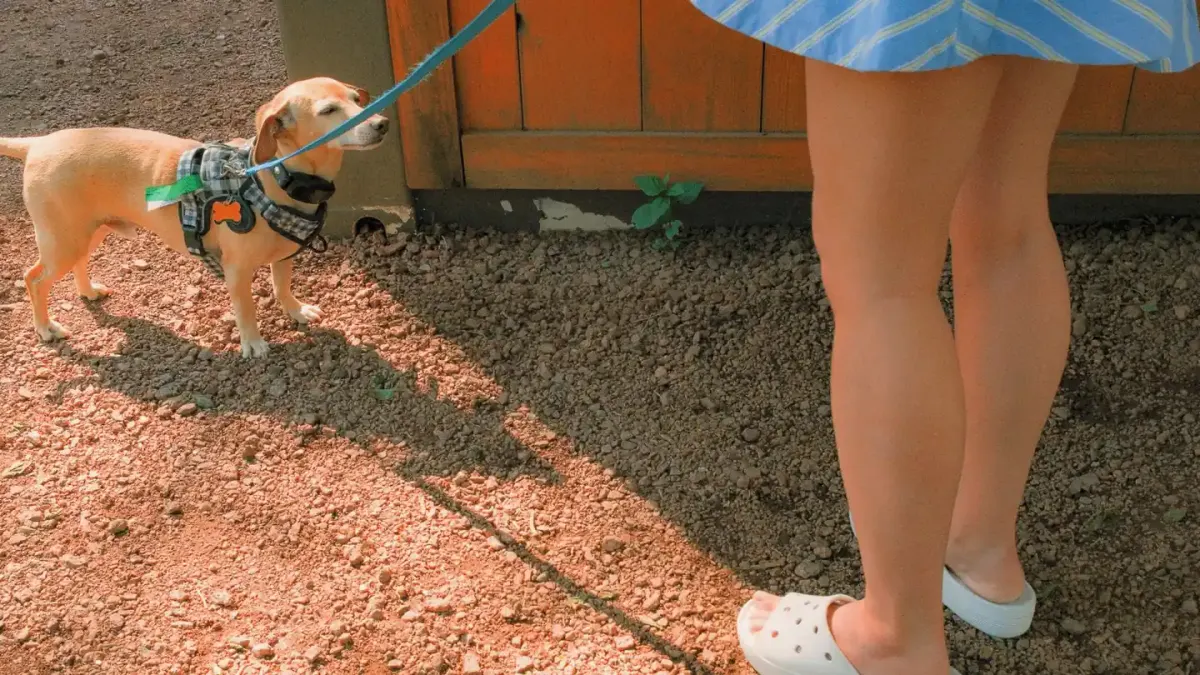
I expect an automatic check-in at the kerb, not a dog who skids to a stop because I yanked the leash. That baseline keeps roadside walks low-stress for both of you.
The 5-minute checklist — do this in order:
- Start 10 feet back from a quiet kerb, high-value treats in a pocket, leash loose in a J
- Walk, then stop one full stride before the edge — mark and reward four paws stopped
- Ask for one sit only once; reward the sit, then wait two seconds of eye contact
- Release forward with one cue word — I use “okay” — never lure across with the treat
- Repeat 4–6 reps, then quit while you are ahead
That short loop is the whole drill. What follows is how to keep it clean when real life shows up.
Last spring I counseled an owner with a 3-year-old, 68-pound Labrador who dragged her to the park gate every morning. She was choosing between a prong collar a neighbor recommended and actually teaching a kerb routine. We picked the routine. By day 10 she could stop a full step before our clinic parking-lot edge, the Lab sat without a second cue, and she counted three full seconds of loose leash before she said okay. That three-second pause changed the walk more than any tool would have.
Stop first, sit second — or you get neither
Owners rush the sit. I teach the stop first because impulse control at the road edge is a behavior chain: feet stop, brain catches up, then sit becomes easy.
Walk at normal pace toward the kerb. Stop yourself one stride early. Most dogs will drift past you — just stand still, anchor your hand at your hip, and wait. The second all four paws pause, mark with “yes” and deliver the treat at your leg, not over the road. That placement matters. You are building where the dog wants to park himself.
Only after three clean stops in a row, add the sit cue once. For background on marker timing and reward placement, the American Kennel Club has a practical library on teaching wait and door manners that matches this sequence well.
If your dog already knows a food-bowl wait, borrow it. The muscle memory transfers fast — see Teaching Your Dog to Wait for the Food Bowl for the exact release language I want you to copy here.
The week it falls apart
I had a client with a 9-month-old, 42-pound cattle-dog mix who nailed kerb sits in the driveway and then completely blew them on trash day. Skateboard, bus brakes, a loose Chihuahua — he lunged straight off the pavement. She felt embarrassed and doubled the treats, repeating “sit, sit, SIT.” Louder did not help.
That failure is normal and useful. Novelty raises arousal faster than food value can compete with, and repeating the cue just teaches the dog to wait for the third shout. We moved 15 feet back from the kerb for three weeks in that neighborhood, rewarded stops only, and dropped the sit entirely until his breathing slowed. The tradeoff: progress looks slower because you are retraining calm feet, not a fast butt. That is the point.
This is also where method matters. The American Veterinary Society of Animal Behavior position statements lay out why low-stress, reward-based handling holds up better long-term than leash corrections for impulse-control behaviors. I land there too — a startle may stop a dog once, but it does not build a dog who volunteers to wait.
Proof it with distance, duration, and that one weird kerb
Once home kerbs are boring, add only one challenge at a time. Farther from the edge, longer pause before release, or a busier street — never all three on the same walk.
My rule: two seconds of settle, then release. Build to five seconds over a week. Then add a foot of distance. Then try a new block.
A senior case still guides me: a 7-year-old, 24-pound terrier with cloudy eyes who waited beautifully at high kerbs but stepped straight off low driveway cuts. Vision and curb height changed the picture. We added a hand touch to her left knee as a tactile anchor, practiced only at that one low cut for four afternoons, and her pause returned by day 5. Edge cases like hearing, vision, or a downhill slope mean you should keep the drill closer and reward longer.
Link the pieces together on walks with How to Teach Your Dog to Heel once the stop is solid, and keep recall separate with How to Teach Your Dog to Come When Called.
My take is simple. Teach feet to stop, reward the pause at your side, release with one word.
Frequently asked questions
How long before my dog waits at the kerb automatically?
Most adolescent and adult dogs offer a pause within 2–3 weeks of daily 5-minute reps; reliable sits with traffic and squirrels nearby often take 4–6 weeks of gradual proofing.
Should I use stay or wait at the kerb?
Pick one release-based cue and keep it. I use “wait” for a short roadside pause followed by “okay,” and save a longer “stay” for stationary work away from traffic.
What if my dog only waits when I have treats?
Fade the lure early but keep random paydays. Reward with food every time for the first week, then reward 1 in 3 clean reps with food and the rest with your release forward — forward motion becomes the paycheck.
Sources
- Expert Advice on Dog Training — American Kennel Club
- Position Statements — American Veterinary Society of Animal Behavior