On this page
There’s a version of this that shows up on every dog account eventually: the “my dog knows sit, he just won’t do it” clip, filmed mid-eye-roll, captioned like the dog is being difficult on purpose. It gets millions of views because every owner has lived it. Here’s the fork you actually need to resolve first — is this a training gap, or is this an arousal/environment problem wearing a training gap’s clothes? Those two get treated completely differently, and mixing them up is why so many owners feel stuck.
In my practice, the dogs who “don’t listen” almost always listen fine in the exam room, on leash, six feet from the door. Ask the same dog to sit at the dog park entrance with three other dogs barking twenty feet away, and the wheels come off. That’s not defiance. That’s a nervous system that’s already spending its attention budget elsewhere, and the cue simply doesn’t have enough value to compete with what’s happening around it.
The behavior you’re describing usually isn’t “not listening” — it’s not knowing yet
Owners tend to describe a dog as knowing a cue once he’s done it reliably at home, in a quiet kitchen, with a treat in hand. But a behavior isn’t actually learned until it holds up with distance, distractions, and duration — trainers sometimes call these the “three Ds.” A dog who sits every time in the kitchen and never outside hasn’t generalized the behavior yet; he’s learned “sit means sit, in the kitchen, when Mom has the treat bag.” That’s a narrower skill than it looks like from the couch.
The American Veterinary Society of Animal Behavior is direct about this: dogs learn fastest and most durably through reward-based methods that reinforce the behavior you want, rather than punishing the one you don’t. If your dog “knows” a cue but only performs it inconsistently, the honest read is usually that reinforcement history is thin, not that he’s testing you. Build the skill back up in a low-distraction setting, then add distraction gradually — the same logic used in how to teach your dog to come when called, where recall reliability is built in stages rather than demanded outright at the dog park.
What to actually do about it, in order
Start with the environment, not the dog. Before you troubleshoot obedience, rule out the boring stuff: is he overtired, overstimulated, in pain, or simply too far from you for the reward to register as worth it. A dog sprinting after a squirrel fifty feet away is not being stubborn; he’s beyond the point where your voice can compete.
- Drop your criteria back to the last place it worked. If “sit” fails at the park, go back to the driveway. Rebuild the behavior there, then move ten feet closer to the distraction, not straight into it.
- Raise the value of the reward to match the distraction. A stale kibble piece won’t beat a squirrel. Real chicken, cheese, or a favorite toy might.
- Shorten your sessions and end on a win. Three to five minutes, then stop. Long sessions burn focus faster than they build it.
- Say the cue once. Repeating “sit, sit, sit, SIT” teaches him that the cue doesn’t matter until the fifth try. Ask once, help him succeed, reward.
- Reinforce the check-in, not just the trick. A dog who glances at you unprompted in a busy environment is offering exactly the behavior you want more of — mark and pay it.
This is also where a marker word or clicker earns its keep: precise timing tells the dog exactly which moment of behavior paid off, which matters even more in a distracting environment where a half-second of ambiguity can wreck the whole rep. If you haven’t settled on one, the tradeoffs are laid out in clicker vs verbal marker word.
The case I keep coming back to
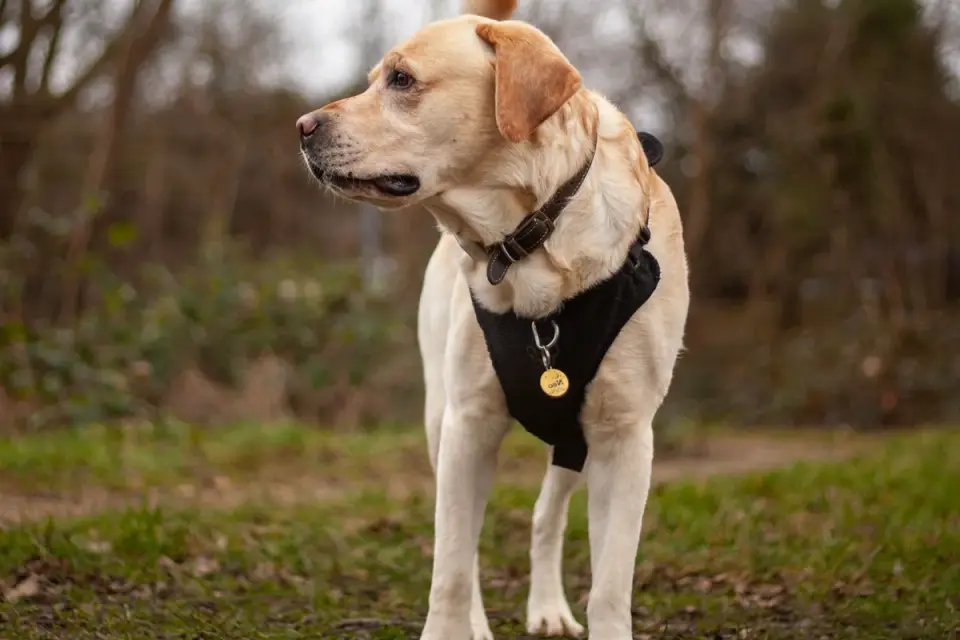
I once worked with a three-year-old Lab mix, forty pounds, brought in because the owner was convinced he’d “gotten dumber” over the past two months. He’d sit, stay, and come reliably indoors but blew through every cue on walks, dragging toward other dogs and cars alike. Turned out nothing had changed about the dog — the owner had switched from twice-daily walks to one long weekend hike, so his weekday walks had gone from calm neighborhood loops to a wound-up fifteen minutes of pent-up energy hitting the sidewalk all at once. We didn’t change a single cue. We split the walk schedule back into two shorter outings, dropped the training distance back to quiet streets, and paid heavily for glances toward the owner near triggers. Within about three weeks, the same “stubborn” dog was checking in on his own before the owner even asked.
That’s the pattern I see over and over: the training mechanics were already there. The dog’s capacity to use them, in that moment, wasn’t. Fix the setup — sleep, exercise, distance from the trigger, reward value — and the listening usually comes back with it.
Where group classes and private lessons actually help here
If you’ve tried the distance-and-reward rebuild and you’re still stuck, that’s usually a sign the dog needs either more structured reps than a solo owner can consistently deliver, or a trainer’s eyes on a specific trigger. The AAHA Canine Life Stage Guidelines note that continued training classes support obedience, socialization, and behavioral well-being across a dog’s life, not just puppyhood — this isn’t something you graduate out of at six months. Whether a group setting, a private trainer, or an online program fits your situation depends on your dog’s specific sticking point; that breakdown is covered in group classes vs private vs online training.
One more thing worth naming honestly: if the “not listening” is paired with sudden onset, lethargy, or a personality change rather than a gradual pattern tied to distraction, that’s a conversation for your vet before it’s a training plan. Pain, hearing changes, and cognitive changes in older dogs can all look like selective listening on the surface.
The verdict
Not listening is rarely stubbornness — it’s a mismatch between what you’re asking, what’s competing for attention, and how much reinforcement history the behavior actually has behind it. Go back to where the cue worked, rebuild it with better rewards and shorter distances, and reinforce the small check-ins, not just the finished trick. Do that consistently for a few weeks before assuming you’ve got a “difficult” dog. Most of the time, you don’t — you’ve got a dog who hasn’t finished learning yet, and that’s a much easier problem to solve.
Frequently asked questions
Is my dog ignoring me on purpose?
Almost never. Most "won't listen" cases come down to the cue not being generalized to that environment yet, the reward not being valuable enough to compete with the distraction, or the dog being too overstimulated or tired to focus — not deliberate defiance.
How long does it take to fix selective listening?
Many owners see a noticeable shift within two to four weeks of consistently rebuilding the cue at a lower distraction level and reinforcing check-ins, though timelines vary with the dog's age, history, and the specific trigger involved.
Should I use a correction if my dog won't listen?
The American Veterinary Society of Animal Behavior recommends reward-based methods as the default and cautions against punishment-based tools as a first-line approach, given the risk of increased fear or fear-related aggression.
Sources
- What are Reward-Based Training Methods for Dogs (and Cats)? — American Veterinary Society of Animal Behavior
- Behavior — AAHA Canine Life Stage Guidelines