On this page
Do these three things first
Approach him where he can see you, and never reach for a sleeping senior dog cold. Wake him with a vibration he can feel — a firm step on the floor near his bed — then let your hand drift close so he catches your scent before you make contact. Keep that first touch light, on the shoulder, and build pressure slowly. A dog who cannot hear you arrive still needs a warning he can receive.
Book a veterinary exam in the next week or two. A startle that is genuinely new counts as a clinical sign, and the point of the visit is to separate a hearing change from pain and from early cognitive decline. Those three overlap in older dogs, and each one is managed differently.
Until then, keep a short log: which sounds set him off, what time of day it happens, and whether his sleep has shifted. That pattern will tell your veterinarian far more than any single dramatic moment on the kitchen floor.
The short answer: he can’t hear you coming
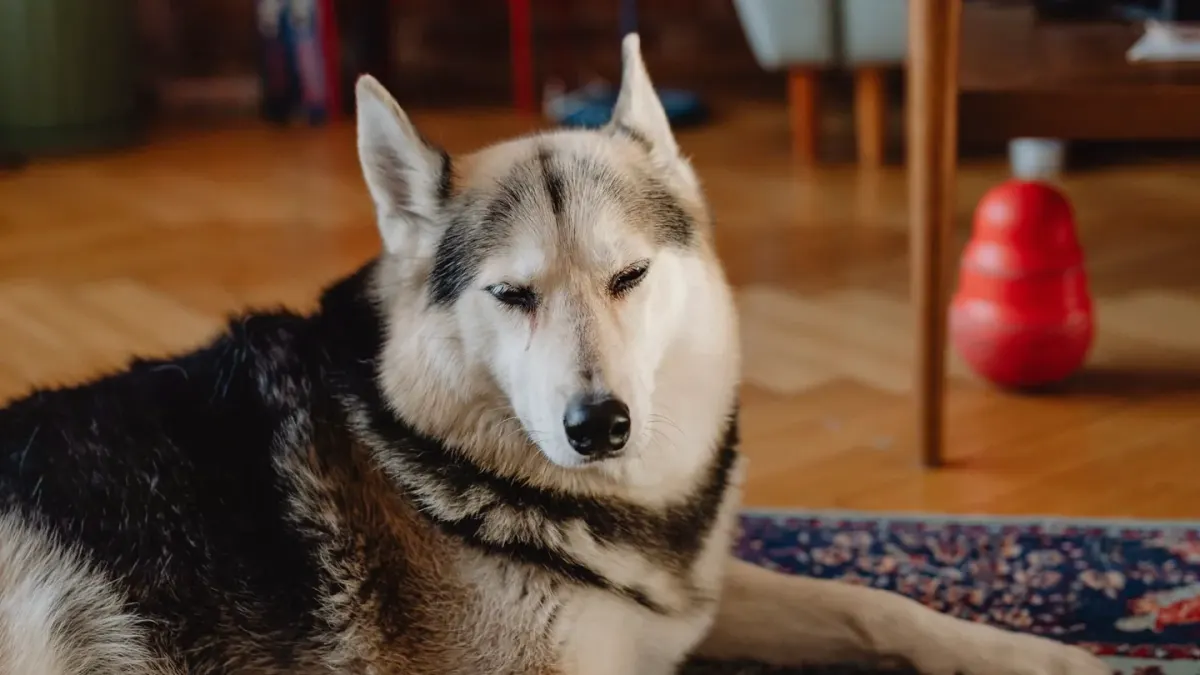
Most of the time, an old dog startles because age-related hearing loss has quietly removed his advance warning. High frequencies fade first, so he stops registering footsteps, the click of a latch, or a higher-pitched voice. The sound or the hand that finally reaches him then arrives with no lead-up. From where he sits, you simply appeared. The startle is a surprise response, not disobedience.
This kind of loss is called presbycusis, and it comes from the gradual death of the hair cells in the cochlea that turn sound into nerve signals. Those cells do not regenerate in dogs. The decline is slow, usually affects both ears, and does not reverse, and it tends to surface in the last third of a dog’s life. That timing is why it can feel sudden even though it has been building for months.
When the ears are the whole story
Owners usually notice the behavior long before they suspect the deafness, because dogs compensate well and rarely give obvious clues. A rough at-home check is to snap your fingers out of his sight line and watch for a flick of the ears or a glance back. No response on repeated tries, from either side, is worth reporting.
There is a real reason not to wave this off as ordinary aging. A 2022 study in the Journal of Veterinary Internal Medicine measured hearing in 39 senior dogs and found that worse hearing tracked with worse cognitive scores and with lower quality-of-life ratings for vitality and companionship. Hearing loss does more than mute the world. It narrows the sensory information a dog leans on to stay oriented, and that narrowing may help set the stage for other age-related change.
When it is more than the ears
Startle that travels with restless nights, extra daytime sleeping, aimless pacing, or moments of looking lost points past the ears toward canine cognitive dysfunction. Veterinary behaviorists track these shifts with the DISHAA framework — disorientation, altered interactions, sleep-wake disruption, house soiling, changed activity, and anxiety. Sensory loss feeds straight into it. As the AAHA senior care guidance describes, failing hearing or vision makes sleep lighter and raises startle responses to normal household sounds. A brain that processes sound and context less efficiently will react to the doorbell it used to ignore.
The differential you cannot skip: pain
Rule out pain before you conclude that he is simply deaf now. A dog who flinches or snaps when touched from behind may be guarding a sore joint rather than reacting to a surprise. Osteoarthritis is one of the most common conditions of senior dogs, and Cornell’s Riney Canine Health Center notes that it can bring “sudden changes in behavior, such as irritability or aggression.” Chronic pain also lowers the threshold at which contact registers as unpleasant, so a hand on the hip that never bothered him before can now provoke a genuine reaction. This is why a hands-on orthopedic exam belongs in the same visit as the hearing question.
Vision usually belongs in the picture too
Fold his eyes into the assessment. Nuclear sclerosis, the bluish haze common in lenses after about seven years of age, does not block vision but does blur near focus. Cataracts, which are a different problem, can take real sight. A dog who can neither hear you approach nor see you clearly in dim light has lost two warning systems at once, and startle becomes his default. Consistent lighting and predictable furniture help more than most owners expect.
How your veterinarian sorts it out
Expect a physical, orthopedic, and neurologic exam plus basic bloodwork first, because the priority is catching pain, thyroid disease, and other treatable contributors that mimic or worsen the picture. For the hearing itself, the objective test is the BAER, or brainstem auditory evoked response. Small electrodes on the head and neck record the brainstem’s electrical response to a series of clicks. A hearing ear produces a waveform. A deaf ear reads as a flat line. The test takes five to fifteen minutes, usually needs no anesthesia, and shows whether each ear still hears — though not precisely how much.
Make home less startling
Once you know what you are dealing with, most of the work is adapting how you reach him. Wake and greet him with vibration and scent rather than sudden touch. Teach a few clear hand signals while some hearing remains, so the visual channel is already familiar when it has to carry the load. Keep routines and furniture consistent, add a night light for a dog whose eyes are also fading, and make sure everyone who handles him — family, sitter, groomer, the veterinary team — knows he cannot hear an approach. These adjustments may help support his sense of security and cut down the number of surprises he has to absorb in a day.
The bottom line
A new startle in an old dog is information, not misbehavior. Have the ears, the joints, and the mind checked in one visit, then change how you approach him so the world stops sneaking up on a dog who can no longer hear it coming.
Frequently asked questions
Is my old dog startling because he is going deaf or losing his mind?
Often both are in play. Age-related hearing loss removes the warning that someone is approaching, while age-related cognitive change makes sleep lighter and raises startle to normal sounds. A veterinary exam sorts out which one is dominant and whether pain is adding to it.
Can hearing loss in a senior dog be reversed?
Age-related hearing loss comes from hair cells in the inner ear that do not regenerate, so it is usually permanent. The goal is adapting how you communicate and ruling out treatable contributors your veterinarian can identify, such as an ear infection or heavy wax.
How do I wake a deaf dog without scaring him?
Create a vibration he can feel by stepping firmly near his bed, and let your scent reach him before you touch. Start with a light hand on the shoulder and increase pressure slowly, always approaching where he can see you when possible.
Should I ask for a BAER test?
If you want objective confirmation of hearing loss, yes. BAER testing places small electrodes on the head and neck to record the brainstem's response to clicks. It is quick, usually needs no anesthesia, and shows whether each ear still hears.
Sources
- Relationship between hearing, cognitive function, and quality of life in aging companion dogs — Journal of Veterinary Internal Medicine (Fefer et al., 2022)
- Managing Cognitive Dysfunction and Behavioral Anxiety (2023 AAHA Senior Care Guidelines for Dogs and Cats) — American Animal Hospital Association
- Behavior Counseling: Senior Pet Cognitive Dysfunction — VCA Animal Hospitals
- Osteoarthritis — Cornell University College of Veterinary Medicine, Riney Canine Health Center
- What is the BAER test? (Deafness in Dogs & Cats) — LSU School of Veterinary Medicine
- How to Train Dogs Who Are Deaf or Hard of Hearing — VCA Animal Hospitals
- Age-Related Vision and Hearing Loss in Dogs — American Kennel Club