
On this page
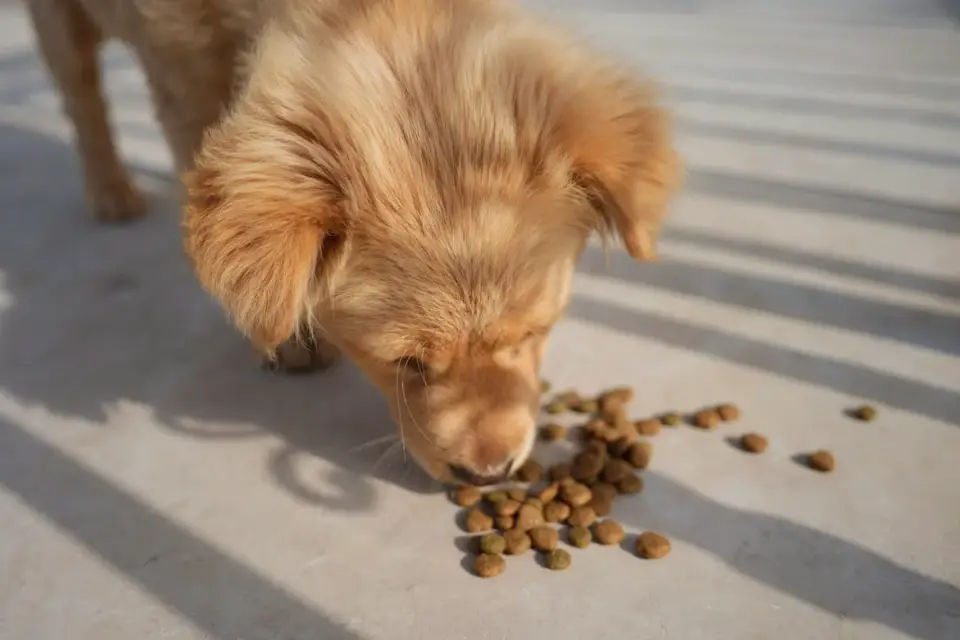
Slow down. The most common mistake with an older dog is swapping the bowl overnight, and a senior gut punishes that harder than a puppy’s does. Plan for one to two weeks, not a weekend.
Aging changes digestion. Older dogs often have slower gut transit and less reserve to absorb a sudden shift in fat, fiber, or protein source. This guide fixes one problem: how to move your dog onto a new diet without the vomiting, loose stool, or appetite drop that sends owners straight back to the old bag.
Why an older dog needs a slower switch
Dogs build a gut microbiome and a set of digestive enzymes tuned to whatever they have eaten for months or years. Change the substrate abruptly and that ecosystem lags behind. Veterinary nutrition guidance is consistent here: transition over 7 to 10 days at minimum, and stretch to 14 days for a dog with a sensitive stomach or one who has eaten the same food for a long time.
Age is its own reason to go slow. Lean muscle matters more now, because dogs lose muscle mass as they age, and adequate, digestible protein may help support what remains. Cutting protein because a dog is old is usually the wrong move, unless a diagnosed kidney or liver condition calls for it. There is also no official senior standard to lean on. Neither AAFCO nor the National Research Council defines a senior life stage, so the word senior on a label is a marketing choice, not a nutrient guarantee. A 2025 analysis found senior diets varied widely and often did not differ meaningfully from adult formulas; adult diets even carried more fat on average.
The transition schedule that works
Mix the two foods by measured volume and shift the ratio every few days. Weigh or measure each portion, because eyeballing drifts over a week.
- Days 1 to 3: 75% old food, 25% new.
- Days 4 to 6: 50% old, 50% new.
- Days 7 to 9: 25% old, 75% new.
- Day 10 onward: 100% new.
For a healthy senior, that arc is enough. For a dog with a history of gut upset, a recent illness, or a large change in food type, from kibble to fresh, one protein to a novel one, or dry to raw, double each stage and run it across 14 days. If a stage produces soft stool, do not advance. Hold the current ratio for a few extra days, then continue. Stepping back one stage is not a failure; it is information about the pace your dog can handle.
What to read on the label
The word senior tells you little, so read the panel instead.
- Protein: favor a named, digestible source at a moderate to high level, unless your veterinarian has restricted it.
- Fat: an overweight senior benefits from lower fat, while a thin or active older dog may need more. Match the dog in front of you, not the age bracket.
- Fiber and moisture: modest fiber may help support stool quality and a feeling of fullness, and added moisture, whether a topper, warm water, or a wet format, helps dogs whose appetite has dulled.
- Complete and balanced: confirm the AAFCO adequacy statement for adult maintenance or all life stages. That statement is the real nutritional floor.
Support the gut through the change
A few tools may help support a smoother switch, with honest limits. Plain pumpkin is a gentle, natural source of both soluble and insoluble fiber and can firm mild loose stool during a transition. Probiotics are popular and low risk, but temper expectations. In a 2025 pilot study in dogs with diarrhea, most improved, yet diversity metrics did not distinguish non-responders from responders, which means a richer microbiome readout does not reliably predict which dog benefits. Treat these as support for the transition, not a reason to rush it.
When to slow down, or call the vet
Some soft stool in the first days is common. Escalating or persistent signs are not. Call your veterinarian for vomiting more than once or twice, watery or bloody diarrhea, refusal to eat for more than a day, lethargy, or weight loss. If a dog stays loose or fails to thrive after a careful, complete switch, look past the food. Persistent malabsorption can signal an underlying disorder. Exocrine pancreatic insufficiency, as one example, is treated by pancreatic enzyme replacement therapy, nutritional management with low-residue diets and moderate fat content, and supplementation of cobalamin, and it will not resolve by tweaking brands. Your veterinarian can run the specific tests.
The steady version wins. Measure the ratios, move every few days, watch the stool, and give an old dog’s digestion the runway it needs.
Frequently asked questions
How long should it take to change a senior dog's food?
Plan for 7 to 10 days at minimum, and extend to 14 days for a dog with a sensitive stomach, a recent illness, or one who has eaten the same food for years. The goal is to let the gut microbiome and digestive enzymes adjust to the new food instead of forcing a sudden switch.
Do senior dogs need less protein?
Usually not. Older dogs lose lean muscle as they age, and adequate, digestible protein may help support what remains. Reducing protein is appropriate only when a veterinarian diagnoses a condition, such as certain kidney or liver disease, that calls for it.
Is food labeled 'senior' actually different?
Not reliably. Neither AAFCO nor the National Research Council defines a senior life stage, so senior is a marketing term rather than a nutrient guarantee. A 2025 analysis found senior diets varied widely and often did not differ meaningfully from adult formulas.
My senior dog has loose stool during the switch. What should I do?
Hold the current old-to-new ratio for a few extra days rather than advancing, and make sure portions are measured. Plain pumpkin can firm mild loose stool. Call your veterinarian for repeated vomiting, watery or bloody diarrhea, refusal to eat, lethargy, or weight loss.
Sources
- How to Switch Dog Foods: Transitioning Your Dog's Diet — American Kennel Club
- Tips and Timelines for Switching Dog or Cat Food — American Animal Hospital Association
- Nutritional Requirements of Small Animals — Merck Veterinary Manual
- Exploratory analysis of nutrient composition of adult and senior dog diets — Frontiers in Veterinary Science (2025), DOI:10.3389/fvets.2025.1717409
- Pilot study evaluating tolerability and changes in fecal microbiota associated with novel probiotic administration to dogs with diarrhea — Frontiers in Veterinary Science (2025), DOI:10.3389/fvets.2025.1720932
- Exocrine pancreatic insufficiency in dogs and cats — Journal of the American Veterinary Medical Association (2024), 262(2):246-255