
On this page
- What Inflammation Actually Looks Like Inside an Arthritic Joint
- Omega-3 Fatty Acids: The Best-Evidenced Starting Point
- Glucosamine and Chondroitin: Building Blocks First, Anti-Inflammatories Second
- Green-Lipped Mussel and Curcumin: Where the Newer Data Points
- Reading the Label: Dose, Sourcing, and What a Seal Does and Doesn’t Promise
- What to Expect as the Regimen Continues
Several natural anti-inflammatory options exist for dogs with arthritis, each working through a distinct joint pathway. Some target the cartilage matrix directly. Others quiet the inflammatory chemistry circulating in the joint fluid itself. Understanding which is which changes how you evaluate a supplement label, and how patient you should be waiting for results.
What Inflammation Actually Looks Like Inside an Arthritic Joint
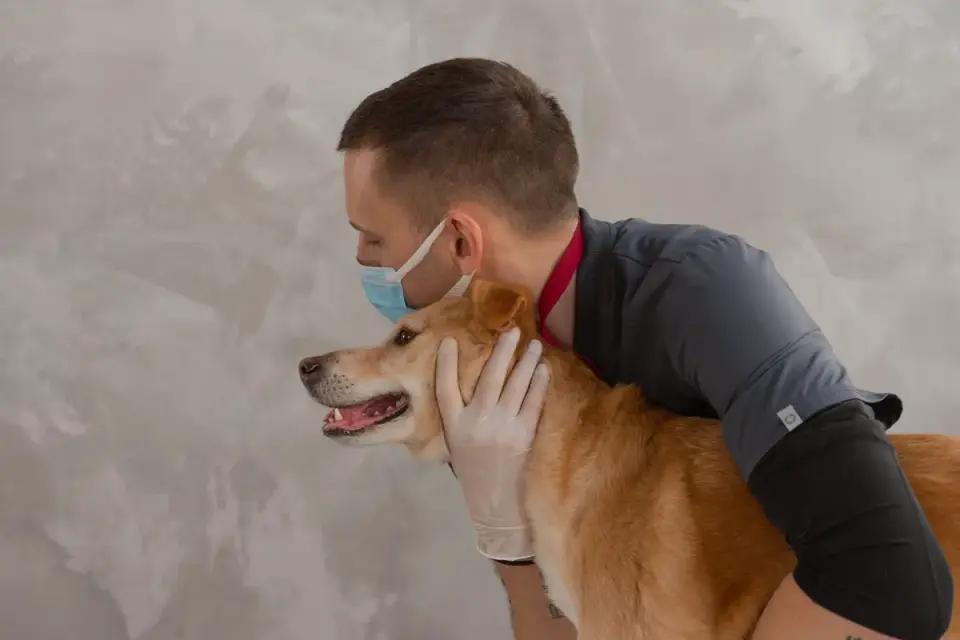
Start at the exam table, because that’s where this makes sense. When I palpate a dog with osteoarthritis, I’m feeling for effusion, crepitus, and a restricted range of motion — all downstream signs of a joint capsule that’s chronically inflamed, not just a cartilage surface that’s worn thin. Cartilage breakdown releases fragments that the immune system reads as foreign, triggering cytokines like TNF-α and IL-17 and enzymes like MMP-3 that further degrade cartilage and irritate the synovial lining. That’s the loop natural anti-inflammatory ingredients are trying to interrupt: less cytokine signaling, less enzymatic breakdown, calmer synovial fluid.
This matters because it reframes what these supplements are for. They’re not analgesics in the way an NSAID is. They’re structure/function support aimed at the biochemistry driving the pain, which is also why they tend to work on a slower timeline.
Omega-3 Fatty Acids: The Best-Evidenced Starting Point
Of everything on this list, fish oil omega-3s have the deepest clinical trial base in dogs specifically. A randomized, blinded trial published in JAVMA found that dogs fed a diet supplemented with fish oil omega-3 fatty acids showed a significant improvement in weight bearing over 90 days, compared to no meaningful change in the control group. A separate multicenter trial across 33 veterinary hospitals went further: dogs with chronic osteoarthritis already on carprofen for pain were able to maintain comfort on a lower carprofen dose once fish oil was added, according to research indexed on PubMed. EPA and DHA compete with arachidonic acid for the same enzymatic pathways, which shifts the balance toward less inflammatory prostaglandin production — a mechanism, not a promise.
For an arthritic dog already managing joint pain and possibly a related gut-health regimen, omega-3s are usually the first natural layer I’ll add, given the strength of the trial data behind them.
Glucosamine and Chondroitin: Building Blocks First, Anti-Inflammatories Second
Glucosamine and chondroitin are the two most familiar names in this category for a reason — they’re also the most studied joint support ingredients for dogs. Glucosamine hydrochloride has been shown to help prevent experimentally induced cartilage degradation in vitro, according to a review in the Journal of Veterinary Medical Science, acting as a substrate for the glycosaminoglycans that make up cartilage matrix. Chondroitin’s role leans more directly anti-inflammatory: research published in Frontiers in Veterinary Science describes it supporting healthy synovial fluid homeostasis, which is the viscous cushioning that keeps a joint gliding rather than grinding.
Neither ingredient is fast. Most owners and vets set expectations around six to eight weeks of consistent dosing before judging whether it’s helping — closer to a slow rebuild than a quick fix.
Green-Lipped Mussel and Curcumin: Where the Newer Data Points
Green-lipped mussel extract brings omega-3s and glycosaminoglycans together in one ingredient, and the newer research is compelling. A study in Nutrients (MDPI) found that green-lipped mussel extracts alleviated paw swelling in an animal model and reduced serum levels of rheumatoid factor, anti-CCP antibody, and pro-inflammatory cytokines including TNF-α and IL-17 — the same inflammatory markers driving joint pain in arthritic dogs.
Curcumin, the active compound in turmeric, tells a similar story with one important caveat. A study documented in PMC (National Library of Medicine) found that a curcumin-containing supplement alleviated osteoarthritis markers in canine subjects. But curcumin is poorly absorbed on its own, so the delivery format — often paired with black pepper extract for bioavailability — matters as much as the raw dose on the label. A thin, unstandardized turmeric powder is unlikely to deliver what the research trials actually tested.
Reading the Label: Dose, Sourcing, and What a Seal Does and Doesn’t Promise
Here’s the plain-language part. A supplement is only as good as its dosing and manufacturing. Look for a labeled amount per serving rather than a vague “proprietary blend,” and check whether the dose is anywhere near what the cited trials used — most of the studies above dosed by body weight, not by a flat scoop size. The National Animal Supplement Council (NASC) seal is a reasonable proxy for manufacturing quality and label accuracy: it means the company passed a third-party facility audit and reports adverse events, not that the product is guaranteed to work for your dog’s arthritis.
If your dog is also on a joint-support regimen involving hyaluronic acid, it’s worth asking your vet how these ingredients stack rather than assuming more is automatically better — several of them overlap in mechanism, and redundancy doesn’t always add benefit.
What to Expect as the Regimen Continues
Natural anti-inflammatory support for canine arthritis is a long game, and the honest answer is that it works best layered onto — not swapped in for — a full mobility plan: weight management, appropriate exercise, and veterinary reassessment as the disease progresses. Reassess every few months. A dog’s inflammatory load, body condition, and mobility needs shift over the course of the disease, and what supported comfort at diagnosis may need adjusting a year in. The ingredients above may help support that trajectory; none of them are a substitute for a veterinarian tracking how your individual dog is actually doing.
Frequently asked questions
How fast do natural anti-inflammatory supplements work for a dog's arthritis?
Structural ingredients like glucosamine and chondroitin generally need six to eight weeks of consistent dosing before an owner notices a difference, while omega-3 fatty acids have shown measurable weight-bearing changes in as little as 90 days in controlled studies. None of them work as fast as a prescription anti-inflammatory.
Can natural options replace an NSAID for my dog's arthritis?
Not typically for moderate to severe pain. Most of the research on natural anti-inflammatories in dogs studies them as an addition to conventional pain management — in one trial, fish oil supplementation let dogs maintain comfort on a lower carprofen dose, rather than eliminating the drug.
Is curcumin safe to give alongside a joint supplement?
Curcumin is generally well tolerated at studied doses, but it can have mild GI effects and may interact with blood-thinning medications, so it's worth running past your veterinarian before layering it onto an existing regimen.
Sources
- Protective effects of turmerosaccharides rich extract of Curcuma longa L. in osteoarthritic dogs — Frontiers in Veterinary Science
- Prevent experimentally induced cartilage degradation in vitro (glucosamine review) — Journal of Veterinary Medical Science
- Green-lipped mussel extracts alleviate paw swelling and reduce pro-inflammatory cytokines — Nutrients (MDPI)
- Evaluation of the effects of dietary supplementation with fish oil omega-3 fatty acids on weight bearing in dogs with osteoarthritis — JAVMA
- A multicenter study of the effect of dietary supplementation with fish oil omega-3 fatty acids on carprofen dosage in dogs with osteoarthritis — PubMed
- A Nutritional Supplement Containing Curcumin C3 Complex, Glucosamine, and Chondroitin Alleviates Osteoarthritis in Mice and Canines — PMC (National Library of Medicine)
- NASC Quality Seal — National Animal Supplement Council (NASC)