On this page
A few practical steps to prepare your dog for the visit can genuinely reduce fear once you’re in the exam room. Most of that work happens well before the front door — in the living room, in the car, and in the days leading up to the appointment, not in the thirty seconds before your dog gets weighed.
Here’s the checklist worth working through, roughly in order of how far ahead you should start:
- Practice handling at home — paws, ears, mouth, gentle restraint — a few minutes a day
- Muzzle-train even if you don’t expect to need one
- Desensitize to the carrier or the car itself, separate from the destination
- Use high-value treats strategically, not just at the exam table
- Ask the clinic about low-stress scheduling or a quieter arrival option
- Bring something that smells like home
- Talk to your vet about calming aids ahead of the visit, not the morning of
- Read body language throughout the appointment, not only at the start
Start Handling and Carrier Practice Days Before the Appointment
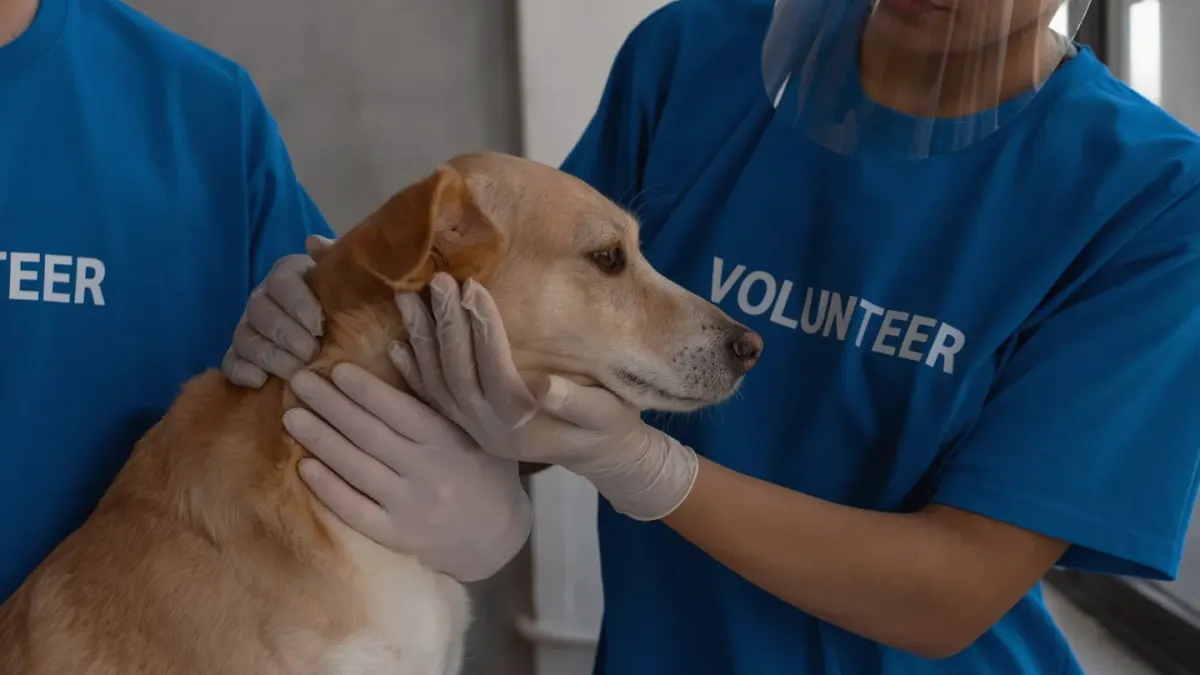
A dog that has never had its ears touched, paws squeezed, or mouth opened outside of a clinic has no reason to expect that any of it is routine. Five minutes a day of calm handling — paws, ears, gums, a light hold around the chest — gives your dog repeated, low-stakes exposure to the same touches a vet will use. If your dog is uneasy with restraint, muzzle-training in short, treat-paired sessions is worth doing even for a dog that’s never bitten anyone; a muzzle introduced calmly at home reads very differently than one strapped on for the first time mid-exam.
Carrier and car work matters just as much. If the carrier or the car only appears on vet days, your dog has already built the association before you’ve left the driveway. Leave the carrier out as furniture between trips. Take short car rides that don’t end at the clinic — around the block, then straight home — so the car itself stops predicting bad news.
What to Bring, and What to Ask the Front Desk
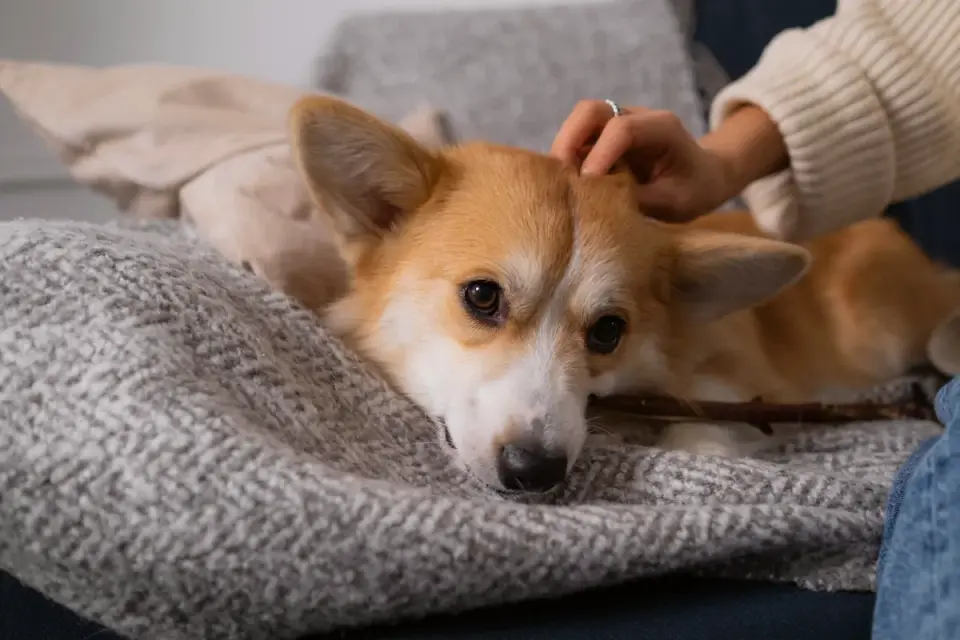
A towel or blanket with your dog’s scent on it, placed on the exam table before your dog gets up there, gives them something familiar in an otherwise sterile room. High-value treats — small, soft, reserved for vet visits only — should travel with you and get used liberally in the parking lot and waiting room, not saved for after the exam.
It’s also fair to call ahead. Many clinics can offer a quieter arrival: first appointment of the day when the waiting room is empty, a side entrance, or waiting in the car until the exam room is actually ready instead of sitting among other anxious animals. None of this requires a special program. It just requires asking.
If your dog’s anxiety shows up well before the vet, in situations like thunderstorms, fireworks, or being left alone, that’s a broader pattern worth reading up on separately. Our guide on signs your dog needs a calming supplement breaks down which behaviors point toward a supplement conversation versus a training one.
Calming Ingredients Worth Understanding, and Their Real Evidence
Some owners look for a calming aid to use in the days around a vet visit. It’s worth knowing what the research actually supports before choosing one, and it’s worth talking to your vet first, since dosing and timing matter more than the ingredient name on the label.
Chamomile has a long history of traditional use for relaxation, but the evidence base is still developing. A review in Biomedicines notes that, for most species, evidence is derived mainly from preclinical studies or traditional use, not large controlled trials in dogs specifically.
KSM-66 ashwagandha has more clinical backing behind it. A systematic review published in Cureus analyzed multiple randomized controlled trials and concluded that ashwagandha has a moderate positive impact on stress reduction and cognitive performance — though that body of evidence is drawn primarily from human studies.
L-theanine, the amino acid found in tea, has also been studied for anxiety, with mixed results across conditions. A review in Molecular Psychiatry found a meaningful effect in one study on psychotic anxiety, using a dose of 400 mg per day over eight weeks — a human dosing context that doesn’t translate directly to a dog. If you’re comparing calming ingredients head-to-head, our breakdown of chamomile vs. L-tryptophan for calming dogs goes deeper into how each one is actually studied.
The honest takeaway: these ingredients have real research behind them, but none of it amounts to a guarantee that a chew will keep your dog calm at the vet. Treat a calming aid as one layer of a plan, not the plan itself, and run any new supplement past your vet before the appointment, not the morning of it.
Reading Fear Signals During the Exam
Preparation doesn’t end at the check-in desk. Watch for lip licking, yawning outside of tiredness, a tucked tail, whale eye (showing the whites of the eyes), or a dog that goes unnaturally still. These are earlier and more reliable signs of fear than growling or snapping, which tend to show up only after quieter signals have been missed. If you see them building during the exam, it’s reasonable to ask the vet team to pause, let your dog reset with a treat, and continue in smaller steps rather than pushing through.
A dog that startles easily at handling in general, not just at the vet, may also be dealing with underlying discomfort worth investigating on its own. Joint pain, for instance, can make normal handling feel threatening; our look at whether hyaluronic acid actually works for dog joints is a useful next read if mobility, not fear alone, seems to be part of the picture.
A single tense vet visit is not a crisis. A pattern of escalating fear at every visit is worth flagging to your vet directly — they can adjust handling, scheduling, or medication protocols for future appointments.
The Bottom Line
Reducing fear at the vet is less about a single trick and more about stacking small, boring preparations — handling practice, carrier familiarity, treats used early and often, and an honest read of your dog’s body language — in the days before the appointment, not the minutes before it.
Frequently asked questions
How many days before a vet visit should I start prepping my dog?
Start handling and carrier or car practice at least a week out if you can. A single session the morning of the appointment rarely undoes a dog's existing association with the clinic.
Are calming chews enough on their own to fix vet-visit fear?
Treat them as one layer, not the whole plan. Ingredients like chamomile, KSM-66 ashwagandha, and L-theanine have supportive research behind them, but they work best alongside handling practice, not instead of it.