On this page
- Trust the Timeline or Buy the Fix: The Fork Every New Owner Hits
- Birth Through Week Three: A Microbiome Assembled Before You Ever Meet the Puppy
- Weaning Is the Real Reset, Not the Puppy Food Bag
- What You Can Actually Move After Eight Weeks
- The Edge Cases That Change the Plan
- Weigh the Cost and the Access Before the Ideal
Trust the Timeline or Buy the Fix: The Fork Every New Owner Hits
Every puppy owner reaches the same fork within the first week home, whether they clock it or not. One path says the gut microbiome is already assembling itself on a fairly fixed biological schedule — feed well, keep things calm, and let physiology finish what birth started. The other path says buy the probiotic, the prebiotic chew, the gut-health starter kit, and get ahead of a problem that may not exist yet. Both paths get marketed hard.
Only one of them is actually supported by what researchers have measured in puppies from birth through the first several months.
Birth Through Week Three: A Microbiome Assembled Before You Ever Meet the Puppy
Colonization begins at birth, and how a puppy arrives already shapes that first wave of bacteria. A 2022 analysis, Gut microbiota development in the growing dog: A dynamic process influenced by maternal, environmental and host factors, identifies birth mode, colostrum and milk composition, and direct litter contact as the dominant forces stocking a newborn puppy’s gut before it has ever eaten solid food. None of that is something an owner picks off a shelf. A more recent long-read sequencing study tracking a canine birth cohort, published in mSystems, found that Lactobacillus species were significantly more abundant in cesarean-delivered puppies than in their vaginally delivered littermates through the eight- to ten-week window — a different starting mix, not automatically a worse one.
Picture the more common version of this fork. A new owner picks up an 8-week-old Cavalier King Charles Spaniel puppy, about 4 pounds, straight from a breeder who weaned the litter on schedule. Stool is normal, appetite is good, energy is puppy-normal. On the drive home, the owner is already scrolling a gut-health starter kit promising to “reset” the microbiome in the first week. Nothing about this puppy’s history suggests a reset is needed — vaginal birth, normal nursing, no antibiotics, no GI illness. The real decision isn’t whether gut support ever matters. It’s whether day one, in a healthy puppy, is the moment to spend on it, or the moment to just feed a good diet and watch.
Weaning Is the Real Reset, Not the Puppy Food Bag
Weaning, not any product, is the actual reset button. It runs roughly from three weeks of age, when a litter starts nosing at solid food, to around eight weeks, when a puppy is fully off the dam and typically goes home. Early on, the puppy gut is dominated by Proteobacteria, a phylum associated more with instability than with a mature, fermentative community. As solid food arrives and dietary fiber and complex carbohydrates enter the mix for the first time, the balance shifts hard toward the phyla that dominate an adult dog’s gut, and diversity climbs. By roughly eight to nine weeks — right around the age most puppies go to their new home — bacterial abundances have already started to resemble an adult dog’s, per that same growing-dog review. Nursing duration and the pace of the milk-to-solid-food transition affect how quickly that diversity climbs too, according to a study in Animals (MDPI) that tracked puppies from birth through weaning.
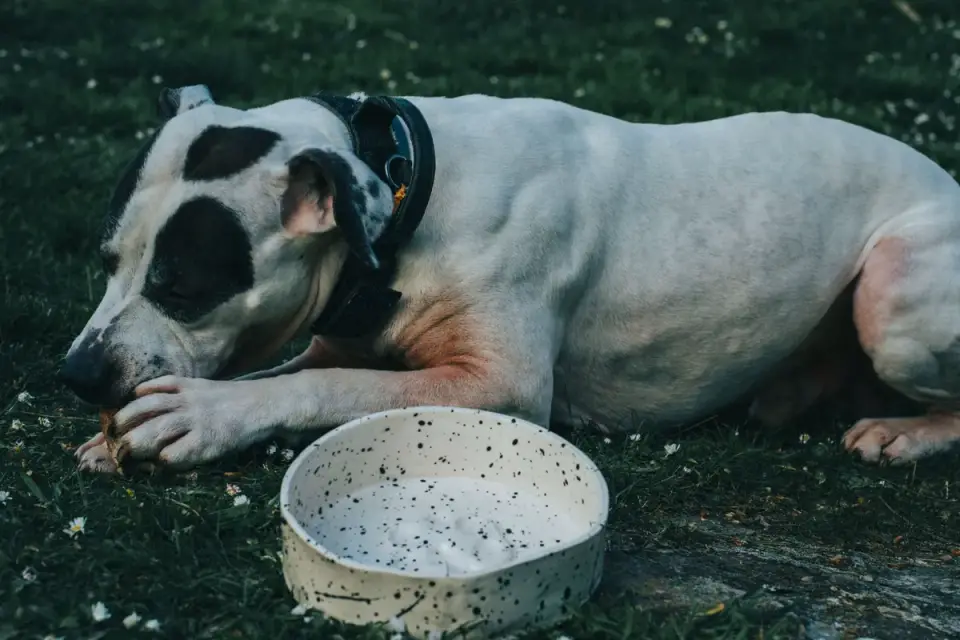
Here’s where it gets messier in practice. In a litter of five German Shepherd puppies delivered by cesarean, the breeder — anticipating a rougher microbial start — switched the whole litter onto a novel-protein, prebiotic-fortified weaning formula from day one. By day 10 after full weaning, three of the five pups had intermittently loose stool anyway, at an age (roughly nine weeks) when stool should already have been firming toward adult consistency. The formula wasn’t wrong to try, and it likely helped at the margins. But it couldn’t outrun the biology of a compressed, cesarean-altered colonization window on its own schedule. That’s the tradeoff owners rarely hear: supplementing a disrupted start helps around the edges. It doesn’t reset the clock to what a full-term vaginal birth and uninterrupted nursing would have produced on their own.
What You Can Actually Move After Eight Weeks
After eight weeks, the birth-and-weaning window is closed, and the questions change. This is where an owner’s choices start to outweigh genetics or delivery mode. Fiber type and amount is one of the few levers with real evidence behind it — get it wrong and you can undo the diversity gains weaning just produced; the line between gut-supportive and too much fiber is a real one, not a marketing hedge. Antibiotic exposure is the other big lever, and not always an avoidable one: a puppy who needs a course of antibiotics for a genuine infection will see measurable shifts in gut community structure, and the timing of any probiotic relative to that course is its own decision, covered in more detail in Can Probiotics Be Given With Antibiotics for Dogs?
Probiotic supplementation itself is a more modest lever than the trend cycle suggests. A 2025 randomized trial, Probiotic Response and Microbial Diversity Outcomes in Dogs, found that diversity metrics did not distinguish the dogs who responded clinically from the dogs who didn’t — meaning a stool sample’s diversity score isn’t a reliable way to confirm whether a specific probiotic is doing anything for a specific puppy. That’s a useful check against the idea that more strains or a bigger count is automatically better; the research so far says response looks individual, not a diversity math problem. If you’re comparing actual products, that’s a separate exercise — see Best Probiotic for Dogs in 2026 for how the category breaks down on dose and strain evidence — but for gut development specifically, a probiotic is a support tool, not a replacement for a window that’s mostly closed by the time most owners start shopping for one.
The Edge Cases That Change the Plan
Most of this holds for a full-term, nursing puppy with an uneventful weaning. A few common deviations change the math enough that a blanket recommendation stops being responsible advice. Orphaned or bottle-fed puppies miss the maternal-imprint stage described earlier. Puppies who need early antibiotics for something like parvovirus supportive care are working from a smaller, less diverse starting population than a healthy littermate. And on the rarer end, a small number of puppies — young German Shepherds especially — turn out to have exocrine pancreatic insufficiency, a pancreas that isn’t producing enough digestive enzymes to break food down properly, gut microbiome aside.
That last one isn’t a supplement problem.
EPI is treated with pancreatic enzyme replacement therapy, nutritional management using low-residue diets with moderate fat content, and cobalamin supplementation, according to a JAVMA review of the condition. No amount of gut-health chews or postbiotic add-ins substitutes for enzyme replacement when the pancreas itself isn’t producing them. It’s also, per that same review, an area where the research still has real gaps — the authors note that future studies are needed to understand why dysbiosis can persist in dogs with EPI even after enzyme replacement therapy starts, which is a fair reminder that “the microbiome is complicated” isn’t marketing spin here; it’s the actual state of the science. Digestive enzyme supplementation more broadly is worth understanding on its own terms, separate from probiotics; see Digestive Enzymes for Dogs for where that category holds up and where it doesn’t.
I’ve examined 16-week-old German Shepherd puppies, around 28 pounds, brought in for growth that had plateaued despite a normal appetite, with stool that turned pale, greasy, and high-volume over about three weeks. Birth, weaning, and diet had all gone by the book. The stool wasn’t a probiotic problem or a fiber problem — bloodwork showed a pancreas that wasn’t secreting enough digestive enzymes. The pattern repeats often enough to matter: the developmental window closes around eight weeks, and after that, persistent GI symptoms in an otherwise well-raised puppy point toward a diagnosis, not toward the next product.
Weigh the Cost and the Access Before the Ideal
The ideal version of puppy gut development isn’t something most owners get to choose. You don’t pick your puppy’s birth mode, whether the breeder weaned early or on schedule, or whether a rescue puppy arrived already stressed and underfed at ten weeks old. What you actually control starts later and costs less than the supplement industry implies: a consistent, appropriate diet through the rest of puppyhood, judicious rather than reflexive antibiotic use, and paying attention to stool and growth instead of assuming a chew fixes what biology already decided in the first eight weeks.
Weigh the cost and the access before the ideal. A picture-perfect breeder pedigree and a research-grade probiotic are both nice ideas, but the free interventions carry more of the actual weight — a good weaning diet, avoiding unnecessary antibiotics, watching for real red flags rather than assuming a supplement fixes what biology already decided. Those are available to every puppy owner regardless of budget, which is the whole point of weighing cost and access before you weigh the ideal.
That’s not a lesser standard. It’s the only one that actually scales.
Frequently asked questions
At what age is a puppy's gut microbiome basically developed?
Most of the heavy lifting happens by around eight to nine weeks, when a puppy's gut bacteria start to resemble an adult dog's, according to a 2022 review in Frontiers in Veterinary Science. Diversity and stability keep refining for a few months after that, but the biggest shifts are already behind a puppy by the time it goes home.
Does a C-section puppy need a different gut-health plan?
Cesarean delivery does shift a puppy's early bacterial makeup — one study found more Lactobacillus in C-section puppies through eight to ten weeks compared with vaginally born littermates. That's a different starting point, not automatically a worse one, and it doesn't call for a special supplement protocol; a consistent, appropriate diet through weaning matters more than trying to correct for delivery mode after the fact.
Should I start my puppy on a probiotic right away?
Not automatically. A healthy, normally weaned puppy with normal stool doesn't need a probiotic on day one. A puppy recovering from antibiotics, illness, or a rough weaning period is a different conversation, ideally with your veterinarian, since research so far shows probiotic response is individual rather than something a diversity score can predict.
What's a red flag that points to something more than normal development?
Persistent, greasy, pale, or high-volume stool alongside poor weight gain isn't just a slow-adjusting gut — get it checked. It can point to something like exocrine pancreatic insufficiency, which needs enzyme replacement therapy and diet changes that no supplement can substitute for.
Sources
- Pancreatic Enzyme Replacement Therapy and Gut Dysbiosis in Canine Exocrine Pancreatic Insufficiency — JAVMA
- Probiotic Response and Microbial Diversity Outcomes in Dogs — Frontiers in Veterinary Science
- Gut microbiota development in the growing dog: A dynamic process influenced by maternal, environmental and host factors — Frontiers in Veterinary Science
- Factors Affecting Gut Microbiota of Puppies from Birth to Weaning — Animals (MDPI)
- Longitudinal long-read microbiome profiling in a canine model reveals how age, diet, and birth mode shape gut community dynamics — mSystems