Can Dogs Eat Watermelon? The Real Rules Behind the Trend
Medically reviewed by Justin Shmalberg, DVM, CVA, ACVN, ACVSMR — For general education — not a substitute for veterinary care.
Yes, dogs can eat watermelon — the flesh alone, seeds and rind removed, served in modest, measured portions.

Yes, dogs can eat watermelon — the flesh alone, seeds and rind removed, served in modest, measured portions. That’s the whole verdict in one line, but the comment section under every watermelon video is proof that owners want the fine print, not just the yes.
Before you cut a slice, run through this:
- Cut the flesh away from the rind entirely — no green skin, no white pith.
- Pick the black seeds out, or buy seedless watermelon and skip the step.
- Keep the portion small: a few half-inch cubes for most dogs, not a wedge.
- Treat it as an extra, not a meal replacement — AKC and most veterinary nutrition guidance put treats at roughly 10% of daily calories.
- Skip it, or ask your vet first, if your dog has diabetes, is overweight, or has kidney disease.
- Introduce it in a small test amount the first time, then watch for loose stool over the next day.
The reason watermelon keeps resurfacing on every dog account by June is almost embarrassingly simple: it’s hot, the fruit is mostly water, and a dog demolishing a rind-free wedge on camera is satisfying to watch. I’ve had clients bring a phone into an exam room to show me the clip before they ask the actual question. A backyard on a July afternoon, a kiddie pool half-full, a Labrador circling the picnic table with the specific, undignified urgency dogs reserve for produce they’ve decided is food now — that’s the entire setup. The owner cuts a slice, hesitates over the seeds, and either tosses a chunk or Googles it first. Both instincts are reasonable. Watermelon flesh is genuinely low-calorie and mostly water, PetMD notes it also carries vitamin A, B-6, and C along with potassium — none of which turns it into a superfood, but none of which makes it a food to fear either.
The part that actually matters isn’t the flesh — it’s what surrounds it. The rind is dense, fibrous, and hard for a dog’s gut to break down; swallowed in any real quantity it’s a plausible cause of gastrointestinal upset or, in the wrong-sized dog, an obstruction that needs surgery to fix. Seeds are a smaller but real risk, mostly for a mouthful swallowed whole rather than one stray seed. Neither is a hypothetical drawn from nowhere — the ASPCA’s food-safety guidance doesn’t list watermelon among foods to avoid at all, which is a useful contrast: this is a preparation problem, not a toxicity problem, unlike grapes or xylitol, which stay dangerous no matter how you cut them.
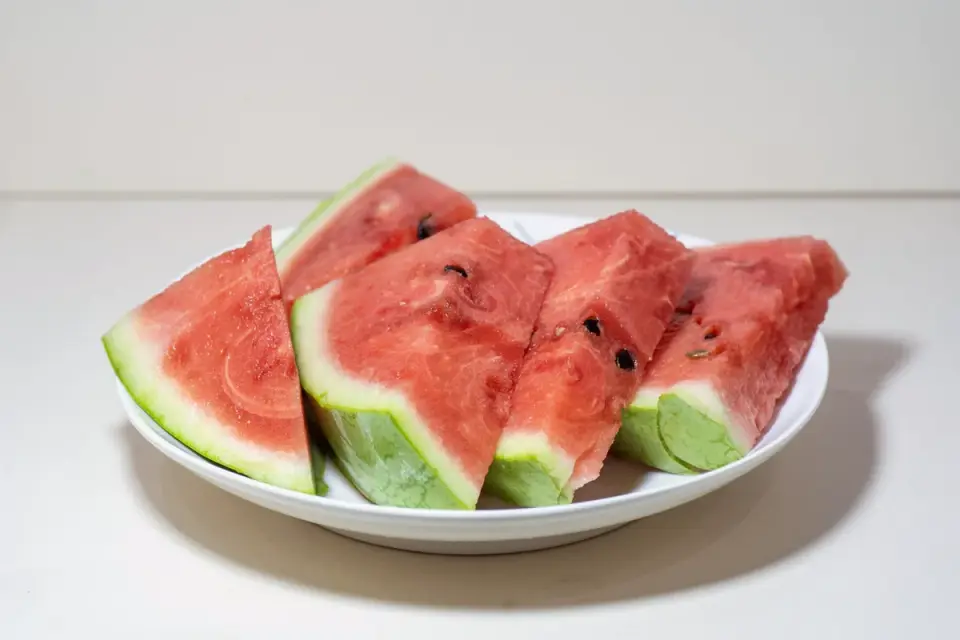
Portion size is where I actually push back on the trend a little. A dog owner filming a full quarter-wedge disappearing in four bites reads as generous, but a large amount of any new food, however low-risk on paper, is the more common way a dog ends up with a soft stool the next morning than an actual seed or rind mishap. I’d rather see a few cubes offered once, with a day to watch how the dog’s stool responds, than a whole slice handed over because a video made it look harmless. That’s not caution for its own sake — it’s the same logic behind introducing any new produce slowly, which is worth applying whether you’re weighing sweet potato or watermelon. If your dog already runs loose or sensitive with dietary change, our fiber guide walks through how a new source of fiber and water content can shift stool consistency even when nothing about the food itself is unsafe.
Sugar content is the other real conversation, and it’s a smaller one than the internet makes it sound. Watermelon is roughly 92% water, and the sugar in a dog-sized portion is genuinely low — but low isn’t zero, and for a dog managing diabetes, consistency matters more than the raw number. Any treat with carbohydrate in it changes the math on insulin timing, so that decision belongs to the dog’s own veterinarian, not a trend cycle. The same caution applies to dogs carrying extra weight or managing kidney disease, where potassium and portion control both deserve a second look before watermelon becomes a regular habit rather than an occasional one. None of this makes watermelon a bad choice — it makes it a treat with conditions, which is true of almost everything dogs eat outside their regular food. If gut sensitivity is already part of your dog’s picture, it’s also worth knowing what actually supports digestion day to day rather than just what to avoid; our probiotic roundup covers that ground separately.
The bottom line: watermelon earns its spot in the yes column, not because it’s trending, but because the actual risk sits almost entirely in preparation rather than the fruit itself. Cut the rind away, clear the seeds, keep the portion modest, and call your vet first if your dog’s health already complicates sugar or potassium. That’s a lower bar than most viral dog treats clear, and it’s why this one is worth repeating past the algorithm.
Frequently asked questions
Can dogs eat watermelon rind?
No. The tough, fibrous rind is difficult to digest and can cause gastrointestinal upset or, in larger pieces, an intestinal blockage, according to the American Kennel Club's guidance on watermelon.
Are watermelon seeds dangerous for dogs?
A stray seed or two swallowed whole is unlikely to cause serious harm, but a mouthful can present a choking or blockage risk, so seeded watermelon should always be seeded before it's offered.
Is watermelon safe for a diabetic dog?
Watermelon still carries natural sugar, and dogs managing diabetes need predictable, consistent carbohydrate intake, so any fruit treat should be cleared with the dog's veterinarian first rather than assumed safe.
Can puppies eat watermelon?
A small amount of seedless, rind-free watermelon is generally fine as an occasional treat, but it should never replace a portion of a puppy's regular diet, which is already calibrated for growth.