Can Dogs Eat Bananas? A Vet Nutritionist's Honest Read on the Trend
Medically reviewed by Justin Shmalberg, DVM, CVA, ACVN, ACVSMR — For general education — not a substitute for veterinary care.
A few peeled, coin-sized slices of banana are one of the lower-risk human foods you can hand a dog — the catch is that low-risk and good idea every day are not the same claim.

On this page
A few peeled, coin-sized slices of banana are one of the lower-risk human foods you can hand a dog — the catch is that low-risk and good idea every day are not the same claim.
Most healthy adult dogs can eat peeled banana in small amounts without incident. That’s the direct answer. The more useful question, the one that actually changes what you do in the kitchen, is how much, how often, and for which dog, because the fuller picture has real caveats attached, not just a green light.
I think about this the same way I think about any trending supplement claim that crosses my desk: what is this ingredient actually doing, mechanically, in this dog’s body, and is that worth the tradeoff? A banana isn’t a supplement, but the reasoning is identical. Weigh what it can realistically do for the diet, mobility, or day-to-day comfort before deciding it deserves a daily spot in the bowl.
The scene that plays out in a lot of kitchens
Picture a Cavalier mix, maybe eleven pounds, sitting at attention by the counter every morning while her owner peels a banana for breakfast smoothies. The dog gets the last inch of fruit, every single day, because it seems harmless and she clearly loves it. Nobody’s weighing the sugar. Nobody’s tracking that the dog has started leaving a little kibble in the bowl most nights. Six months in, she’s up nearly two pounds — not dramatic, but on a dog that size it’s roughly the equivalent of a 150-pound adult gaining twenty. Nothing about that banana habit was reckless. It just never got measured against what she was already eating, and small daily additions have a way of quietly rewriting a dog’s calorie budget. That’s the pattern worth catching before it becomes a weight problem instead of after.
What banana flesh actually contributes
According to American Kennel Club nutrition guidance, bananas are high in potassium, vitamins, biotin, fiber, and copper, while staying low in cholesterol and sodium. Potassium supports normal muscle and heart function; the fiber can help some dogs with mild GI regularity. None of that makes banana a functional supplement. It makes it a fruit with a mild, generalized nutrient profile — the kind of thing that adds texture and variety without doing heavy lifting. If a dog is already eating a complete, balanced diet, banana isn’t filling a nutritional gap. It’s a treat wearing a health-food costume, and that distinction matters more than the ingredient list suggests. Owners chasing extra fiber for a sensitive gut are often better served reading up on how much fiber is actually appropriate before stacking banana on top of a fiber-forward kibble or chew.
Where this actually goes wrong
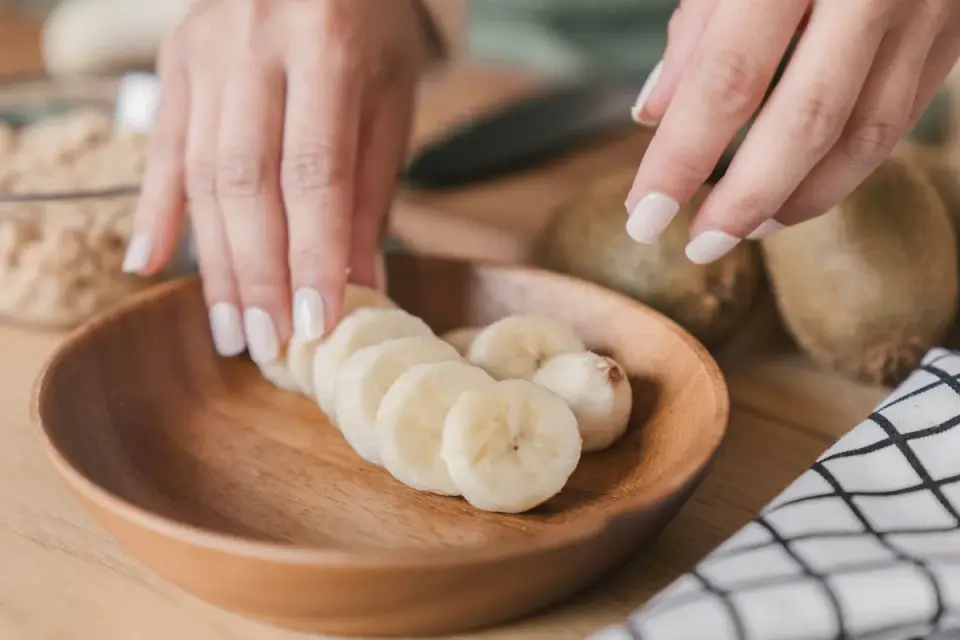
Three things cause real problems, and none of them is the banana flesh itself. First, the peel. It’s not toxic, but it’s dense, stringy, and poorly digestible — PetMD notes that too much banana, peel included, can contribute to digestive upset and, in smaller dogs, a genuine blockage risk if a chunk of peel is swallowed whole. Second, sugar. A medium banana carries roughly 15 grams of natural sugar. That’s not dangerous in a one-inch slice, but a whole banana handed to a 12-pound terrier is a meaningfully different math problem than the same fruit given to a 70-pound Labrador. Puppies, diabetic dogs, and dogs already carrying extra weight are the ones I’d pump the brakes on hardest.
Third, and this is the one owners rarely think to ask about: potassium load in dogs with impaired kidney function. A study published via PubMed on dogs with chronic kidney disease found that potassium-reduced home-prepared diets could correct hyperkalemia that persisted even on commercial renal therapeutic diets — a reminder that potassium intake is something clinicians actively manage in CKD patients, not a detail to ignore. Banana isn’t a renal-diet food. If a dog has diagnosed kidney disease, run banana past the vet managing that case before it becomes a habit, not after.
The gut-health angle, without the hype
Banana shows up constantly in ‘natural fiber’ and ‘prebiotic’ pet content, usually stretched further than the evidence supports. Fiber can genuinely help firm up loose stool or ease mild constipation in some dogs — that’s real and worth using deliberately. It is not the same as banana doing meaningful, sustained work for a dog’s microbiome the way a formulated fiber blend or a targeted probiotic protocol might. If gut health is the actual goal rather than an occasional treat, a couple of banana slices isn’t the tool for that job; owners chasing that outcome are better off comparing what’s actually in a vetted probiotic for dogs than leaning on fruit to do a supplement’s work. Same logic applies to the sweet-potato trend running parallel to this one — reading it honestly means separating ‘contains fiber’ from ‘solves your dog’s digestion.‘
Where I land
Banana, peeled, in small portions, for a healthy dog: fine, genuinely fine, and I won’t pretend otherwise just to sound cautious. The strongest counterargument I hear is that it’s ‘natural’ and therefore automatically better than a processed treat — but natural doesn’t erase the sugar math or the peel risk, and it certainly doesn’t grant kidney patients an exemption. My rule of thumb hasn’t changed in years: a few slices, occasionally, peel off, portion tracked against the rest of the day’s food. Skip it for dogs with diagnosed kidney disease unless their vet signs off, and don’t let ‘it’s just fruit’ talk you into a whole banana for a small dog. That’s the honest verdict, not the viral one.
Frequently asked questions
Can puppies eat banana?
In very small amounts, yes, but puppies are more sensitive to the sugar load and to peel fragments than adult dogs, so keep portions smaller and always remove the peel.
Is frozen banana safe as a treat?
Frozen banana slices are fine for most dogs and can be a low-mess warm-weather treat, but skip it for dogs that gulp food, since a firm frozen chunk is harder to break down than a soft one.
How much banana is too much for a dog?
A rough guideline vets use is keeping any treat, banana included, under 10% of daily calories — for most dogs that's a few small slices, not a whole banana.